
You’ll create authentic Thai fish cakes (Tod Mun Pla) by blending white fish with red curry paste, kaffir lime leaves, and fish sauce into springy patties. After gently shaping your seasoned mixture, fry the cakes in hot oil until they’re golden brown and crispy outside while remaining tender inside. This popular dish from Thailand’s Ayutthaya period pairs perfectly with sweet chili sauce and cucumber relish – mastering these traditional techniques will reveal the dish’s royal heritage.
Key Takeaways
- Tod Mun Pla combines minced white fish with red curry paste, creating a signature Thai appetizer with a springy texture.
- Essential ingredients include fresh fish, red curry paste, kaffir lime leaves, fish sauce, and green beans.
- The fish mixture must be pounded or processed until paste-like, then mixed with curry paste and seasonings.
- Patties are fried at 350°F until golden brown and served with sweet chili sauce and cucumber relish.
- The dish originated in Thailand’s Ayutthaya period and evolved from coastal preservation techniques into a refined delicacy.
History
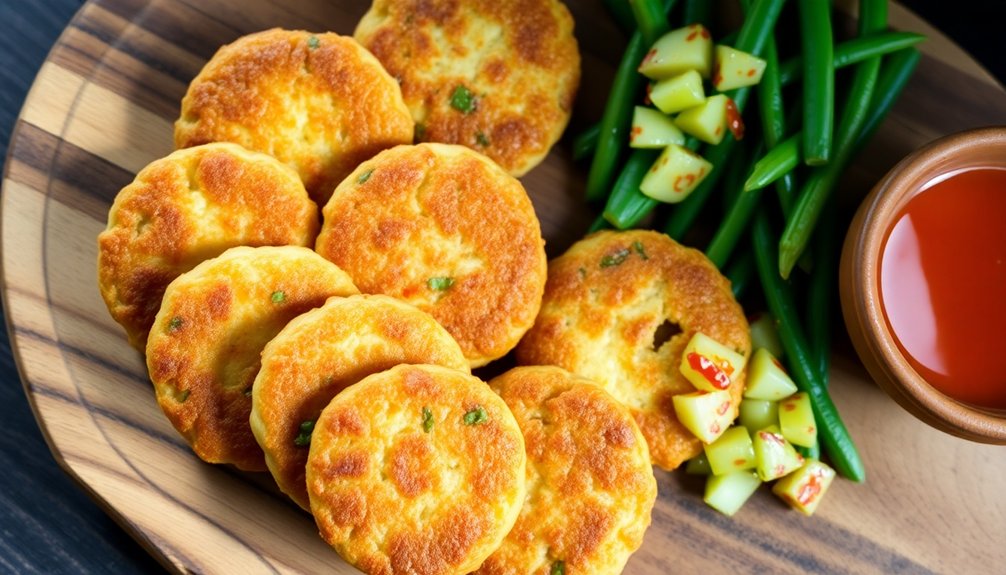
While the exact origins remain unclear, Thai fish cakes (tod mun pla) emerged as an essential part of Thailand’s culinary heritage during the Ayutthaya period (1351-1767).
The culinary origins of this dish can be traced to coastal regions, where fresh fish was plentiful and needed to be preserved. You’ll find that locals developed the technique of pounding fish with spices and herbs to create these resilient, flavorful cakes.
The cultural significance of tod mun pla extends beyond its practical origins. You’ll discover that it became a staple at royal courts, where chefs refined the recipe to achieve the perfect balance of textures and flavors.
Today, you can experience this dish everywhere from street food stalls to upscale restaurants, showcasing how it’s evolved while maintaining its authentic character.
Recipe

Ingredients:
- 500g white fish fillets (cod, haddock, or snapper), chopped
- 3 tablespoons red curry paste
- 1 egg
- 4 kaffir lime leaves, finely chopped
- 2 tablespoons fish sauce
- 1 tablespoon palm sugar
- 100g green beans, finely chopped
- Vegetable oil for frying
Instructions:
- Place fish, curry paste, egg, lime leaves, fish sauce, and palm sugar in a food processor. Blend until well combined and paste-like.
- Transfer mixture to a bowl and fold in the chopped green beans.
- Shape mixture into small patties, about 5cm wide and 1cm thick.
- Heat oil in a large frying pan over medium heat.
- Fry fish cakes in batches for 2-3 minutes each side until golden brown and cooked through.
- Remove with a slotted spoon and drain on paper towels.
- Serve hot with sweet chili sauce and cucumber relish.
Serves 4-6 people
Preparation time: 20 minutes
Cooking time: 15 minutes
Cooking Steps

You’ll start by mincing fresh fish into a chunky paste before thoroughly incorporating it with your prepared curry paste mixture.
Next, you’ll gently shape the seasoned fish mixture into small, uniform patties using moistened hands to prevent sticking.
Finally, you’ll fry the fish cakes in hot oil until they develop a golden-brown crust, serving them immediately with a traditional Thai cucumber relish for authentic street food flavor.
step 1. Prepare Fresh Minced Fish
Begin by scaling and deboning fresh white fish like cod, haddock, or snapper – ensuring all pin bones are completely removed.
Cut the fish into smaller chunks and place them in your food processor. Pulse in short bursts until you achieve a fine, paste-like consistency, being careful not to over-process the fish into mush.
If you’re doing it by hand, chop the fresh fish with a sharp knife using a rocking motion until you get a minced texture similar to ground meat. The fish should be sticky enough to hold together when pressed but still maintain some texture.
Scrape the minced fish into a bowl and keep it chilled until you’re ready to mix it with the curry paste and other ingredients.
step 2. Mix Paste With Fish
Fold the red curry paste into the chilled minced fish using a spatula, working it thoroughly to guarantee even distribution.
You’ll want to achieve a smooth, uniform paste consistency where the curry’s vibrant orange-red color is evenly mixed throughout the fish. This step is essential for developing balanced flavors in your Tod Mun Pla.
Continue mixing while gradually adding the beaten egg and finely sliced kaffir lime leaves.
You’ll notice the mixture becoming more cohesive and slightly sticky. To test if you’ve achieved the right texture, take a small amount and roll it into a ball – it should hold its shape without being too wet.
The fish flavor should remain prominent while being enhanced by the aromatic curry paste. Let the mixture rest for 10 minutes before shaping.
step 3. Form Fish Patties Gently
After the mixture has rested, scoop out portions roughly the size of a golf ball using moistened hands to prevent sticking.
Gently flatten each portion into a patty about 1/2 inch thick, being careful not to compress the mixture too much. You’ll want to maintain the springy texture that’s characteristic of authentic Thai fish cakes.
As you form fish patties gently, keep the edges smooth but not too perfect – slight irregularities will create crispy spots during frying.
The texture importance can’t be overstated; overworking the mixture will result in dense, tough fish cakes. If the mixture becomes too sticky while you’re working, simply rewet your hands with cool water.
Place the formed patties on a lined baking sheet, keeping them separate to prevent sticking together.
step 4. Fry Until Golden Brown
Heat oil in a large wok or heavy-bottomed pan to 350°F (175°C), using enough oil to submerge the fish cakes halfway.
Carefully slide 4-5 patties into the hot oil, making sure not to overcrowd the pan. The fish cakes will initially sink, then float to the surface as they cook.
Fry for 2-3 minutes on each side until they achieve a deep golden-brown color and develop a crispy exterior.
Pay attention to the color indicators – you’ll want an even, rich amber tone without any dark spots. If they’re browning too quickly, lower the heat slightly.
Once done, remove them with a slotted spoon and place on paper towels to drain excess oil. They should be crispy outside while remaining tender and springy inside.
step 5. Serve With Cucumber Sauce
While your Thai fish cakes rest on paper towels, you can prepare the traditional cucumber sauce that brings a cooling contrast to the warm, crispy patties.
In a small bowl, combine finely diced cucumber with rice vinegar, sugar, and crushed peanuts. The cucumber’s natural benefits include hydration and a crisp texture that complements the fish cakes perfectly.
For sauce variations, you can adjust the sweetness by using palm sugar instead of regular sugar, or add depth with a splash of fish sauce. If you prefer extra heat, incorporate finely chopped Thai bird’s eye chilies.
Don’t forget to garnish with fresh cilantro leaves and serve the sauce at room temperature to allow the flavors to meld together naturally.
Cooking Tips

For the best Thai fish cakes, maintaining the right oil temperature is essential – around 350°F (175°C).
Test the oil by dropping a small amount of the fish mixture; it should sizzle and rise to the surface immediately.
Don’t overcrowd the pan, as this will lower the oil temperature and make your fish cakes greasy.
When it comes to cooking techniques, you’ll want to pat each cake gently into shape rather than compress them too firmly.
If you can’t find Thai fish paste, you can substitute fresh cod or haddock – just process it until paste-like.
The fish cakes should turn golden brown in about 2-3 minutes per side.
They’re done when they’re crispy outside but still springy when pressed.
Remove them quickly to prevent overcooking.
Final Thoughts

These authentic Thai fish cakes bring the vibrant flavors of Southeast Asian street food right to your kitchen.
When you master this recipe, you’re not just creating a delicious appetizer – you’re participating in a culinary tradition that’s been perfected over generations in Thailand’s bustling markets and family kitchens.
Frequently Asked Questions
Can Tod Mun Pla Be Frozen and Reheated Later?
You’ll save 90% of your prep time by freezing these fish cakes. Store them in airtight containers for up to 3 months, then reheat in a 350°F oven until hot throughout.
What’s the Best Oil Temperature for Frying Thai Fish Cakes?
You’ll want to heat your oil to 350-375°F (175-190°C) for ideal frying techniques. Choose a neutral oil with high smoke point like vegetable or peanut oil for perfect golden-brown results.
How Long Do Thai Fish Cakes Stay Fresh in the Refrigerator?
You’ll get the best freshness from your fish cakes for 2-3 days when stored properly in an airtight container. Check for off-odors and visual changes as storage tips for monitoring their quality.
Which Fish Varieties Work Best as Substitutes for Traditional Thai Fish?
Looking for fish substitutes? You’ll get great flavor profiles using cod, haddock, pollock, or tilapia. These mild white fish varieties bind well and won’t overpower your curry paste.
Are Thai Fish Cakes Typically Served as Appetizers or Main Dishes?
You’ll find Thai fish cakes served both ways – as bite-sized appetizer presentations with sweet chili sauce, or as main dish variations alongside rice, vegetables, and curry dishes in traditional meals.