
Learn How To Make The Best Massaman Curry
To make the best Massaman curry, start by gathering essential ingredients like beef, cinnamon, cardamom, and roasted peanuts.
Toast the spices to enhance their flavors, then sauté onions and garlic to create a savory base.
Add the Massaman curry paste and coconut milk, allowing the mixture to simmer for tender meat and a rich sauce. Incorporate vegetables like potatoes and carrots for added texture.
Be mindful of cooking temperatures and spice balance to avoid common mistakes. Serve with jasmine rice or naan, and consider pairing with a revitalizing salad or off-dry Riesling to elevate the dish further. Explore more nuances of this delightful cuisine.
Key Takeaways
Understanding Massaman Curry
Massaman curry, a fragrant and hearty dish, originates from Thailand and is heavily influenced by Persian cuisine, reflecting a rich cultural exchange.
This unique dish is a quintessential representation of Thai cuisine, showcasing a harmonious blend of flavors that are both savory and slightly sweet.
The flavor profile typically includes aromatic spices such as cardamom, cinnamon, and cloves, combined with tamarind, coconut milk, and peanuts, resulting in a complex and satisfying taste.
Its cultural significance extends beyond mere sustenance; Massaman curry is often served during special occasions and festivals, symbolizing hospitality and the blending of cultures.
Essential Ingredients Needed
To create a delicious Massaman curry, it is essential to gather a specific set of ingredients that contribute to its distinctive flavor and texture. This dish, rooted in its traditional origins, showcases a harmonious blend of spices and ingredients that reflect regional differences across Thailand and beyond.
Key spice variations typically include cinnamon, cardamom, and cloves, which impart warmth and depth. Additionally, Massaman curry paste is vital, often made from dried chilies, garlic, and lemongrass, providing a rich base.
When considering protein options, beef, chicken, or even tofu are commonly used, with beef being the most traditional choice due to its ability to absorb flavors.
For a balanced meal, vegetable choices such as potatoes, carrots, and onions are recommended, adding both texture and nutrition.
Furthermore, the inclusion of roasted peanuts or cashews enriches the dish, giving it a delightful crunch.
Coconut milk is essential for creating the creamy consistency that characterizes Massaman curry, ensuring a satisfying and indulgent experience.
Step-by-Step Cooking Process
With the essential ingredients prepared, the step-by-step cooking process can now begin. This journey involves various cooking techniques that enhance the unique flavors of Massaman curry while ensuring a harmonious balance.
- Toast spices for deeper flavor
- Sauté aromatics to build a savory foundation
- Simmer slowly for tender meat and rich sauce
- Garnish creatively for appealing presentation
Start by toasting the spice combinations—cumin, coriander, and cardamom—until fragrant. This step reveals their full potential.
Next, sauté the onion and garlic until translucent, creating a flavorful base. Add the meat and brown it evenly, sealing in juices.
Incorporate the prepared curry paste and coconut milk, stirring to achieve a cohesive mixture. For flavor balancing, taste as you go; adjust with tamarind or fish sauce as needed. If certain ingredients are unavailable, consider ingredient substitutions like using sweet potatoes instead of potatoes.
Allow the curry to simmer gently, letting the flavors meld beautifully.
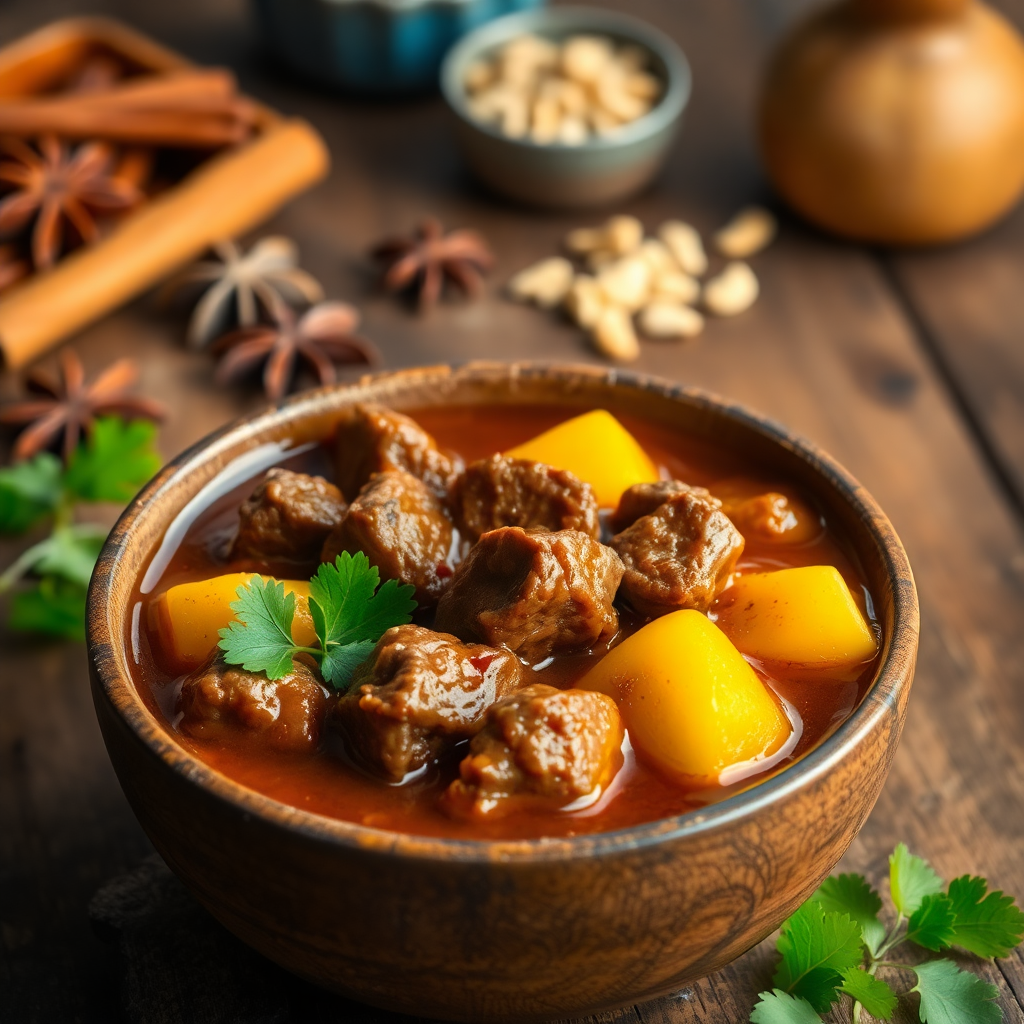
Finally, for presentation tips, serve the Massaman curry in a shallow bowl, garnished with fresh cilantro and chopped peanuts, enhancing both its aesthetic and flavor profile. Enjoy your culinary creation!
Common Mistakes to Avoid
When preparing Massaman curry, it's easy to overlook key aspects that can greatly impact the final dish. One of the most significant mistakes is neglecting ingredient quality. Fresh, high-quality ingredients, especially spices, are fundamental for achieving the authentic flavor profile that defines Massaman curry.
Similarly, maintaining the correct cooking temperature is essential; cooking too quickly can lead to uneven flavors and textures.
Another common oversight is the spice balance. Massaman curry requires a harmonious blend of spices, such as cardamom, cinnamon, and cumin. Overdoing or underutilizing any spice can disrupt the intended flavor.
Preparation time is also important; rushing the process can result in poorly blended flavors. Allowing the curry to simmer properly helps meld the ingredients, enhancing the overall taste.
Lastly, improper storage methods can ruin your hard work. If you plan to make the curry ahead of time, make sure it is cooled and stored correctly in airtight containers to preserve its flavors.
Serving and Pairing Suggestions
A well-prepared Massaman curry deserves thoughtful serving and pairing to enhance its rich flavors. This aromatic dish, with its blend of spices and creamy coconut milk, pairs beautifully with various sides and beverages, creating a well-rounded meal experience.
- Jasmine rice or brown rice for a flavorful base
- Fresh cucumber salad for a revitalizing contrast
- Naan or roti to soak up the delicious sauce
- Mixed vegetable stir-fry for added texture
When serving, maintain an appropriate serving temperature, ideally warm but not too hot, to guarantee the flavors are fully appreciated.
For garnishing ideas, consider fresh cilantro, crushed peanuts, or lime wedges to add brightness and crunch.
In terms of perfect accompaniments, a light, tangy cucumber salad complements the curry's richness, while a side of naan or roti allows guests to enjoy every bit of sauce.
For wine pairings, opt for a slightly off-dry Riesling or a fruity Grenache, which will balance the curry's spice.
Thoughtful pairings elevate the dining experience, assuring that each bite of Massaman curry is as delightful as the last.
Frequently Asked Questions
Can I Use a Slow Cooker for Massaman Curry?
Yes, a slow cooker can enhance your Massaman curry. The slow cooker benefits include improved flavor development through extended cooking time. Adjust ingredients as needed, and consider serving with rice or naan for a complete meal experience.
What Is the History Behind Massaman Curry?
Massaman curry has Thai origins, influenced by Muslim culinary traditions. Its development reflects the spice trade's impact on Southeast Asia, resulting in regional variations that highlight its cultural significance within both Thai and Muslim communities.
How Do I Make Massaman Curry Vegan?
To create a vegan Massaman curry, utilize vegan protein options such as tofu or tempeh, substitute coconut milk alternatives, adjust spices for flavor, incorporate vegetable substitutions, and consider serving suggestions like rice or quinoa for a complete meal.
Can I Freeze Leftover Massaman Curry?
Yes, you can freeze leftover Massaman curry. Utilize airtight storage containers for best flavor preservation. For best results, label with the date. When reheating, guarantee even heating to maintain quality, typically within three months for perfect shelf life.
What Type of Meat Is Best for Massaman Curry?
The best meat for Massaman curry includes beef options like chuck or brisket, chicken choices such as thighs, lamb cuts for richness, pork varieties for flavor, and meat alternatives like tofu for a vegetarian option.
Conclusion
In summary, mastery of Massaman curry requires a thorough understanding of its unique flavor profile and essential ingredients. Following the outlined cooking process guarantees a balanced and authentic dish, while awareness of common mistakes enhances the overall outcome. Proper serving and pairing elevate the dining experience, allowing for a greater appreciation of this rich and aromatic Thai cuisine. Ultimately, attention to detail in each phase of preparation results in a memorable and satisfying culinary creation.