
How To make Mango Sticky Rice at Home
To make mango sticky rice, you'll need glutinous rice, ripe mangoes, coconut milk, sugar, and salt. Soak the rice overnight, then steam it for 20-25 minutes in a bamboo steamer until tender. While steaming, prepare the coconut sauce by gently heating coconut milk with sugar and salt. Slice your mangoes, arrange the rice on plates, top with mango slices, and drizzle with warm coconut sauce. Master these basics, and you'll reveal the secrets of this beloved Thai dessert.
Key Takeaways
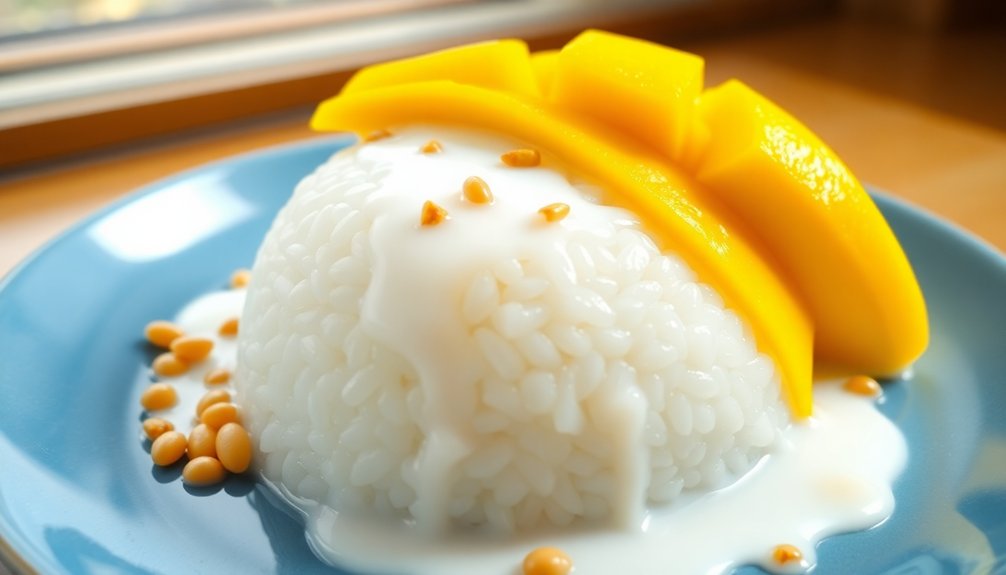
- Soak glutinous rice overnight in cold water, then steam in a bamboo steamer for 20-25 minutes until tender.
- Prepare coconut sauce by gently heating coconut milk, sugar, and salt until sugar dissolves, avoiding boiling.
- Select ripe mangoes that are fragrant and slightly soft, then peel and slice into uniform pieces.
- Keep rice and coconut sauce separate until serving, then assemble by placing rice first, mango slices, and drizzling sauce.
- Serve warm or at room temperature, garnishing with optional sesame seeds and extra coconut sauce for added flavor.
History
While these recipe titles promise simplicity, mango sticky rice carries a rich heritage dating back centuries in Southeast Asian cuisine.
You'll find its origins deeply rooted in Thailand, where it's known as "khao niaow ma muang" and has been a beloved street food and traditional dessert.
The dish gained prominence during Thailand's Ayutthaya period (1351-1767), when trade brought mangoes and coconut palms together with the region's sticky rice cultivation.
You'll discover it's not just Thai - variations exist across Southeast Asia, from Laos to Cambodia.
The combination reflects the ingenuity of local cooks who paired seasonal sweet mangoes with glutinous rice and coconut milk, creating a dessert that's now recognized globally.
Today, you'll see this dish served everywhere from humble street carts to high-end restaurants.
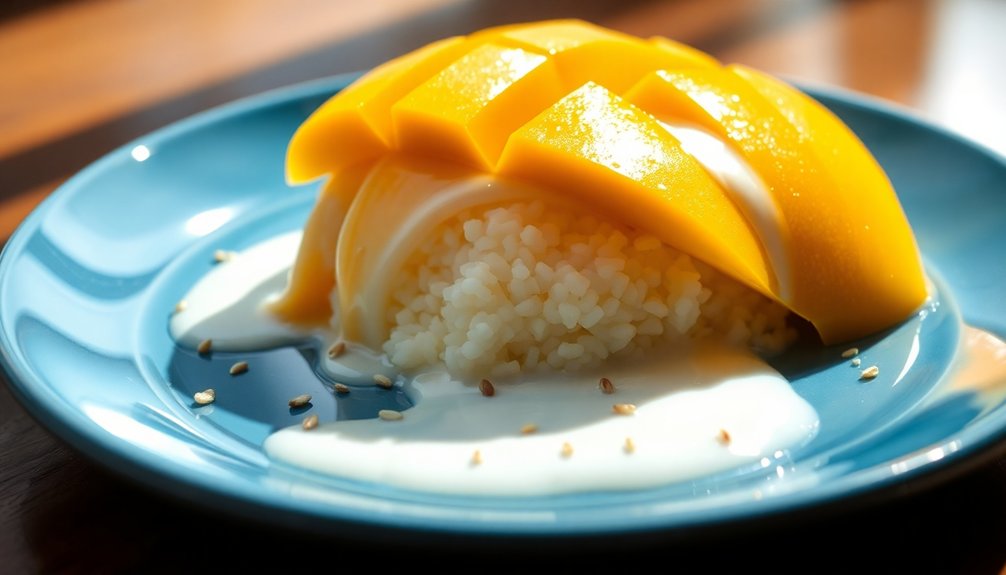
Recipe
Ingredients:
- 1 cup glutinous rice
- 1 ripe mango
- 1 cup coconut milk
- 1/4 cup sugar
- 1/2 teaspoon salt
- 1 tablespoon cornstarch
- 2 tablespoons water
- Sesame seeds (optional)
Instructions:
- Soak glutinous rice in water for 4-6 hours or overnight.
- Drain rice and steam for 20-25 minutes until tender.
- While rice cooks, heat 3/4 cup coconut milk, sugar, and 1/4 teaspoon salt in a saucepan.
- Mix cornstarch with water and add to coconut mixture; stir until thickened.
- Pour half the coconut sauce over cooked rice; mix well.
- Mix remaining coconut milk and salt for topping sauce.
- Peel and slice mango.
- Serve rice topped with mango slices and coconut sauce.
- Sprinkle with sesame seeds if desired.
Serves: 2-3 portions
Cooking Steps
You'll begin by soaking glutinous rice overnight and steaming it until each grain turns translucent and tender.
Next, prepare the coconut sauce mixture while you peel and slice fresh, ripe mangoes into uniform pieces.
Finally, assemble your dessert by placing the warm sticky rice on a plate, drizzling it with the coconut sauce, and arranging the mango slices alongside it.
Step 1. Soak Glutinous Rice Overnight
The first essential step in making authentic mango sticky rice is soaking Thai glutinous rice overnight.
You'll need to rinse the rice thoroughly in cold water until the water runs clear, removing excess starch.
Place the cleaned rice in a large bowl and add enough cool water to cover it by at least 2 inches.
Let the rice soak for 8-12 hours or overnight at room temperature.
Don't refrigerate it, as this can affect the texture.
You'll notice the grains become noticeably larger and slightly opaque as they absorb water.
Once soaked, drain the rice in a fine-mesh strainer, discarding the soaking water.
The rice is now ready for steaming, which will create that signature sticky texture that's vital for this beloved Thai dessert.
Step 2. Steam Rice Until Translucent
Steaming properly soaked glutinous rice requires a traditional bamboo steamer or metal steaming basket lined with cheesecloth.
Drain the rice you've soaked overnight and spread it evenly across the cheesecloth, ensuring it's not packed too tightly.
Fill your pot with water, keeping the level below where the rice will sit, and bring it to a rolling boil.
Place your steamer basket on top and cover with a tight-fitting lid.
Steam the rice for 20-25 minutes, or until the grains become translucent and tender. You'll know it's done when you can easily squeeze a grain between your fingers, and it's completely clear rather than showing any white center.
Don't lift the lid during steaming, as this will interrupt the cooking process and affect the rice's texture.
Step 3. Prepare Coconut Sauce Mixture
While your rice steams to perfection, prepare the creamy coconut sauce that gives this dessert its signature richness.
In a small saucepan, combine 1 cup of coconut milk with ¼ cup of granulated sugar and ¼ teaspoon of salt. Heat the mixture over medium heat, stirring constantly until the sugar dissolves completely and the sauce begins to simmer.
For the best coconut sauce results:
- Don't let the mixture boil, as this can cause separation and graininess
- Stir continuously to guarantee the sugar dissolves evenly
- Look for tiny bubbles around the edge of the pan as your indicator of proper temperature
Remove the saucepan from heat once the sauce reaches the right consistency.
You'll use this warm coconut mixture to transform your sticky rice into a delectable Thai dessert.
Step 4. Slice Fresh Mango
Selecting perfectly ripe mangoes is essential for this beloved Thai dessert. Look for mangoes that yield slightly when pressed and emit a sweet fragrance near the stem. You'll need one ripe mango per serving.
Stand the mango on your cutting board with the stem end pointing up. Using a sharp knife, cut slightly off-center along the flat side of the pit, creating two cheeks. Score the flesh of each mango cheek in a crosshatch pattern, being careful not to pierce the skin.
Push the skin upward to create a hedgehog pattern, then slice the cubes away from the skin. For the remaining flesh around the pit, carefully cut it away and slice into bite-sized pieces. Arrange the mango pieces alongside your sticky rice.
Step 5. Drizzle and Serve Assembled Dessert
With your perfectly sliced mango ready, you can now assemble this classic Thai dessert.
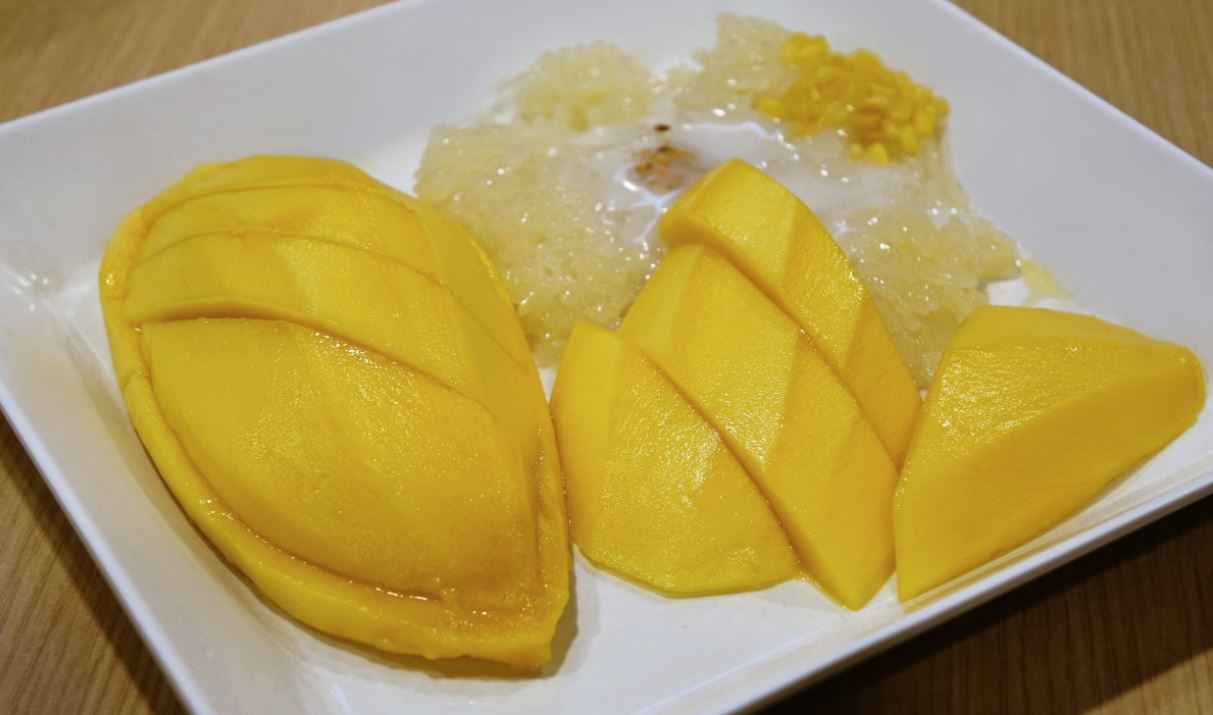
Place a generous portion of warm sticky rice in the center of your serving plate. Arrange the fresh mango slices alongside or atop the rice in a fan pattern. Pour the coconut cream sauce over the rice, allowing it to pool slightly around the base.
For the perfect finishing touch:
- Drizzle additional coconut cream sauce in a decorative pattern across the top
- Sprinkle toasted sesame seeds or mung beans for added crunch and visual appeal
- Garnish with a fresh mint leaf if desired
Serve immediately while the rice is still warm and the coconut sauce is fresh.
The contrast between the warm, sweet rice and cool, fresh mango creates an unforgettable dining experience.
Cooking Tips
Although mango sticky rice appears deceptively simple, mastering a few key techniques will elevate your results from good to exceptional.
When selecting mangoes, press gently - they should yield slightly when ripe.
For the rice, don't skip the soaking step; it's essential for achieving that perfect sticky texture. Steam your glutinous rice rather than boiling it to maintain its distinct chewy quality.
Watch your coconut sauce carefully as it simmers - it can quickly become too thick. You'll know it's ready when it coats the back of a spoon but still flows smoothly.
Don't mix the sauce with the rice too early; wait until just before serving to preserve the rice's texture. If you're making ahead, keep the components separate and assemble right before serving.
Final Thoughts
Making mango sticky rice at home brings the vibrant flavors of Thai cuisine right to your kitchen. While it requires attention to detail and specific ingredients, you'll find the process rewarding and the results absolutely delicious.
Once you've mastered this classic dessert, you'll be able to create restaurant-quality mango sticky rice whenever you crave it.
Beyond just being a delightful treat, mango sticky rice represents:
- A connection to Thailand's rich culinary heritage and the art of balancing sweet, creamy, and tropical flavors
- An opportunity to explore authentic Asian cooking techniques and ingredients
- A chance to impress friends and family with a sophisticated dessert that's both elegant and comforting
Remember to choose ripe mangoes and quality glutinous rice for the best results.
Frequently Asked Questions
Can I Substitute Regular Rice for Sticky Rice in This Recipe?
You can't substitute regular rice - it won't give you the right texture. Sticky rice (glutinous rice) has unique properties that create that essential chewy, sticky consistency you're looking for.
How Long Does Mango Sticky Rice Stay Fresh in the Refrigerator?
You'll want to eat your mango sticky rice within 2-3 days when stored in an airtight container in the fridge. The mango should be stored separately to maintain freshness.
Which Mango Variety Works Best for Mango Sticky Rice?
You'll get the best results using Nam Dok Mai or Ataulfo mangoes, as they're sweet, creamy, and have minimal fibers. Thai honey mangoes are also excellent when they're perfectly ripe.
Is Coconut Cream the Same as Coconut Milk for This Dish?
No, they're not the same. You'll want coconut cream for the topping, which is thicker and richer than coconut milk. You can use coconut milk for cooking the rice though.
Can Mango Sticky Rice Be Made Ahead and Reheated Later?
You can prepare sticky rice ahead, but serve it warm or at room temperature. Don't reheat it, as this'll affect the texture. Keep mangoes separate until you're ready to serve.