You’ll find khao pad gai, Thailand’s iconic chicken fried rice, is a comforting dish that emerged from Chinese cooking influences in the early 20th century. It combines day-old jasmine rice, diced chicken, eggs, and fresh vegetables, all stir-fried in a smoking-hot wok with Thai seasonings like soy and oyster sauce. While it started as a practical way to use leftover rice, it’s now a beloved street food staple. Master the essential wok hei technique to reveal its authentic flavors.
Key Takeaways
- Khao Pad Gai is a classic Thai chicken fried rice dish made with jasmine rice, diced chicken breast, eggs, and mixed vegetables.
- Day-old rice works best for this dish to prevent mushiness, and proper wok heating is essential for achieving authentic wok hei flavor.
- The dish originated as Thai street food, adapting Chinese cooking techniques with traditional Thai seasonings like soy sauce and oyster sauce.
- Cooking involves sequential steps: heating wok, searing chicken, scrambling eggs, and incorporating rice with seasonings for optimal texture and taste.
- Customizable ingredients allow for varied spice levels, vegetable combinations, and protein choices while maintaining authentic Thai flavors.
History
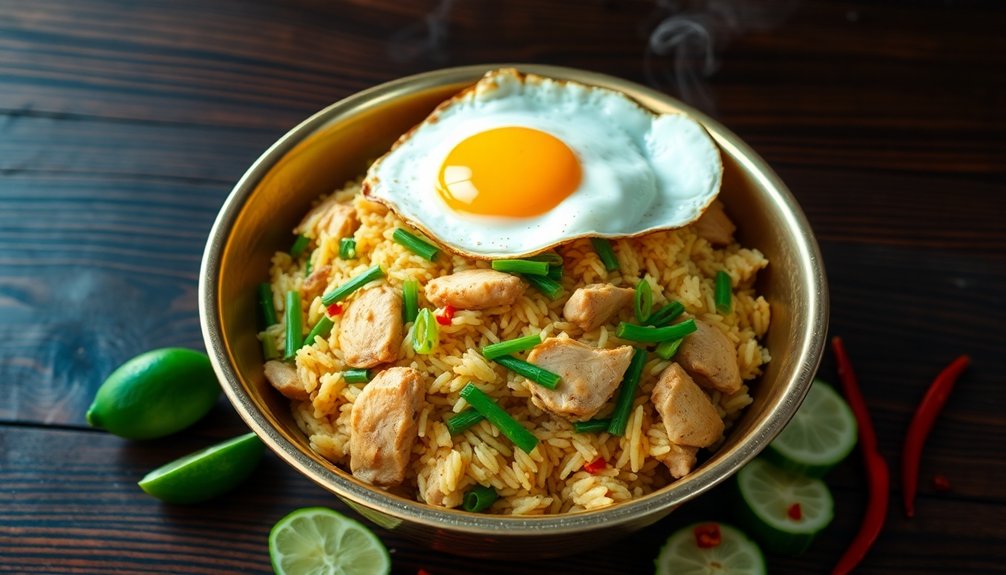
Although the exact origins of khao pad gai remain unclear, this Thai-style chicken fried rice emerged as a popular street food in Thailand during the early 20th century. You’ll find that it evolved from Chinese-influenced cooking techniques, which were adapted to suit Thai tastes and ingredients.
As rice cultivation flourished throughout Thailand, locals began experimenting with ways to repurpose leftover rice, leading to this beloved dish.
The cultural significance of khao pad gai in Thai cuisine extends beyond its humble beginnings. You can trace its development alongside Thailand’s urbanization, when busy workers needed quick, satisfying meals.
What started as a practical solution for using day-old rice has become one of Thailand’s most recognized comfort foods, enjoyed by people from all walks of life.
Recipe
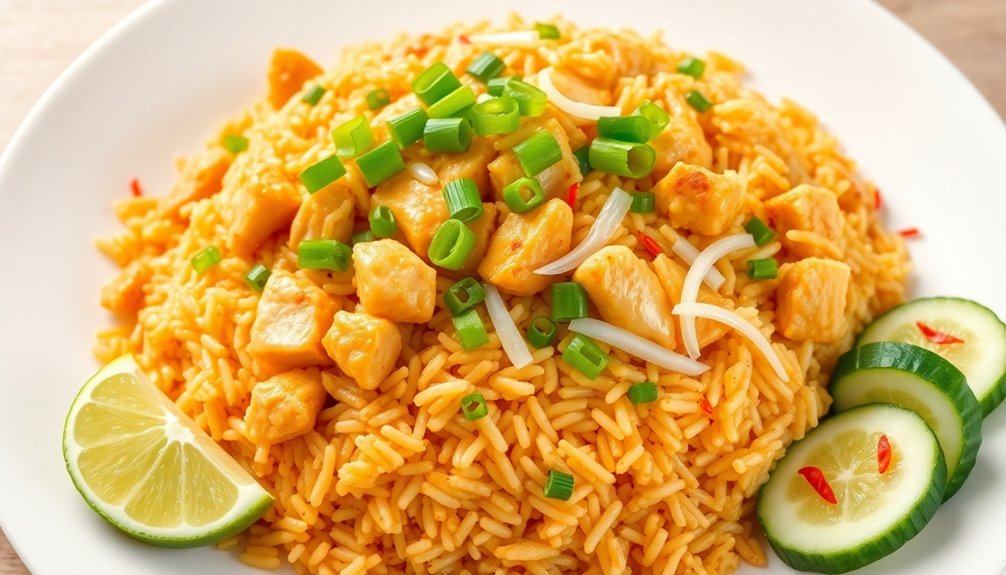
Ingredients:
- 3 cups cooked jasmine rice, cooled
- 300g chicken breast, diced
- 2 eggs, beaten
- 2 cloves garlic, minced
- 1/2 onion, diced
- 1 cup mixed vegetables (carrots, peas, corn)
- 2 tablespoons soy sauce
- 1 tablespoon oyster sauce
- 1/2 teaspoon white pepper
- 3 tablespoons vegetable oil
- Green onions for garnish
- Lime wedges for serving
Instructions:
- Heat oil in a wok or large frying pan over medium-high heat.
- Add minced garlic and onion, stir-fry until fragrant.
- Add diced chicken, cook until nearly done.
- Push ingredients to one side, add beaten eggs to empty space.
- Scramble eggs until nearly set.
- Add rice, breaking up any clumps.
- Add mixed vegetables.
- Season with soy sauce, oyster sauce, and white pepper.
- Stir-fry everything together until well combined and heated through.
- Garnish with chopped green onions.
- Serve hot with lime wedges.
Cooking time: 15-20 minutes
Serves: 4 people
Cooking Steps
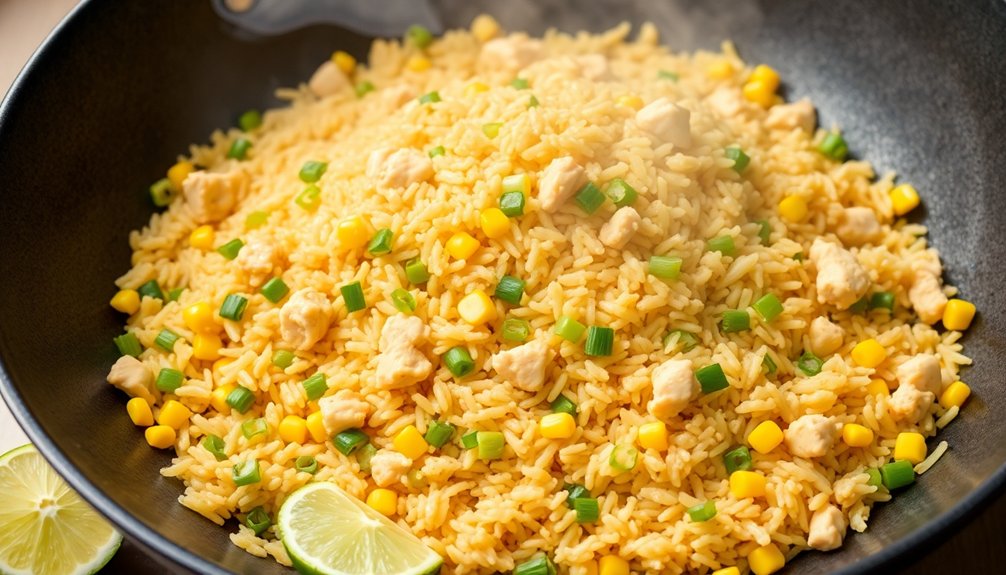
You’ll start by heating your wok until it’s smoking hot before gradually adding the cooked rice, stirring constantly to prevent sticking.
Next, incorporate the minced chicken and continue stirring until it’s fully cooked, then carefully add beaten eggs to the side of the wok, letting them set slightly before mixing.
Finally, you’ll gently add Thai seasonings like fish sauce, soy sauce, and white pepper, continuing to stir-fry until all ingredients are well combined and heated through.
step 1. Heat Wok Until Smoking
Heating your wok until it smokes is vital for achieving the perfect wok hei – that distinctive smoky flavor in Thai fried rice.
Once you’ve placed your carbon steel or cast iron wok over high heat, you’ll want to wait until you see wisps of smoke rising before adding any ingredients.
The proper wok temperature and smoking point are imperative for success. Here’s what to look for:
- The surface should be so hot that water droplets instantly vaporize and dance across it.
- You’ll notice a faint blue-gray smoke starting to rise from the empty wok.
- The bottom and sides of the wok will start changing color slightly.
- When held close, you’ll feel intense heat radiating from the cooking surface.
Don’t rush this step – proper heat guarantees your rice won’t stick and helps create that authentic Thai street food flavor.
step 2. Add Cooked Rice Gradually
Once your wok reaches the proper smoking temperature, begin adding your day-old cooked jasmine rice in small batches, about 1-2 cups at a time.
Break up any clumps with your spatula while continuously stirring to prevent the rice from sticking to the wok’s surface. This gradual incorporation helps maintain the ideal rice texture and guarantees even heating throughout.
Wait until each batch of rice is thoroughly heated and slightly toasted before adding the next portion.
You’ll notice the rice grains becoming more distinct and slightly golden as they cook. If you hear a subtle crackling sound and see individual grains dancing in the wok, you’re achieving the right temperature and texture.
Continue this process until all your rice is incorporated and heated through.
step 3. Add Minced Chicken and Stir
Push the rice to one side of the wok and add the minced chicken to the cleared space. Let the chicken make direct contact with the hot wok surface, allowing it to sear properly. As the chicken begins to cook, break it apart with your spatula while stir frying to guarantee even cooking.
- Watch as the chicken turns from pink to white, indicating it’s cooking through – this should take about 2-3 minutes.
- Break up any clumps of minced chicken with quick, decisive movements of your spatula.
- Maintain high heat throughout this process to achieve that signature wok hei flavor.
- Once the chicken is nearly cooked, mix it with the rice using quick folding motions.
Continue stir frying until the chicken is fully cooked and well-integrated with the rice, creating a harmonious blend of proteins and grains.
step 4. Add Beaten Eggs Carefully
The addition of beaten eggs introduces an essential layer of flavor and texture to your Khao Pad Gai.
Push the rice mixture to one side of the wok, creating a clear space for the eggs. Pour your pre-beaten eggs into this empty space, allowing them to start setting for about 10 seconds.
Using your spatula, employ proper egg incorporation techniques by gently folding and scrambling the eggs until they’re about 70% cooked.
Now’s the time to mix the eggs with your rice mixture, ensuring even distribution throughout. While some fried rice variations call for fully cooking the eggs separately, this method of partial cooking allows the eggs to finish cooking as they integrate with the hot rice, creating those signature golden threads that characterize authentic Thai fried rice.
step 5. Add Thai Seasonings Gently
Seasoning your Khao Pad Gai begins with three essential Thai condiments: fish sauce, soy sauce, and oyster sauce.
These traditional Thai spices work together to create the perfect flavor balance that makes this dish authentically Thai. Add each sauce gradually while continuously stirring the rice to guarantee even distribution.
- Drizzle 1 tablespoon of fish sauce around the pan’s edges, letting it sizzle and caramelize slightly.
- Add 2 teaspoons of light soy sauce directly over the rice, stirring immediately to prevent clumping.
- Pour 1 tablespoon of oyster sauce in a circular motion, incorporating it thoroughly.
- Taste and adjust seasonings – remember, you can always add more, but you can’t take it away.
Keep stirring gently to maintain the rice’s delicate texture while the Thai seasonings infuse completely.
Cooking Tips
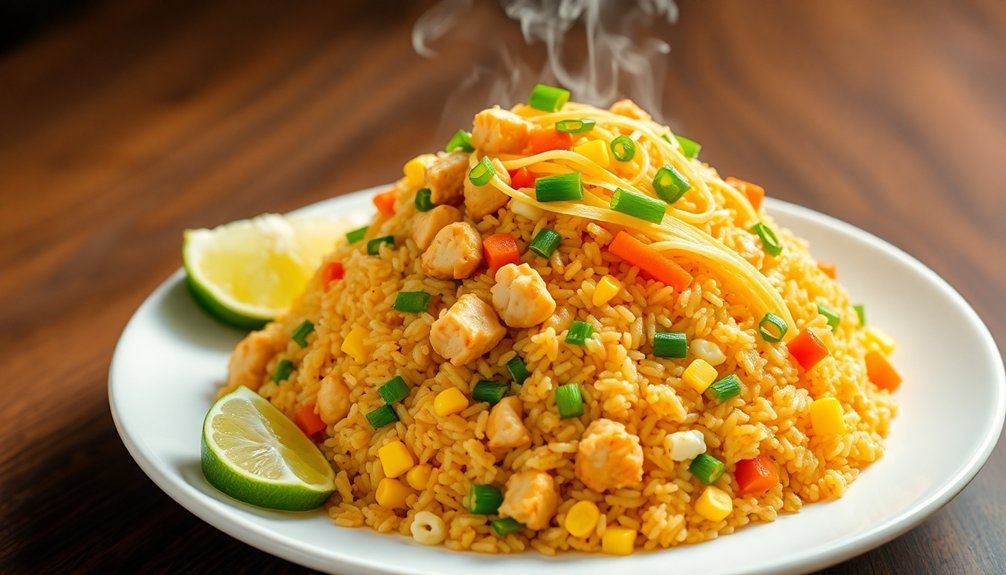
While achieving restaurant-quality khao pad gai requires practice, mastering a few key techniques will elevate your results.
Start with day-old jasmine rice that’s been chilled – fresh rice will become mushy. Heat your wok until it’s smoking before adding oil, as this prevents sticking and creates that coveted wok hei flavor.
If you don’t have a wok, you can substitute a large flat-bottomed skillet, though you’ll need to work in smaller batches. Keep your ingredients moving constantly and cook at high heat.
Don’t overcrowd the pan, or you’ll steam rather than fry the rice. When making ingredient substitutions, you can use brown rice instead of jasmine, but avoid sticky rice varieties as they’ll clump together.
Final Thoughts
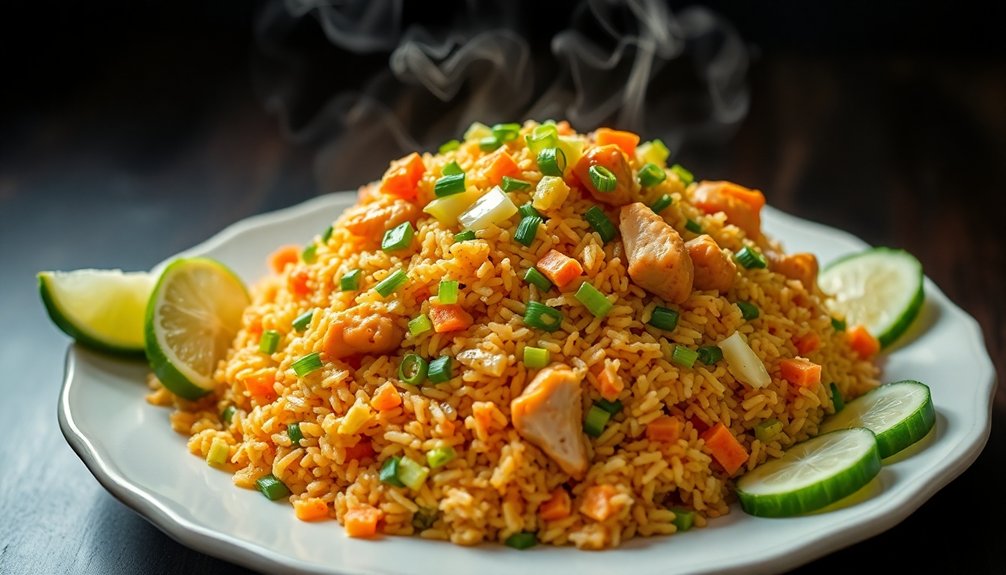
Making khao pad gai at home opens up a world of possibilities for customization and creativity.
You’ll discover that this versatile Thai dish can adapt to your preferences while maintaining its authentic charm.
- You’ll appreciate how you can adjust the spice levels to match your tolerance, from mild to fiery hot, making each plate uniquely yours.
- You’re in control of the health benefits by choosing lean proteins, fresh vegetables, and quality oils.
- You’ll master flavor variations by experimenting with different sauces, from traditional fish sauce to vegetarian alternatives.
- You can transform leftovers into exciting new meals, reducing food waste while creating delicious results.
Frequently Asked Questions
Can I Substitute Brown Rice for White Rice in Khao Pad Gai?
You can substitute brown rice, though it’ll give a nuttier texture. While you’ll get more fiber and nutritional benefits, brown rice won’t absorb flavors quite as well as traditional white rice.
How Long Does Leftover Thai Chicken Fried Rice Stay Fresh in the Refrigerator?
For ideal leftover storage, you’ll want to eat your fried rice within 3-4 days when refrigerated. Keep it in an airtight container and practice proper rice preservation by cooling it quickly before storing.
Is Khao Pad Gai Typically Eaten for Breakfast or Dinner in Thailand?
Like a sunrise blessing, Thai meal times are flexible. You’ll find locals enjoying this dish for breakfast, especially with leftover rice, but it’s equally popular for dinner too.
What’s the Best Way to Reheat Thai Chicken Fried Rice?
You’ll get better results using stovetop reheating – heat oil in a pan and stir-fry until hot. If you’re short on time, sprinkle water before using the microwave method.
Can I Make Khao Pad Gai Without Using Fish Sauce?
You can substitute fish sauce with soy sauce, coconut aminos, or mushroom sauce for vegetarian khao pad. While the umami flavor will differ slightly, you’ll still achieve a delicious and authentic-tasting dish.