
Khao Moo Daeng - Red BBQ Pork With Rice and Special Sauce
You'll discover authentic Thai-Chinese fusion cuisine at its finest with Khao Moo Daeng, a beloved street food dish from Bangkok's bustling Chinatown. This aromatic combination features tender red BBQ pork marinated in five-spice powder and fermented red bean curd, served over jasmine rice and drizzled with a sweet-savory sauce. Each plate comes garnished with Chinese kale, cucumbers, and hard-boiled eggs - a harmonious blend that'll transport your senses straight to Thailand's vibrant food scene.
Key Takeaways
- Khao Moo Daeng is a Thai dish featuring sliced red BBQ pork served over steamed jasmine rice with a special sauce.
- The signature red color comes from fermented red bean curd, introduced by Chinese immigrants to Thailand.
- Key ingredients include pork shoulder/belly, five-spice powder, soy sauces, and a special sauce made from pork stock.
- The dish is typically served with blanched Chinese kale, hard-boiled eggs, and cucumber slices.
- The pork is marinated in spices, slow-roasted until tender, and served with a sweet-savory sauce over rice.
History
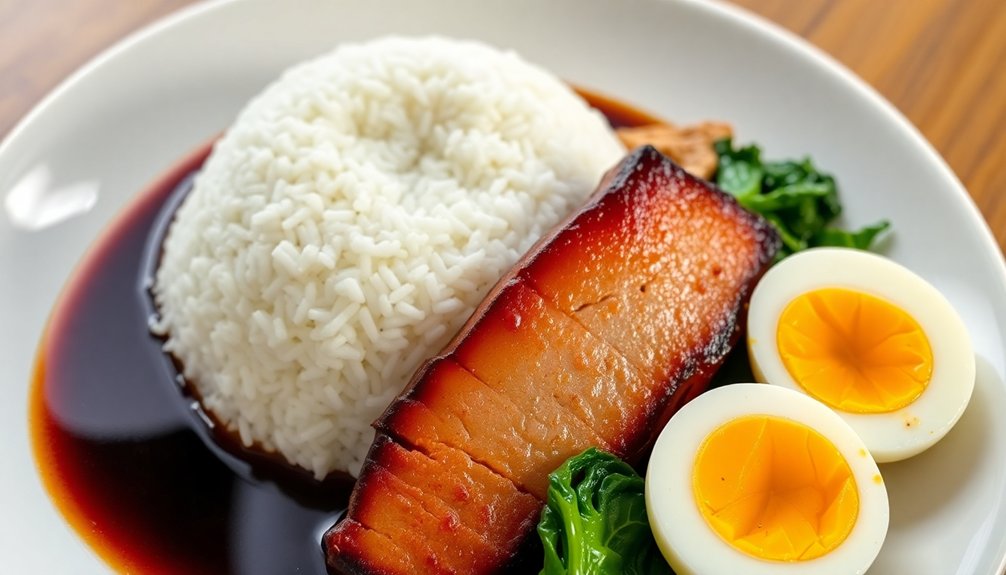
While the exact origins of Khao Moo Daeng remain debated, this iconic Thai street food emerged in Chinese-Thai communities during the early 20th century.
Chinese immigrants brought their expertise in roasting meats and adapted their techniques to local Thai ingredients and tastes, creating a delicious fusion that's become a cornerstone of Thai cuisine.
You'll find that the dish evolved as Chinese barbecue methods merged with Thai culinary traditions, particularly in Bangkok's Chinatown district.
The signature red color comes from fermented red bean curd and other spices - a technique Chinese immigrants introduced.
Over time, Thai street vendors perfected the balance of sweet, savory, and spicy flavors that characterize today's Khao Moo Daeng, making it a beloved staple of Thailand's vibrant food scene.
Recipe
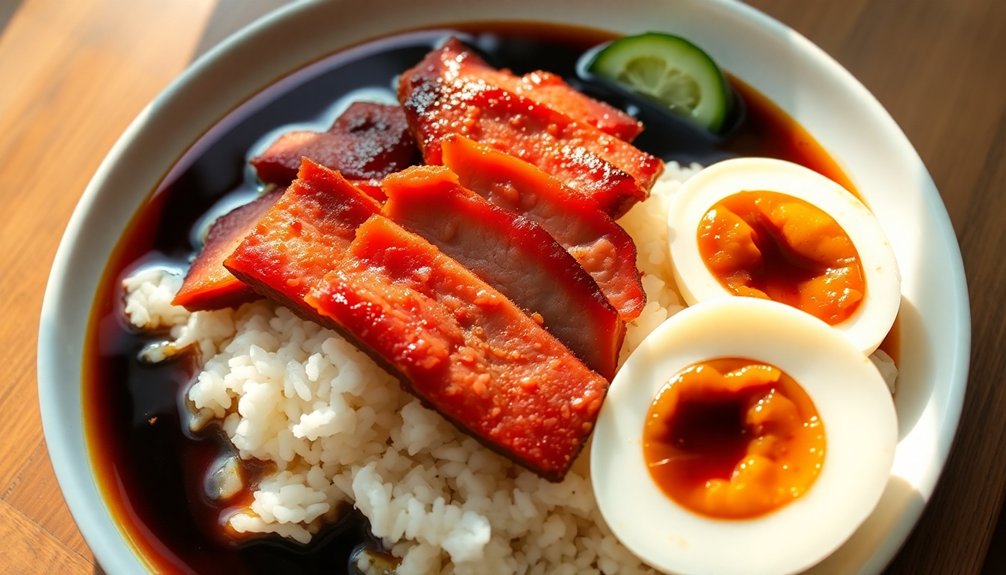
For the BBQ Pork (Moo Daeng):
1 lb pork shoulder or pork belly
2 tablespoons five-spice powder
2 tablespoons light soy sauce
2 tablespoons dark soy sauce
2 tablespoons honey
2 tablespoons hoisin sauce
1 tablespoon rice wine
2 cloves garlic, minced
1/4 teaspoon white pepper
For the Red Sauce:
1 cup pork stock
2 tablespoons red fermented tofu
1 tablespoon dark soy sauce
1 tablespoon light soy sauce
1 tablespoon oyster sauce
1 tablespoon sugar
1/4 teaspoon five-spice powder
For Serving:
Steamed jasmine rice
Chinese kale or bok choy, blanched
Hard-boiled eggs, halved
Cucumber slices
Instructions:
- Marinate pork in combined BBQ marinade ingredients for 4-6 hours.
- Preheat oven to 350°F (175°C).
- Place pork on a rack over a baking tray.
- Roast for 45-60 minutes, basting every 15 minutes.
- For sauce, combine all ingredients in saucepan.
- Simmer sauce for 10 minutes until thickened.
- Slice cooked pork thinly.
- Serve over rice with sauce, vegetables, and eggs.
Cooking Steps

To prepare authentic khao moo daeng, you'll first cut your pork into thin strips and marinate them in a fragrant mix of five-spice powder, soy sauce, and garlic.
As the meat absorbs the marinade's rich flavors, you'll slow-roast it until fork-tender while preparing a classic Thai sweet soy sauce infused with star anise and cinnamon.
You'll then arrange the succulent roasted pork over steamed jasmine rice and drizzle it generously with the aromatic sauce.
Step 1. Cut Pork Into Strips
Slicing the pork into thin, uniform strips is essential for achieving the signature texture of Khao Moo Daeng. You'll want to start your pork preparation by guaranteeing the meat is well-chilled, making it easier to achieve clean cuts.
Using a sharp knife, slice against the grain into strips approximately 1/8 inch thick and 2-3 inches long. For the best meat slicing results, position your knife at a 45-degree angle and use smooth, consistent motions.
You'll notice the meat's natural muscle fibers - always cut perpendicular to these lines. If you're working with pork belly, trim excess fat first but leave a thin layer for flavor.
Keep your strips as uniform as possible to guarantee even cooking and that classic Khao Moo Daeng appearance that Thai street vendors have perfected over generations.
Step 2. Marinate Pork in Spices
Once your pork strips are ready, you'll begin the aromatic marination process that gives Khao Moo Daeng its distinctive red-hued charm.
In a large bowl, combine Chinese five-spice powder, white pepper, garlic powder, and a touch of cinnamon. Add red fermented bean curd, which provides the signature color and depth of flavor traditional to this Thai-Chinese dish.
Mix your marinade ingredients with honey, soy sauce, and Shaoxing wine until well blended. Coat each pork strip thoroughly in this rich spice combination, ensuring even coverage.
Press the marinade into the meat with your fingers to help the flavors penetrate deeply. Cover the bowl with plastic wrap and let the pork marinate in the refrigerator for at least 4 hours, though overnight is best for ideal flavor development.
Step 3. Slow-Roast Pork Until Tender
After your pork has absorbed the aromatic marinade, preheat your oven to 325°F (165°C) and arrange the marinated strips on a wire rack set over a foil-lined baking sheet.
This slow roasting technique allows the fat to render gradually while keeping the meat moist and flavorful.
Roast the pork for 1.5 to 2 hours, turning the pieces every 30 minutes to guarantee even cooking.
You'll know the meat is ready when it's developed a deep reddish-brown color and feels tender when pierced with a fork.
Don't rush this process - slow roasting is essential for breaking down the tough muscle fibers into succulent, melt-in-your-mouth meat.
If you notice the surface browning too quickly, tent the pork loosely with foil to prevent burning while maintaining the perfect texture.
Step 4. Make Sweet Soy Sauce
While your pork roasts to perfection, you'll want to prepare the essential sweet soy sauce that gives khao moo daeng its signature flavor profile.
Start by combining equal parts dark and light soy sauce in a small saucepan. Add palm sugar, rock sugar, or brown sugar until you achieve the desired sweetness level - traditionally, the sauce should have a noticeable sweet undertone without overwhelming the savory elements.
For flavor enhancement, introduce five-spice powder, a dash of white pepper, and a small piece of cinnamon bark.
Simmer the mixture over low heat, stirring occasionally until it thickens slightly and develops a glossy sheen. The sauce should coat the back of a spoon but remain pourable.
Once cooled, strain the sauce to remove any solid spices.
Step 5. Serve Over Steamed Rice
Before plating this cherished Thai dish, you'll need perfectly steamed jasmine rice as the foundation.
Mound a generous portion of hot steamed rice in the center of each plate, creating a pristine white canvas for the vibrant toppings to follow. Layer thin slices of the red BBQ pork across the rice, allowing the meat's rich color to contrast beautifully with the grain below.
Drizzle your homemade sweet soy sauce generously over the pork and rice, letting it cascade down the sides.
For authentic serving suggestions, garnish with fresh cucumber slices, cilantro sprigs, and a sprinkle of white pepper. Traditional Thai presentations often include a small bowl of clear soup (nam sai) on the side to cleanse the palate between bites of this savory dish.
Cooking Tips

To achieve the signature red color and tender texture of Khao Moo Daeng, you'll need to master the art of slow-roasting the pork. Start by marinating the meat overnight in Chinese five-spice powder, red fermented bean curd, and honey to develop deep flavors.
When roasting, maintain a steady temperature of 325°F (163°C) and baste the meat every 30 minutes with the marinade. Your cooking techniques should focus on even heat distribution - place the pork on a rack to allow hot air circulation.
For flavor enhancements, brush the meat with maltose or honey during the final 15 minutes to create that characteristic glossy finish.
Don't rush the process; the pork should roast for about 2 hours or until it reaches an internal temperature of 145°F (63°C). Let it rest for 10 minutes before slicing.
Final Thoughts
Mastering Khao Moo Daeng stands as a tribute to the rich heritage of Thai-Chinese street food culture.
When you prepare this dish at home, you're not just cooking a meal - you're participating in culinary traditions that have evolved over generations of street vendors and home cooks.
You'll find that the layered flavor profiles of the sweet-savory sauce, tender red-hued pork, and crispy pork belly create an experience that's greater than the sum of its parts.
The combination represents the perfect balance that Thai cuisine is famous for.
Whether you're serving it for a weekday lunch or a special dinner, this dish delivers the authentic taste of Bangkok's bustling streets.
Frequently Asked Questions
How Long Can Leftover Khao Moo Daeng Be Stored in the Refrigerator?
You'll want to follow proper leftover storage rules - keep it refrigerated for up to 3-4 days max. For best results, store the meat, rice, and sauce separately during refrigeration.
Can I Substitute Red Food Coloring With Natural Alternatives?
Over 70% of chefs now prefer natural dyes. You can use beetroot juice, annatto seeds, or red fermented rice (angkak) as food dye substitutes for authentic coloring that's both traditional and healthier.
Which Regions of Thailand Is This Dish Most Popular In?
You'll find this savory dish most commonly in Bangkok's bustling streets, where vendors serve it from dawn to dusk. It's also deeply rooted in Southern Thailand's culinary traditions and local markets.
Why Does My Pork Become Tough After Cooking?
Your precious pork's tenderness could be slipping away because you're overcooking it. Watch your cooking techniques closely - high heat and extended cooking times can transform juicy meat into tough bites.
Can Vegetarians Adapt This Recipe Using Meat Alternatives?
You'll find seitan or tempeh work perfectly as meat alternatives for this dish. Their firm textures absorb marinades well, and you can season them with traditional five-spice powder and sweet soy sauce.