
Kanom Krok - Coconut Rice Pancakes
Kanom krok are traditional Thai coconut-rice pancakes you'll find sizzling at street food stalls across Thailand. These small, round treats feature crispy edges and creamy centers made from rice flour, coconut milk, and simple seasonings cooked in a special dimpled pan. You'll love their perfect balance of sweet and savory flavors, topped with green onions or corn. Mastering these beloved pancakes connects you to centuries of Thai culinary heritage and time-honored cooking techniques.
Key Takeaways
- Kanom Krok is a traditional Thai dessert featuring crispy edges and creamy centers, made primarily from rice flour and coconut milk.
- Cooked in a special cast-iron pan with round indentations, these small pancakes combine sweet and savory flavors.
- The batter requires rice flour, coconut milk, water, and salt, with toppings like green onions or corn added before serving.
- Cooking takes 25-30 minutes at medium-low heat, yielding 20-24 pieces of perfectly crispy-edged, creamy-centered pancakes.
- Popular as street food in Thailand, these coconut-rice pancakes are traditionally served during ceremonies and festivals.
History
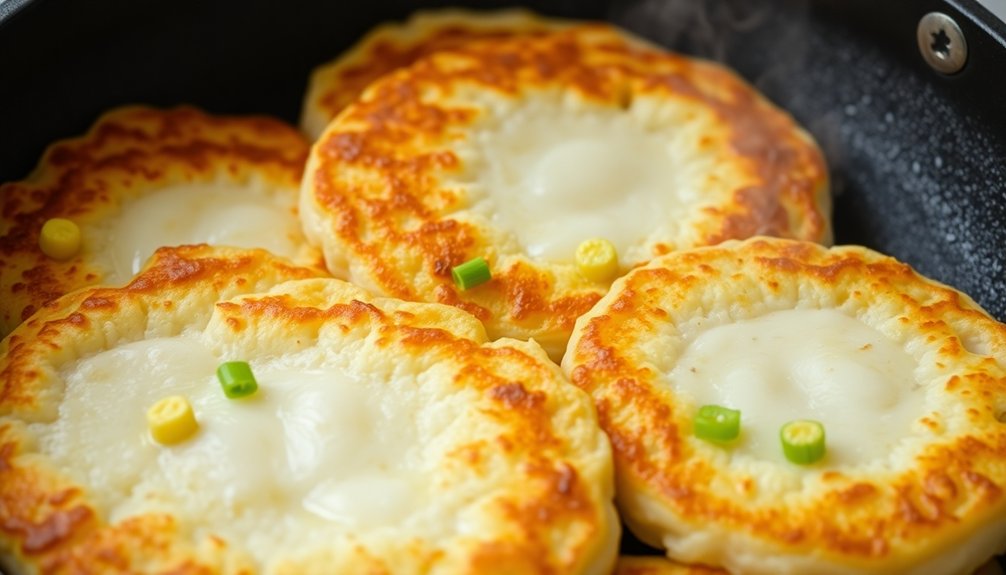
Although the exact origins remain unclear, Kanom Krok emerged as a beloved street food in Thailand during the Sukhothai period (1238-1438).
You'll find these coconut-rice pancakes deeply rooted in Thai origins, with their distinctive preparation method passed down through generations of street vendors and home cooks.
The cultural significance of Kanom Krok extends beyond its role as a mere snack.
You'll discover that these half-spherical delicacies have traditionally been served during important ceremonies and festivals.
The dish's popularity grew considerably during the Ayutthaya period, when coconut-based desserts became increasingly prominent in Thai cuisine.
Today, you'll still see vendors carefully preparing these treats in specially-designed cast iron pans, maintaining the authentic cooking techniques that have endured for centuries.
Recipe
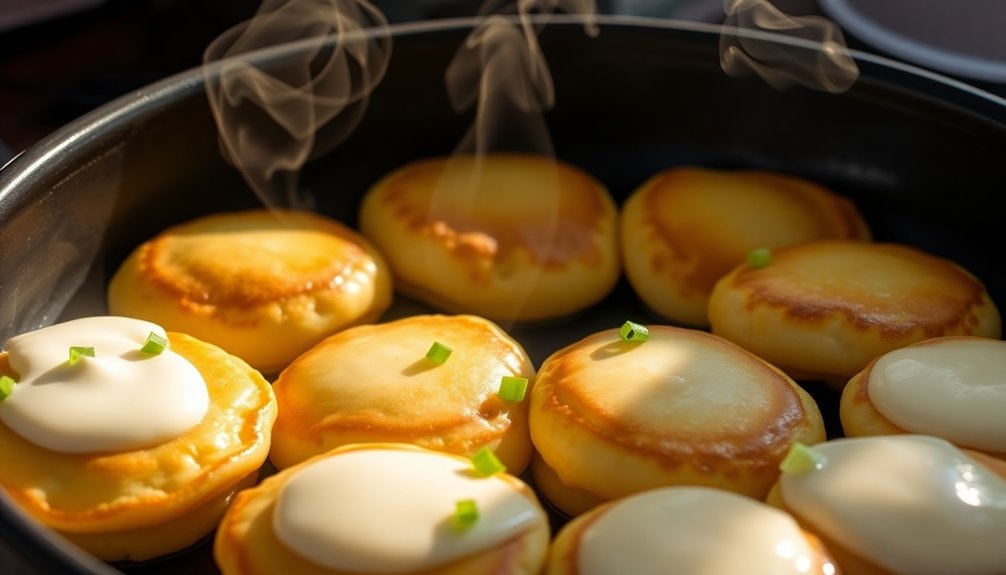
Ingredients:
- 2 cups rice flour
- 1 cup coconut milk
- 1/2 cup water
- 2 tablespoons cooked rice
- 1 teaspoon salt
- 1/2 teaspoon sugar
- Green onions (chopped)
- Corn kernels
For topping:
- 1 cup thick coconut cream
- 1/4 teaspoon salt
- 2 tablespoons sugar
Instructions:
- Blend rice flour, coconut milk, water, cooked rice, salt, and sugar until smooth.
- Let batter rest for 30 minutes.
- Heat Kanom Krok pan over medium heat.
- Brush pan indentations with oil.
- Pour rice batter to fill each indentation halfway.
- Mix coconut cream with salt and sugar for topping.
- Add topping mixture to each indentation.
- Sprinkle green onions and corn on top.
- Cover and cook over low heat for 5-7 minutes until edges are crispy.
- Remove from pan using a spoon or spatula.
- Serve hot.
Cook Time: 25-30 minutes
Yield: 20-24 pieces
Cooking Steps
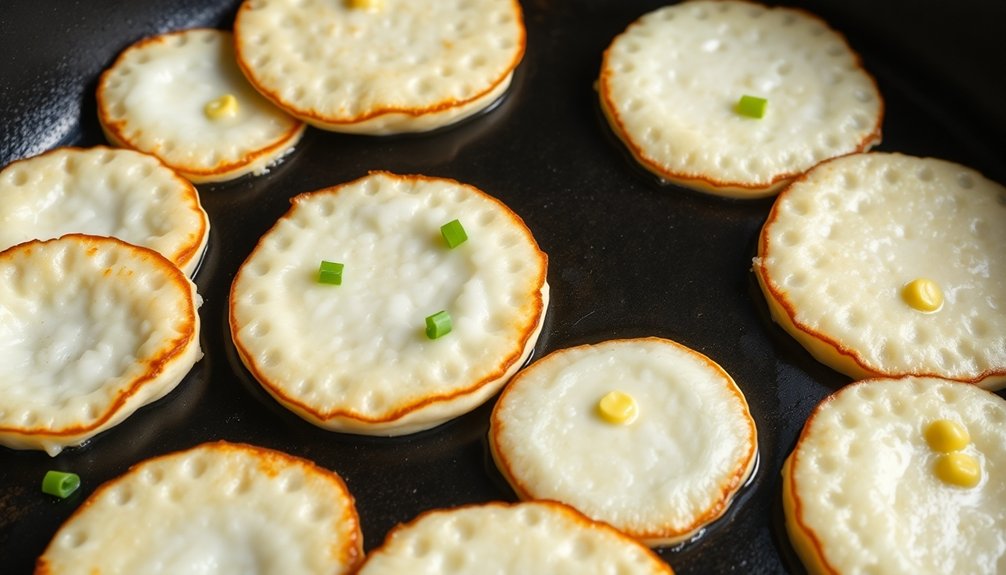
You'll begin by thoroughly mixing your rice flour batter until it reaches a smooth, pourable consistency.
Next, heat your traditional Kanom Krok pan over medium heat before pouring the coconut milk mixture into each dimpled well, then carefully ladle the rice flour batter on top.
Once the edges turn golden brown and start to pull away from the pan, cover and cook for 2-3 minutes until the pancakes are set, then remove and serve these crispy-edged Thai treats immediately.
Step 1. Mix Rice Flour Batter
Combine the rice flour, coconut milk, water, and salt in a large mixing bowl until you achieve a smooth consistency similar to that of heavy cream.
The rice flour batter should be free of any lumps - if needed, strain it through a fine-mesh sieve to guarantee perfect smoothness.
Let the mixture rest for about 15 minutes to allow the rice flour to fully hydrate.
Check the batter consistency by lifting your whisk or spoon - the batter should flow steadily in a ribbon-like stream.
If it's too thick, add coconut milk one tablespoon at a time. If it's too thin, incorporate small amounts of rice flour until you reach the ideal pouring consistency.
Don't overmix, as this can make your pancakes tough.
Step 2. Heat Kanom Krok Pan
With your batter properly prepared, focus turns to heating the traditional Kanom Krok pan. Place the pan over medium heat and let it warm up gradually for about 5 minutes.
You'll want to maintain consistent heat settings throughout the cooking process - too hot and the pancakes will burn, too cool and they won't develop their signature crispy edges.
Before adding any batter, season the pan by brushing each indentation with coconut oil. This step is essential for proper pan maintenance and guarantees your pancakes won't stick.
Test the temperature by sprinkling a few drops of water into the cavities - if they sizzle immediately, your pan is ready. If the water evaporates instantly, reduce the heat slightly before proceeding with the batter.
Step 3. Pour Coconut Milk Mixture
Gently ladle the creamy coconut milk mixture into each depression of your heated Kanom Krok pan, filling them about 2/3 full. Be careful not to overfill, as the batter will expand slightly during cooking.
You'll want to achieve the perfect balance for the classic dome shape of these traditional Thai coconut pancakes.
Watch as the edges of the coconut milk mixture begin to set and small bubbles form on the surface. This indicates it's time for the next step.
The consistency of your batter is essential - it should be smooth and pourable, but not too thin. If you've prepared the mixture correctly, you'll notice it starting to develop that characteristic pancake texture, with a slight crust forming around the edges while maintaining a creamy center.
Step 4. Cover and Cook Pancakes
Once your Kanom Krok pan's depressions are filled with the coconut mixture, close the lid to trap the heat and create an even cooking environment.
Let the pancakes cook for about 3-4 minutes until you notice the edges turning golden brown and slightly crispy.
Using traditional cooking techniques, carefully lift the lid to check if the pancakes have set. They should be firm to the touch with a creamy center.
If needed, add classic pancake toppings like chopped green onions or corn kernels while they're still cooking.
Replace the lid and continue cooking for another 1-2 minutes until the toppings are warm and the pancakes achieve that signature crispy exterior.
You'll know they're done when the edges are deep golden brown and easily release from the pan.
Step 5. Remove and Serve Pancakes
After the kanom krok have achieved their golden-brown crust, you'll need to carefully remove them from their molds using a small spoon or traditional bamboo skewer.
For authentic presentation techniques and serving suggestions, follow these traditional Thai methods:
- Arrange pairs of kanom krok together, with their rounded sides touching to form complete spheres.
- Place them on a banana leaf-lined plate or traditional bamboo basket for an authentic look.
- Serve immediately while they're still hot and crispy on the outside, soft on the inside.
- Garnish with finely chopped green onions or coconut shavings for added visual appeal.
- Present with a small side of sweet chili sauce or palm sugar syrup for dipping.
These delicate treats are best enjoyed fresh, ideally within minutes of cooking, to experience their perfect texture and warmth.
Cooking Tips
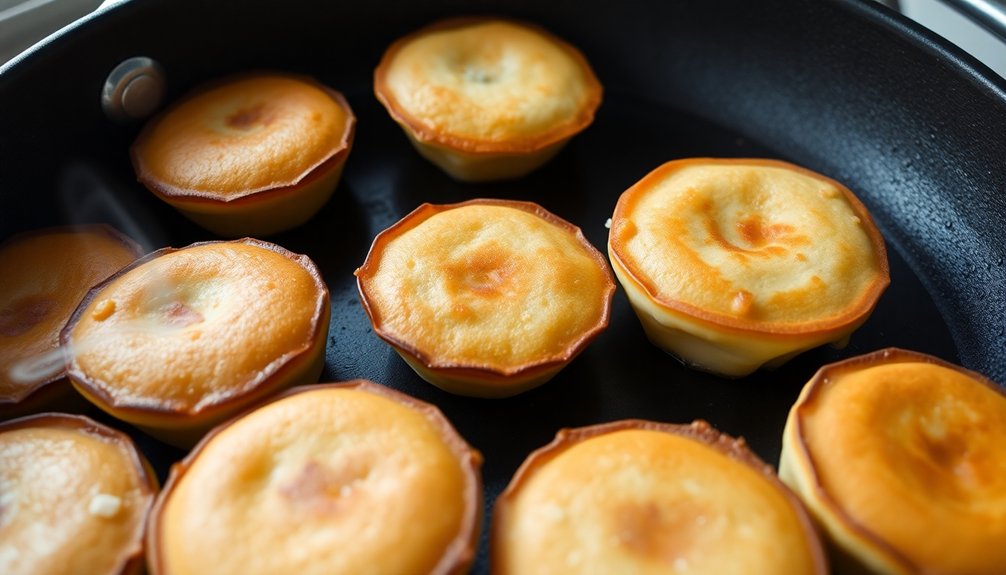
To achieve perfectly crispy kanom krok, the temperature of your pan must stay consistent throughout cooking.
You'll want to maintain medium-low heat to guarantee the pancakes develop a golden-brown crust while keeping their centers creamy. When pouring the batter, don't overfill the indentations - about 3/4 full is ideal.
For advanced cooking techniques, try rotating your pan halfway through cooking to guarantee even browning.
If you're making substitutions, you can use regular milk instead of coconut milk, though this will affect the authentic taste. Rice flour is essential and shouldn't be substituted.
Always make certain your pan is well-seasoned before starting, and clean it thoroughly between batches to prevent sticking and maintain consistent results.
Final Thoughts

While making kanom krok requires patience and practice, mastering these traditional Thai coconut pancakes will reward you with a delightful treat that's perfect for breakfast or afternoon tea.
The cultural significance and serving suggestions of kanom krok extend beyond its delicious taste:
- You'll connect with centuries of Thai culinary tradition when preparing this beloved street food.
- You're preserving an authentic cooking method that's been passed down through generations.
- You can serve them fresh and hot as a welcoming gesture to guests, honoring Thai hospitality.
- You'll find they pair wonderfully with Thai iced tea or coffee for a complete experience.
- You're participating in a dish that brings people together, as street food vendors have done for generations in Thailand's bustling markets.
Frequently Asked Questions
Can Kanom Krok Be Made Without a Traditional Thai Pancake Pan?
Like repurposing grandma's old silver dollar molds, you'll find several alternative cooking methods work well. You can use mini muffin tins or takoyaki pans as pancake pan substitutes to achieve similar results.
How Long Can Leftover Kanom Krok Be Stored in the Refrigerator?
You'll want to eat your leftovers within 2-3 days for best quality. Store them in an airtight container in your fridge, and reheat gently before serving to restore their crispy texture.
What Are Good Substitutes for Rice Flour in Kanom Krok?
You'll find all-purpose gluten-free flour, mochiko (sweet rice flour), or a blend of almond and cornstarch work well as alternative flours, though the texture won't be quite as authentic.
Why Do My Kanom Krok Pancakes Sometimes Turn Out Flat and Dense?
Like a soufflé that falls flat, your pancakes' density issues likely stem from overmixing the batter, using cold ingredients, or having incorrect proportions of liquid to dry ingredients.
Can the Batter Be Prepared the Night Before Making Kanom Krok?
You can prepare and store the batter overnight, but you'll need to keep the rice and coconut mixtures separate until cooking time. Just refrigerate both portions and combine them fresh.