
How To make Kanom Ba Bin - Coconut Pancake
Kanom Ba Bin is a traditional Thai coconut pancake with centuries of history. You'll need rice flour, palm sugar, coconut milk, salt, and grated coconut to create this dessert's complex flavors and satisfying textures. Mix dry ingredients, combine with heated coconut milk, then steam for about 30 minutes. Serve these sweet treats at casual gatherings or Buddhist festivals to experience Thailand's rich culinary heritage. Discover how this simple pancake connects generations through its adaptable yet traditional preparation methods.
Key Takeaways
- Kanom Ba Bin is a traditional Thai coconut pancake made with rice flour, palm sugar, and grated coconut.
- The dessert features a complex flavor profile balancing sweetness with coconut richness and varied textures.
- Preparation involves mixing dry ingredients with heated coconut milk, then steaming the batter for approximately 30 minutes.
- Proper cooking requires medium heat, consistent batter, and filling molds three-quarters full to allow for expansion.
- This Thai dessert holds cultural significance in ceremonies and Buddhist festivals, representing culinary heritage passed through generations.
History
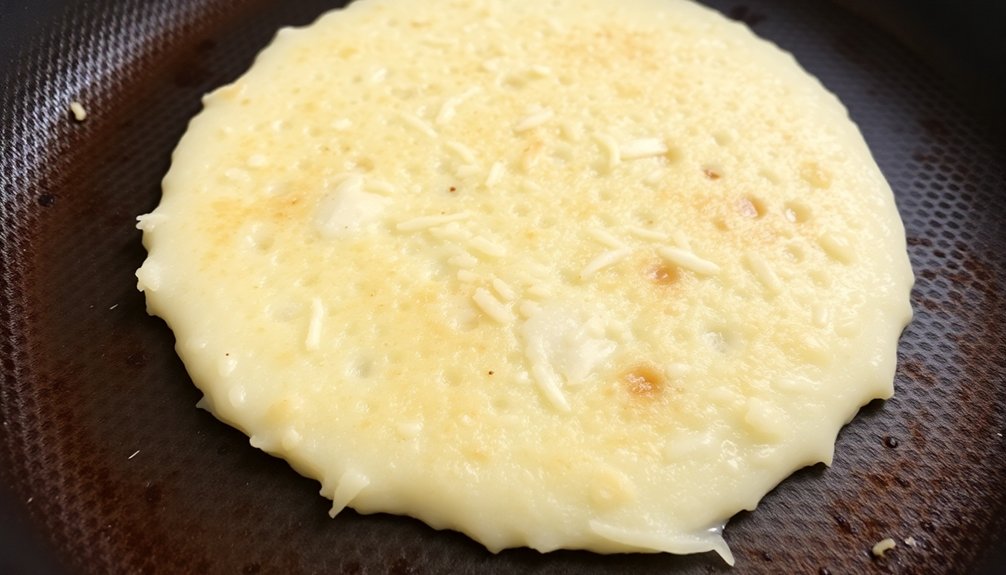
Although the exact origins of Kanom Ba Bin remain somewhat obscure, this traditional Thai coconut pancake dates back several centuries in Thailand's culinary history.
You'll find it has evolved from ancient palace recipes to become a beloved street food across the country.
The dessert holds significant cultural significance, especially in central and southern Thailand where coconut palms thrive.
As trade routes expanded throughout Southeast Asia, you'll notice regional variations emerged, with some areas adding pandan leaves for color or aromatics like jasmine essence.
During traditional ceremonies and Buddhist festivals, you'll often see Kanom Ba Bin served as an offering.
Its resilience in Thai cuisine demonstrates how simple ingredients like coconut milk, rice flour, and palm sugar connect modern Thais to their ancestral food practices.
Recipe
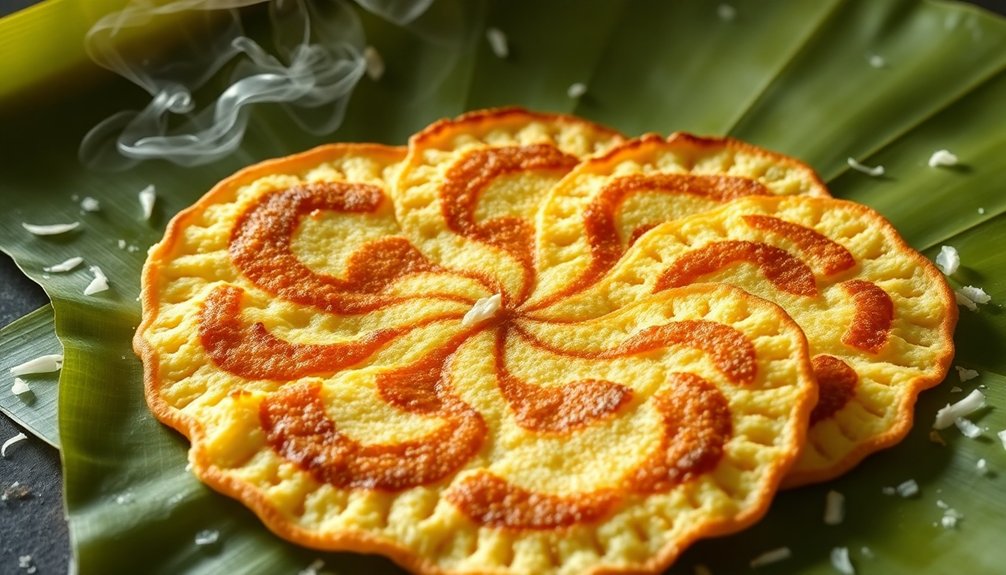
Ingredients
- 200g rice flour
- 100g palm sugar
- 200ml coconut milk
- 1/4 tsp salt
- 2 tbsp grated coconut (for garnishing)
Instructions
- In a mixing bowl, combine rice flour and salt.
- Heat coconut milk in a small saucepan until warm.
- Gradually pour the warm coconut milk into the rice flour, stirring continuously to avoid lumps.
- Melt the palm sugar in a separate pan over low heat until completely dissolved.
- Pour the melted palm sugar into the rice flour mixture and stir well until fully incorporated.
- Grease a round baking pan with a small amount of oil.
- Pour the batter into the greased pan.
- Steam over medium heat for about 30 minutes or until firm.
- Allow to cool before cutting into diamond or square shapes.
- Sprinkle grated coconut on top before serving.
Cooking Steps

To cook Kanom Ba Bin properly, you'll first need to mix coconut flakes thoroughly into your batter until fully incorporated.
Heat your skillet until hot, pour the batter evenly across the surface, and wait patiently until bubbles appear before flipping with a spatula.
Your traditional Thai coconut pancakes should have a golden-brown exterior when done and are best served with a sweet dipping sauce on the side.
Step 1. Mix Coconut Flakes Thoroughly
Sprinkle the prepared coconut flakes into your kanom ba bin mixture, ensuring they're distributed evenly throughout the batter.
Use a silicone spatula to fold gently but thoroughly, maintaining the airy texture while incorporating the coconut's rich flavor. The flakes not only enhance the traditional taste but also provide coconut benefits like natural fiber and healthy fats.
For uniform distribution, rotate your bowl as you fold, reaching the bottom of the mixture with each stroke.
Don't rush this process—proper integration creates consistent texture throughout your Thai pancake. You'll know you've achieved the right consistency when the flakes are visible but not clumped together.
If you're exploring pancake variations, consider toasting half your coconut flakes beforehand for deeper flavor profiles while keeping the rest raw for traditional texture.
Step 2. Heat Skillet Until Hot
Place your skillet over medium-high heat and allow it to warm thoroughly before adding your kanom ba bin batter. The proper skillet temperature is vital for achieving the signature crispy edges and soft center of these traditional Thai coconut pancakes.
Wait until you can feel radiating heat when you hold your hand about an inch above the surface.
Brush a light coating of cooking oil across the heated surface. You'll know the skillet is ready when the oil shimmers slightly but doesn't smoke. If smoke appears, your temperature is too high—reduce the heat before proceeding.
Coconut oil works wonderfully for authentic flavor, but any neutral cooking oil will suffice. The hot, oiled surface guarantees your pancakes won't stick and creates that characteristic golden-brown exterior that makes kanom ba bin so irresistible.
Step 3. Pour Batter Evenly
With your skillet properly heated and oiled, you're ready to pour the kanom ba bin batter. Using a ladle or measuring cup, scoop approximately ¼ cup of the mixture for each pancake.
Hold the ladle about 2-3 inches above the skillet and pour with a steady hand, allowing the batter to spread naturally into a circle about 4 inches in diameter.
The batter consistency should be thick enough to pour slowly yet fluid enough to settle evenly. Your pouring technique matters—start from the center and work outward in a small circular motion.
Don't pour too quickly or the pancake will be uneven. If needed, use the back of your ladle to gently spread the batter. For best results, cook only 2-3 pancakes at a time, leaving enough space between them for easy flipping.
Step 4. Flip When Bubbles Appear
Watching carefully, you'll know it's time to flip your kanom ba bin when small bubbles begin to form across the surface and the edges turn slightly dry, usually after about 2-3 minutes of cooking.
These bubbles rising to the surface indicate that the batter is cooking through and the pancake is ready to turn.
Use a wide, thin spatula to execute your flipping technique. Slide it completely under the pancake with a swift, confident motion. Lift it slightly to guarantee it's fully detached from the pan, then flip it in one smooth movement.
Don't worry if your first flip isn't perfect – kanom ba bin is forgiving. The second side requires less cooking time, typically just 1-2 minutes until golden brown. The pancake should feel springy when lightly pressed.
Step 5. Serve With Sweet Dipping
Once your kanom ba bin pancakes are cooked to golden perfection, they're ready to be paired with their traditional sweet companion. The most authentic dipping option is a simple coconut-based sauce made by simmering coconut cream with palm sugar until it reaches a thick, syrupy consistency. You'll want to serve this warm alongside your pancakes.
For variety, you can prepare alternative sweet sauces like pandan-infused coconut syrup, caramelized banana sauce, or even a light ginger syrup.
Place your pancakes on a serving platter, cut them into manageable pieces, and arrange the dipping options in small bowls nearby. The contrast between the slightly savory pancakes and the sweet dipping sauces creates the perfect balance that makes kanom ba bin such a beloved Thai dessert.
Let your guests experiment with different combinations.
Cooking Tips
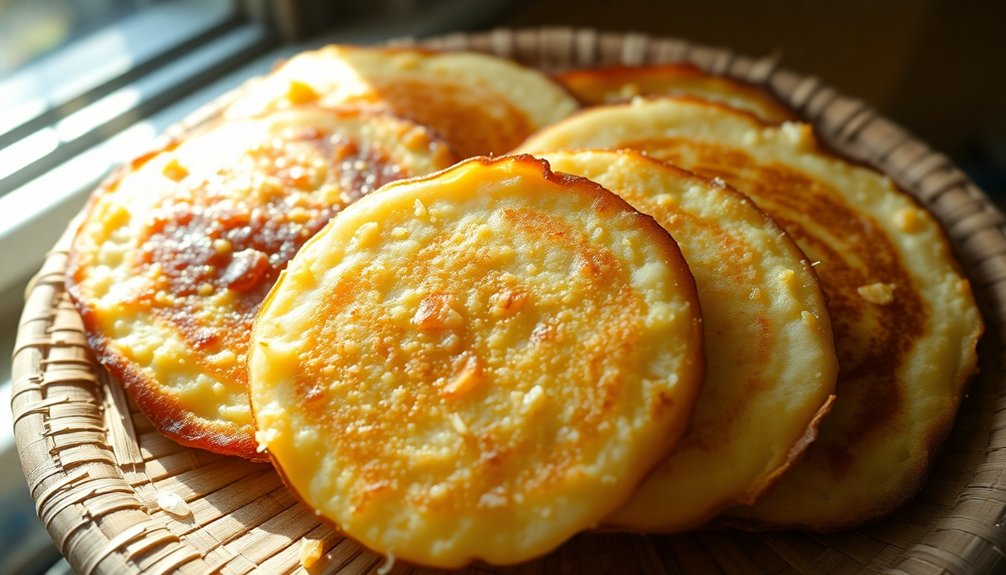
Successful preparation of Kanom Ba Bin requires attention to several critical details. First, verify your batter achieves the perfect consistency—not too thick or too thin.
When pouring into molds, fill them only three-quarters full to allow for expansion during cooking. For best results, maintain medium-low heat throughout the cooking process.
If you don't have traditional clay molds, you can substitute small ramekins or a muffin tin as alternative cooking techniques. Watch for bubbles forming on the surface and edges pulling away from the mold as signs of doneness.
For ingredient substitutions, brown sugar can replace palm sugar, though the flavor profile will slightly change.
If fresh coconut isn't available, use unsweetened desiccated coconut soaked in warm coconut milk for 15 minutes before incorporating.
Final Thoughts
Although seemingly simple, Kanom Ba Bin represents the perfect balance of Thai culinary tradition and accessible home cooking. This coconut pancake carries cultural significance beyond its delicious taste—it's a dish that connects generations through shared recipes and cooking techniques.
As you master this dessert, you'll likely develop your own variations that reflect your personal experiences with Thai cuisine. Whether you're preparing it for a casual family gathering or introducing friends to Thai desserts, Kanom Ba Bin offers both comfort and novelty.
The beauty of this dish lies in its unpretentious nature while delivering complex flavors and textures. It's a reminder that sometimes the most satisfying culinary experiences come from recipes that honor tradition while welcoming adaptation.
You've now joined countless others who keep this beloved Thai classic alive.
Frequently Asked Questions
Is Kanom Ba Bin Gluten-Free?
You'll want to check specific ingredients as traditional kanom ba bin isn't necessarily gluten-free. Rice flour is common, but some recipes include wheat flour, affecting those with dietary restrictions.
How Long Can I Store Leftover Kanom Ba Bin?
You can store leftovers in an airtight container at room temperature for 2-3 days or refrigerate for up to a week. Consider reheating them in a pan for storage tips or creating leftover recipes with ice cream.
What Substitutes Work for Palm Sugar in Kanom Ba Bin?
You can substitute palm sugar with brown sugar, coconut sugar, or jaggery. Each alternative offers different sweetness levels, so you'll need to adjust quantities based on your taste preference.
Can Kanom Ba Bin Be Frozen for Later Consumption?
Yes, you can freeze these treats! Wrap them individually in plastic, then foil for protection. Freezing techniques work best when they're completely cooled first. Storage tips: thaw at room temperature before enjoying.
Are There Regional Variations of Kanom Ba Bin Across Thailand?
You'll find regional differences in this dessert throughout Thailand. Northern versions often use palm sugar, while southern variations incorporate more coconut cream. Some regions add pandan or durian for distinct flavor variations.