
Kai Jeow - Thai-Style Omelet Often Served With Rice
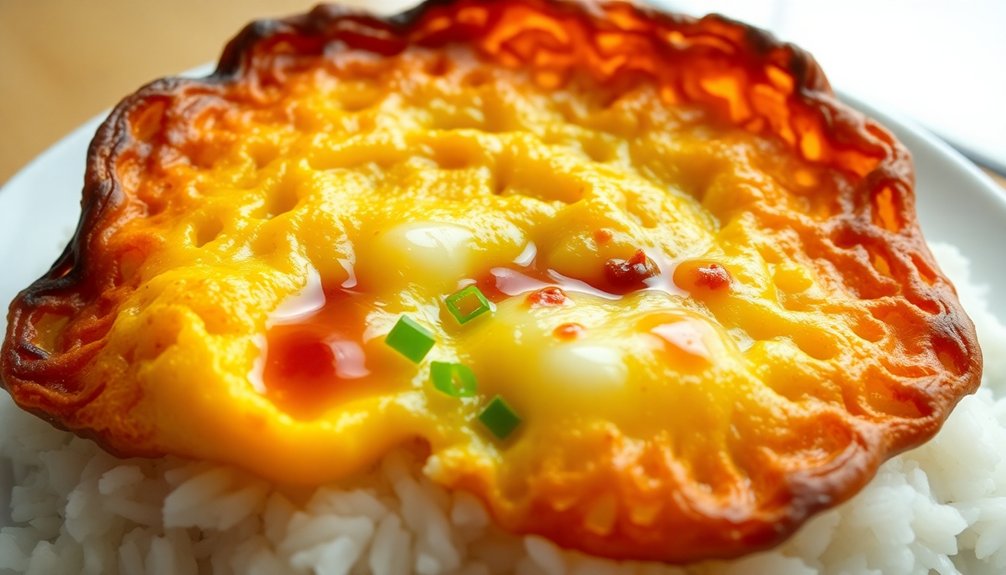
You'll find this beloved Thai street food combines beaten eggs, fish sauce, and white pepper, fried in hot oil until puffy with signature crispy edges and a tender center. The key to authentic kai jeow lies in vigorously whisking the eggs and using enough oil to achieve those characteristic lacy edges. Serve your omelet hot over steamed rice with Thai chili sauce for a quick, satisfying meal that reveals Thailand's rich culinary heritage.
Key Takeaways

- Kai Jeow is a crispy Thai omelet made with eggs, fish sauce, and white pepper, traditionally served over steamed rice.
- The omelet features distinctive puffy texture and crispy edges achieved through high-heat cooking in generous oil.
- A popular street food and comfort dish in Thailand, Kai Jeow serves as a quick, protein-rich meal any time of day.
- The dish requires simple ingredients but specific technique: eggs must be whisked until frothy and cooked in very hot oil.
- Commonly accompanied by Thai chili sauce, Kai Jeow offers a satisfying combination of crispy exterior and fluffy interior.
History
While the exact origins of kai jeow remain unclear, this crispy Thai omelet emerged as a popular street food in Thailand's bustling markets during the mid-20th century.
You'll find it's become a cornerstone of Thai cuisine, particularly as a quick, affordable breakfast option for workers and students.
The dish reflects Thailand's resourceful cooking methods, where simple ingredients transform into satisfying meals.
Its cultural significance stems from being a comfort food that transcends social classes - you'll see it served in both humble street stalls and upscale restaurants.
The technique of creating a puffy, crispy-edged omelet with fish sauce has been passed down through generations of Thai families, making kai jeow not just a meal, but a cherished part of Thailand's culinary heritage.
Recipe

Ingredients:
- 2-3 eggs
- 1 tablespoon fish sauce
- 1/4 teaspoon white pepper
- 2-3 tablespoons vegetable oil
Instructions:
- Crack eggs into a bowl and add fish sauce and white pepper.
- Beat eggs vigorously until frothy, about 30 seconds.
- Heat oil in a wok or small frying pan over medium-high heat until very hot.
- Pour the beaten egg mixture into the hot oil.
- The edges will immediately puff and brown.
- Cook for about 1 minute until bottom is golden brown and crispy.
- Flip omelet and cook other side for 30 seconds.
- Fold omelet in half.
- Transfer to serving plate.
- Serve hot with steamed rice and Thai chili sauce.
Cooking time: 5 minutes
Serves: 1 person
Cooking Steps
Enter your text here...
You'll want to heat your oil in a wok until it's shimmering hot, then quickly beat your eggs with fish sauce and white pepper until well combined.
Pour the seasoned eggs into the center of the hot oil, allowing them to spread and puff while the edges turn golden brown and crispy.
Once the omelet's edges are properly crisped, flip them inward to form neat folds before sliding the finished kai jeow onto a bed of steaming jasmine rice.
Step 1. Heat Oil Until Shimmering
Before starting your Thai omelet, heat about 3 tablespoons of vegetable oil in a small wok or 8-inch skillet over medium-high heat until it begins to shimmer.
The oil temperature is vital for achieving the signature puffy texture of kai jeow. You'll know it's ready when you see subtle ripples across the surface and a slight haze rising from the pan.
If you drop a tiny bit of egg mixture into the oil, it should immediately sizzle and bubble up. Don't rush this step - properly heated oil guarantees your omelet will develop those characteristic crispy brown edges while maintaining a tender center.
If the oil's not hot enough, you'll end up with a flat, greasy omelet instead of the airy, crispy result that's fundamental to this Thai cooking technique.
Step 2. Beat Eggs With Seasonings
Crack 2-3 fresh eggs into a medium bowl, then add 1 tablespoon of fish sauce, 1/2 teaspoon of white pepper, and a splash of oyster sauce if desired.
Using chopsticks or a fork, beat the eggs vigorously with a quick, circular motion until they're well combined and slightly frothy.
The key to proper egg preparation lies in incorporating the seasonings thoroughly.
You'll want to beat until you don't see any separate egg white streaks, which typically takes about 30-45 seconds.
The fish sauce adds essential umami and saltiness, while white pepper brings subtle heat that's characteristic of Thai cuisine.
Don't worry if the mixture seems loose - this helps create the signature puffy texture of kai jeow when it hits the hot oil.
Step 3. Pour Beaten Eggs Quickly
Once the egg mixture is properly seasoned and beaten, heat about 1/4 cup of vegetable oil in a wok or small frying pan over medium-high heat until shimmering hot.
Test the oil's temperature by dropping a tiny bit of the egg mixture - it should sizzle immediately.
When the oil's ready, pour the beaten eggs from about 12 inches above the pan in one quick, steady stream. This cooking technique creates the signature ripples and bubbles that give kai jeow its unique texture.
The egg consistency will initially spread thin, then puff up dramatically as it hits the hot oil.
Don't worry if some oil splashes - it's part of the process. The high pour helps create those crispy, browned edges while keeping the center tender and fluffy.
Step 4. Flip Edges When Golden
After the edges start to turn golden brown and crisp up (about 1-2 minutes), gently lift one side of the omelet with your spatula to check the color underneath.
You'll want to see a deep golden color with some darker spots forming on the bottom surface.
Once you've achieved the right color, it's time for egg flipping. Using a wide spatula, carefully slide it under the omelet, making sure you've loosened any stuck edges.
In one swift motion, flip the omelet over. The golden edges should now create a slight curl around the perimeter.
Let it cook for another 30-45 seconds on this side until you see the same deep golden color developing.
The finished omelet should be crispy on the outside while maintaining a tender, slightly runny center.
Step 5. Serve Hot Over Steamed Rice
The perfectly cooked Thai omelet deserves a proper presentation to complete its journey from pan to plate.
While your omelet is still piping hot, slide it onto a mound of freshly steamed jasmine rice. The rice pairing is essential - it absorbs the omelet's savory juices while providing a neutral canvas for the dish's bold flavors.
For ideal serving temperature, don't let your omelet sit too long - it's best enjoyed when the edges are still crispy and the center remains tender and hot.
Place the dish on a warmed plate and garnish with fresh cilantro leaves and sliced chilies if desired. A small dish of Thai sriracha or nam pla prik (chili-infused fish sauce) on the side completes this classic comfort meal.
Cooking Tips

For perfectly crispy results, make sure your oil is hot enough by testing it with a drop of beaten egg - it should sizzle immediately on contact.
When beating your eggs, incorporate air by whisking vigorously for at least 30 seconds to achieve a fluffier texture.
Don't skimp on the oil - you'll need enough to create those signature crispy edges.
While fish sauce is traditional, you can substitute soy sauce if needed, though it will alter the authentic taste.
For extra flavor, add a pinch of white pepper or finely chopped garlic to your beaten eggs.
The key cooking technique is to let the edges get golden brown before flipping, and then briefly cook the other side.
You'll know it's done when the omelet is slightly puffed and golden brown on both sides.
Final Thoughts
Making kai jeow at home lets you experience an authentic taste of Thai street food culture while mastering a versatile dish that's both quick and satisfying.
Beyond its simplicity, this omelet carries cultural significance as a beloved comfort food that's deeply woven into Thailand's culinary fabric.
You'll find that kai jeow offers notable nutritional benefits, providing a protein-rich meal that's especially satisfying when paired with jasmine rice.
Whether you're cooking it for breakfast, lunch, or dinner, it's a practical dish that fits seamlessly into your meal rotation.
Once you've mastered the basic technique, you can experiment with different herbs and seasonings to create your own signature version while staying true to its Thai roots.
Frequently Asked Questions
Can I Substitute Fish Sauce With Something Else in Kai Jeow?
Like a ship without its anchor, fish sauce adds essential saltiness, but you can use soy sauce, coconut aminos, or liquid aminos as alternative sauces for vegetarian options.
How Long Can Leftover Thai Omelet Be Stored in the Refrigerator?
Store your leftover omelet in an airtight container for up to 2 days. For best storage tips, let it cool completely first. You can reheat it quickly in a pan or microwave.
Is Kai Jeow Traditionally Eaten for Breakfast, Lunch, or Dinner?
You'll find this golden-hued treasure gracing Thai tables throughout the day, thanks to its cultural significance and meal versatility. It's equally cherished whether you're enjoying it for breakfast, lunch, or dinner.
What Type of Rice Pairs Best With Kai Jeow?
You'll find jasmine rice pairs perfectly with its fluffy texture, though sticky rice is equally delicious. Both types of rice absorb the omelet's savory flavors and crispy edges wonderfully.
Why Does Thai Omelet Puff up More Than Regular Omelets?
You'll get that signature puff in Thai omelets because you're using very hot oil and quickly dropping beaten eggs into it, creating steam that makes the eggs balloon dramatically.