
Gai Pad Khing - Stir-Fried Chicken With Ginger
You'll discover authentic Thai flavors in Gai Pad Khing, a fragrant stir-fry combining tender chicken with the warmth of fresh ginger. This beloved dish showcases the perfect balance of savory soy sauce, aromatic garlic, and crisp vegetables cooked at high heat in a wok. It's a quick, satisfying meal that's deeply rooted in Thai culinary traditions, influenced by Chinese cooking methods. Master this dish, and you'll reveal the secrets of Thai home cooking.
Key Takeaways
- Gai Pad Khing is a Thai stir-fried dish combining chicken and fresh ginger as its main ingredients, typically served with rice.
- Fresh ginger, chicken thigh, soy sauce, and vegetables are essential ingredients that create the dish's distinctive flavor profile.
- High-heat stir-frying in a wok preserves ingredient freshness and ensures proper searing of chicken and vegetables.
- The sauce mixture includes oyster sauce, light and dark soy sauce, Shaoxing wine, sugar, and white pepper.
- Cut ingredients uniformly and add them in proper sequence while maintaining high heat for optimal texture and flavor development.
History
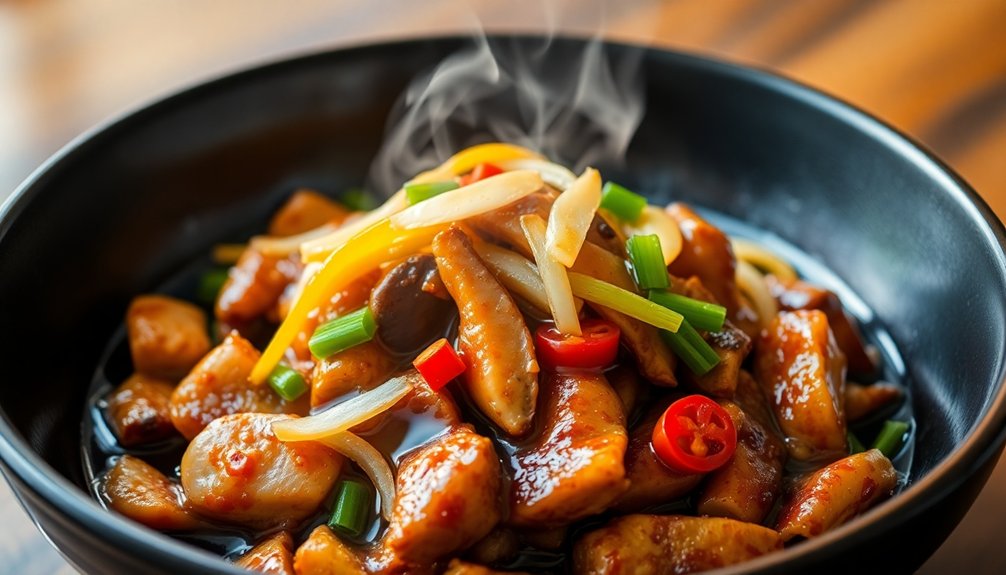
Though the exact origins of Gai Pad Khing remain unclear, this Thai stir-fried dish emerged from the strong Chinese culinary influence on Thailand's central plains during the 18th and 19th centuries.
You'll find that as Thai cuisine evolved, it incorporated ginger as a key ingredient not just for its distinctive flavor but also for its medicinal properties. Throughout history, regional variations developed across Thailand, with some areas using more ginger while others emphasized different aromatics.
The dish's enduring popularity stems from both its delicious taste and the widely recognized ginger benefits in traditional medicine.
As culinary traditions merged between Chinese immigrants and local Thai communities, stir-frying techniques became firmly established in Thai cooking methods, leading to countless adaptations of this beloved dish that you can still enjoy today.
Recipe
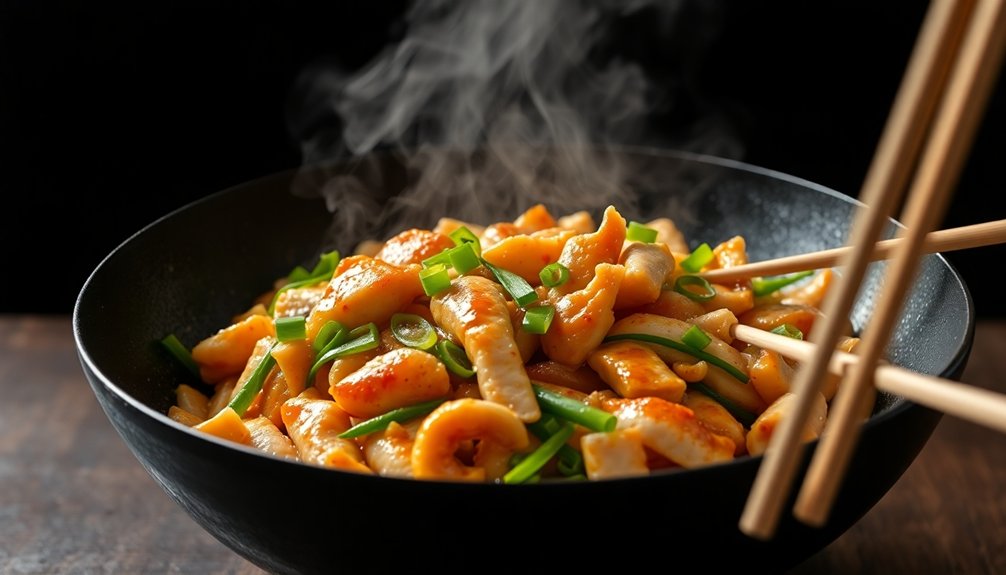
Ingredients:
- 300g chicken thigh, sliced
- 3 tablespoons fresh ginger, julienned
- 2 spring onions, cut into 2-inch lengths
- 1 onion, sliced
- 2 garlic cloves, minced
- 2-3 dried red chilies (optional)
- 2 tablespoons vegetable oil
Sauce:
- 2 tablespoons oyster sauce
- 1 tablespoon light soy sauce
- 1 teaspoon dark soy sauce
- 1 tablespoon Shaoxing wine
- 1/2 teaspoon sugar
- 1/4 teaspoon white pepper
Instructions:
- Mix all sauce ingredients in a small bowl and set aside.
- Heat oil in a wok over high heat.
- Add garlic and stir-fry until fragrant.
- Add chicken and stir-fry until nearly cooked through.
- Add ginger and onions, stir-fry for 1 minute.
- Pour in sauce mixture and dried chilies if using.
- Continue stir-frying until chicken is fully cooked.
- Add spring onions and stir briefly.
- Serve hot with steamed rice.
Cooking Steps

You'll start by dicing the onions and garlic while marinating your chicken pieces in the prepared sauce mixture.
Once your wok is smoking hot, you'll stir-fry the aromatics and vegetables before adding the marinated chicken to achieve that perfect sear.
Finally, you'll incorporate the remaining sauce seasonings, allowing everything to cook together until the chicken is done and the sauce has thickened to coat all ingredients.
Step 1. Dice Onions and Garlic
Prepare the aromatics by dicing one medium onion into small, uniform pieces and mincing 4-5 cloves of garlic.
Using proper chopping techniques, slice the onion in half from top to bottom, then remove the skin and cut off the ends. Make horizontal cuts through each half, followed by vertical cuts, creating a grid pattern. Finally, slice across the grid to produce evenly-sized pieces about 1/4 inch in dimension.
For the garlic, first crush each clove with the flat side of your knife to remove the papery skin easily. Then, finely mince the cloves into tiny pieces no larger than 1/8 inch. This size guarantees ideal flavor enhancement throughout the dish while preventing any overwhelming bites of raw garlic in your finished stir-fry.
Step 2. Marinate Chicken With Sauce
With the aromatics prepped and ready, the chicken requires proper marination to develop its signature Thai flavors.
In a medium bowl, combine 2 tablespoons of oyster sauce, 1 tablespoon of light soy sauce, and 1 teaspoon of dark soy sauce. Add your sliced chicken pieces and gently massage the marinade into the meat.
For chicken tenderizing, you'll want to let it marinate for at least 15 minutes, though 30 minutes will yield better results.
Don't exceed 2 hours, as the soy sauce can make the meat too salty. If you're exploring marinade variations, you can add a splash of Shaoxing wine or a teaspoon of white pepper for extra depth.
For a sweeter profile, incorporate a teaspoon of palm sugar into your marinade mixture.
Step 3. Heat Wok Until Smoking
Place your wok over high heat until wisps of smoke begin to rise from its surface - this essential step guarantees proper "wok hei" and prevents the chicken from sticking.
This important wok technique requires patience and attention, as achieving the right temperature is critical for that authentic Thai stir-fry flavor. You'll know your wok has reached the perfect temperature when a drop of water instantly vaporizes upon contact.
- Feel the intense heat radiating from the wok - it's both thrilling and intimidating
- Watch as the metal surface changes color, darkening slightly as it reaches ideal temperature
- Listen for that distinctive metallic ping as the wok expands with the high heat
- Experience the anticipation building as thin ribbons of smoke signal it's time to begin cooking
Step 4. Add Vegetables and Chicken
Now that your wok has reached ideal smoking temperature, drizzle in 2 tablespoons of vegetable oil, then quickly add your julienned ginger and minced garlic.
Stir continuously for 30 seconds until fragrant, being careful not to burn the aromatics.
Add your sliced chicken pieces and stir-fry until they're nearly cooked through, about 3-4 minutes. You can substitute chicken with tofu, shrimp, or thinly sliced pork if preferred.
Next, add your vegetable varieties - traditional options include sliced onions, wood ear mushrooms, and baby corn. For extra authenticity, include fresh bamboo shoots and Thai celery.
Keep everything moving in the wok to guarantee even cooking and prevent sticking. The vegetables should remain crisp-tender, maintaining their vibrant colors and distinct textures.
Step 5. Add Final Sauce Seasonings
Once the vegetables have reached their ideal texture, it's time to add your sauce mixture.
Pour your pre-mixed sauce around the outer edges of the wok, allowing it to heat quickly and create that perfect sauce balance. Stir continuously to guarantee even coating of all ingredients.
- Watch as the sauce begins to bubble and thicken, creating a glossy sheen that signals proper flavor enhancement
- Listen for the sizzling sound to intensify as the sauce hits the hot wok - this means you're developing those authentic Thai flavors
- Notice how the aroma becomes more complex as the sauce melds with the ginger and chicken
- Pay attention to the consistency - you'll want the sauce to coat the back of your spatula but still flow smoothly
Cooking Tips
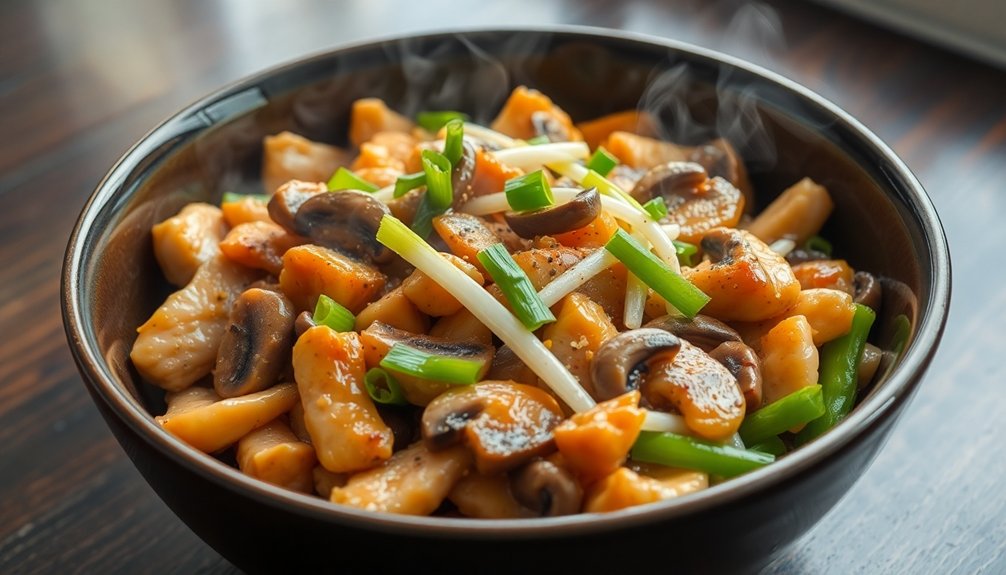
Several key techniques will help you achieve the perfect Gai Pad Khing.
Always start with a hot wok to guarantee proper searing and avoid steaming the chicken. Don't overcrowd your pan - cook in batches if necessary to maintain high heat and proper caramelization.
Cut your chicken and vegetables into uniform sizes for even cooking.
Pay attention to flavor pairing by adding ingredients in the right order. Start with aromatics like ginger and garlic, followed by chicken, then harder vegetables, and finally the more delicate ones.
You'll want to use cooking techniques that preserve the ginger's sharp bite while allowing it to infuse the dish. Keep your ingredients moving constantly in the wok, and don't overcook the vegetables - they should remain crisp-tender.
Final Thoughts
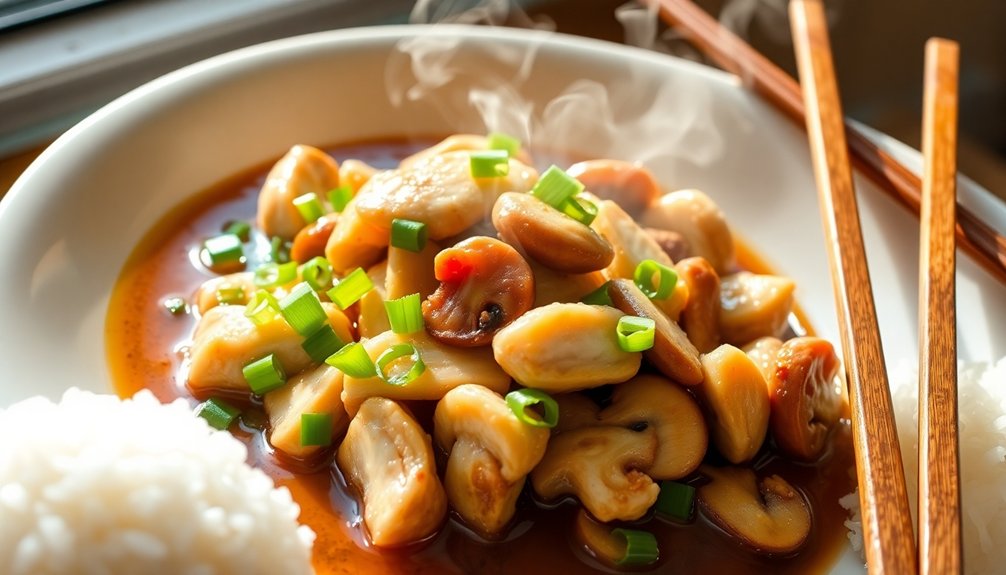
While mastering Gai Pad Khing takes practice, this classic Thai dish offers a perfect balance of flavors that you'll want to make again and again.
The taste experience combines fresh ginger's warmth with savory chicken and crisp vegetables, creating an authentic representation of Thai cuisine's cultural significance.
- You'll discover how the harmonious blend of ingredients creates memories of bustling Thai street markets
- You'll appreciate the deep connection between traditional Thai cooking and the use of aromatic ginger
- You'll feel accomplished when your kitchen fills with the enticing aroma of perfectly stir-fried ingredients
- You'll share a meaningful part of Thai culture with friends and family through this beloved dish
Frequently Asked Questions
Can I Substitute Chicken With Other Meats in Gai Pad Khing?
You can swap chicken with various meat alternatives like pork, beef, shrimp, or tofu. These recipe variations work well, as long as you adjust cooking times for each protein choice.
How Long Can I Store Leftover Gai Pad Khing in the Refrigerator?
Your leftover storage should last 3-4 days when properly refrigerated in an airtight container. For safe consumption, make sure to reheat thoroughly until steaming hot before eating.
Is Gai Pad Khing Gluten-Free?
While 32% of Thai dishes are naturally gluten-free, you'll need to check your ingredients carefully. Traditional gai pad khing can be gluten-free if you use tamari instead of regular soy sauce.
What's the Best Rice Variety to Serve With Gai Pad Khing?
For the best rice pairings, you'll want jasmine rice for its fragrant aroma and fluffy texture. It's Thailand's preferred variety and will perfectly absorb the savory ginger sauce in your dish.
Can I Make Gai Pad Khing Less Spicy While Maintaining Authentic Flavor?
You can reduce chili peppers while adjusting spices to maintain authenticity. Try using more ginger and garlic as flavorful alternatives, and incorporate extra oyster sauce for depth without heat.