
Gai Nam Daeng - Red-Cooked Chicken
When you're craving authentic Thai-Chinese fusion, you'll love Gai Nam Daeng, a vibrant red-cooked chicken dish that originated in Thailand's Chinese immigrant communities. You'll marinate tender chicken in a rich blend of soy sauce, palm sugar, and red fermented tofu before slow-braising it to perfection. The result is succulent meat bathed in a crimson sauce that's both sweet and savory. This cherished dish holds centuries of cultural heritage waiting to be discovered.
Key Takeaways
- Gai Nam Daeng is a Thai-Chinese fusion dish of chicken braised in soy sauce, creating a distinctive red color and rich flavor.
- The dish requires marination in soy sauce, followed by simmering with red fermented tofu, palm sugar, and aromatic spices.
- Total cooking time is approximately 30-35 minutes, with chicken simmered until tender and easily pulling from the bone.
- Serve hot with steamed jasmine rice, garnished with cilantro and green onions for a complete family-style meal.
- Regional variations incorporate Thai bird chilies for heat and palm sugar for sweetness, reflecting local taste preferences.
History
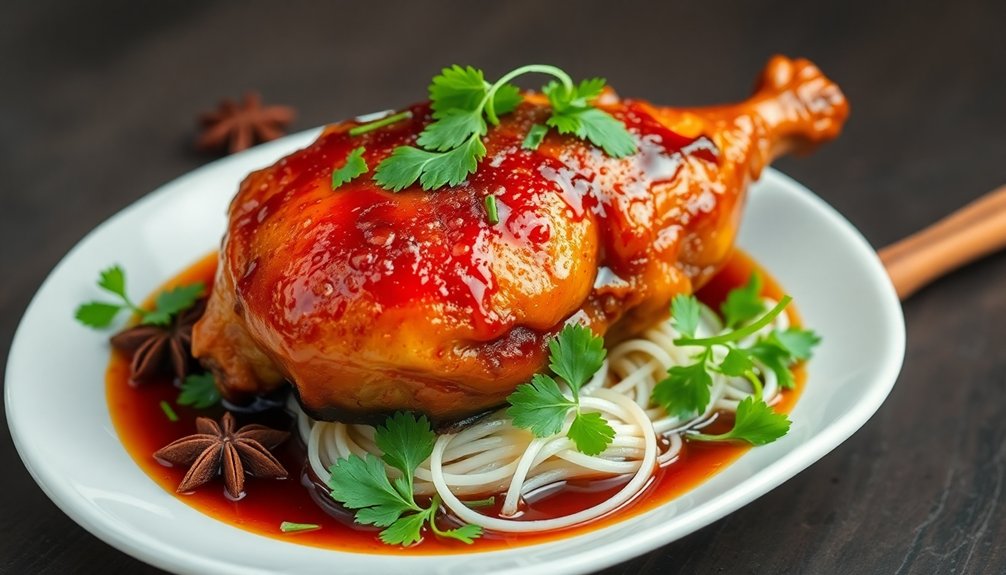
While its exact origins remain debated, Gai Nam Daeng emerged from Thailand's Chinese immigrant communities in the early 20th century.
You'll find this dish has deep cultural significance, particularly in central Thailand where Chinese cooking techniques merged with local Thai ingredients. The name literally translates to "red-cooked chicken," referring to the characteristic crimson color achieved through slow-cooking with soy sauce and spices.
As Chinese merchants settled throughout Thailand's provinces, regional variations of this dish developed. In some areas, you'll discover versions featuring palm sugar for added sweetness, while others incorporate Thai bird chilies for heat.
The evolution of Gai Nam Daeng reflects the successful fusion of Chinese braising methods with Thailand's aromatic herb and spice traditions.
Recipe
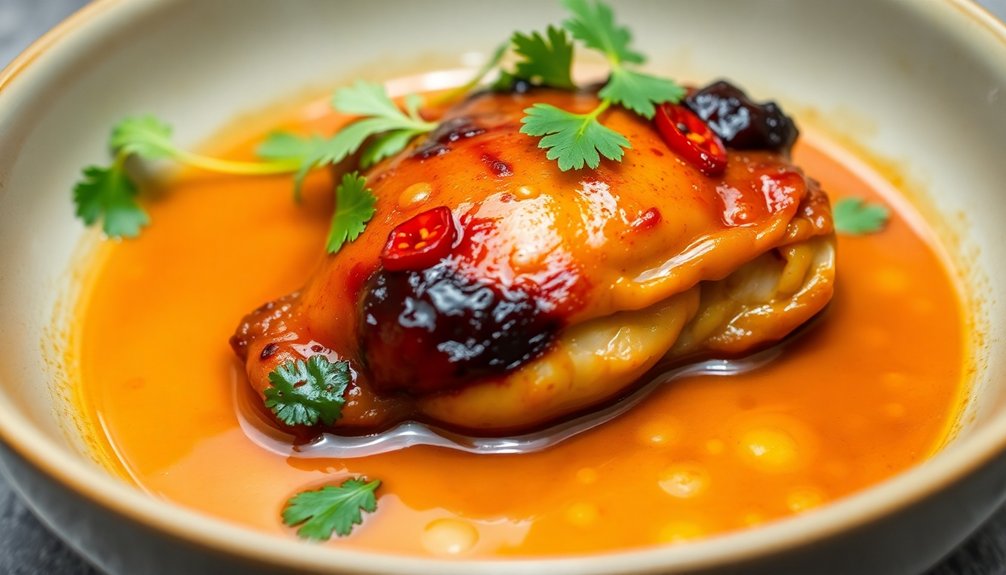
Ingredients:
- 1 whole chicken, cut into pieces
- 4 tablespoons soy sauce
- 2 tablespoons fish sauce
- 2 tablespoons palm sugar
- 2 tablespoons red fermented tofu (nam yee)
- 4 cloves garlic, minced
- 2 tablespoons vegetable oil
- 1 cup water
- White pepper to taste
Instructions:
- Mix soy sauce, fish sauce, palm sugar, and red fermented tofu in a bowl.
- Heat oil in a wok or large pan over medium heat.
- Add minced garlic and stir-fry until fragrant.
- Add chicken pieces and brown on all sides.
- Pour in the sauce mixture and water.
- Bring to a boil, then reduce heat to low.
- Cover and simmer for 30-35 minutes, turning chicken occasionally.
- Remove lid and continue cooking until sauce thickens.
- Season with white pepper.
- Serve hot with steamed rice.
Cooking Steps
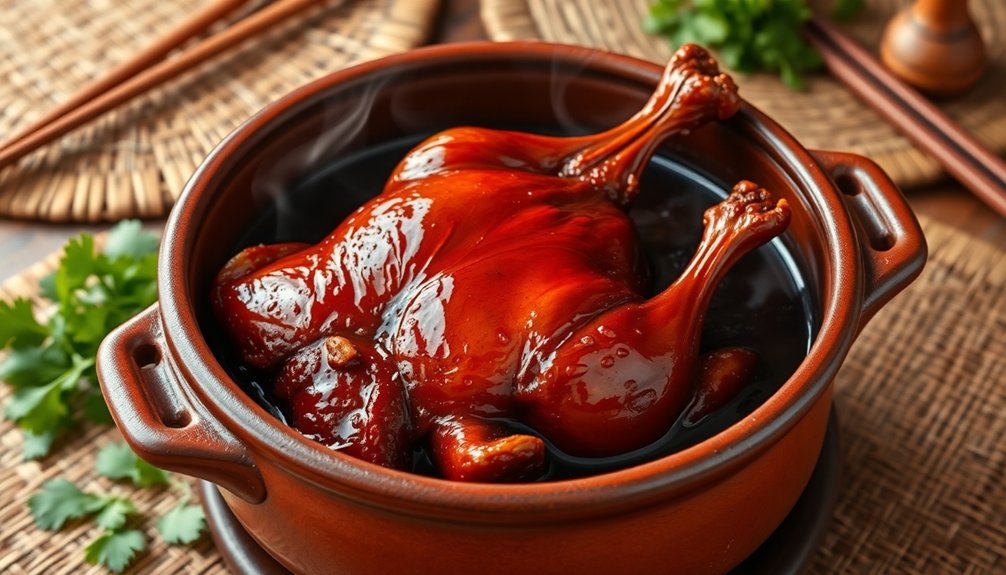
First, you'll marinate the chicken pieces in dark soy sauce until they're thoroughly coated and the flavors begin to penetrate the meat.
Next, heat your wok until it's smoking, add oil, then quickly stir-fry fresh ginger and garlic until fragrant before introducing the marinated chicken along with star anise, cinnamon, and dried chilies.
Finally, reduce the heat and let the chicken simmer in its aromatic sauce until it reduces to a rich, glossy coating that clings to each piece.
Step 1. Marinate Chicken in Soy
Mix together light and dark soy sauces, Chinese rice wine, and a splash of sesame oil in a large bowl. Add your chicken pieces and make certain they're fully coated in the marinade. The combination of light and dark soy sauce creates a complex flavor profile - the light soy providing saltiness while the dark soy adds color and richness.
Let the chicken marinate for at least 30 minutes, though you'll get better flavor infusion if you leave it for 2-4 hours in the refrigerator. Turn the pieces occasionally to make certain of even distribution of the marinade.
The soy sauce will begin to break down the protein structures, allowing the flavors to penetrate deeper into the meat. Don't marinate longer than 4 hours, as the meat can become too salty.
Step 2. Heat Oil in Wok
Once your chicken has finished marinating, heat your wok over medium-high heat until wisps of smoke begin to rise from the surface.
Add 3 tablespoons of vegetable oil, swirling it around to coat the sides. The oil temperature should reach approximately 350°F (175°C) - you'll know it's ready when the surface shimmers slightly.
Using proper wok technique, maintain consistent heat by lifting and tilting the wok periodically. If the oil begins smoking heavily, reduce the heat slightly.
You're aiming for that sweet spot where the oil is hot enough to sear the chicken properly but won't burn it. The wok's surface should be hot enough that a drop of water instantly vaporizes when it hits the oil, but not so hot that the oil breaks down.
Step 3. Add Ginger and Garlic
While the oil reaches ideal temperature, add 2 tablespoons of minced fresh ginger and 4 cloves of finely chopped garlic to the wok's center.
These aromatics will infuse the oil with their essential flavors, creating the foundation for this traditional Thai dish. The ginger benefits include adding a warm, spicy note while garlic properties contribute to the dish's rich, savory depth.
- Keep the ginger and garlic in the center of the wok where the heat is most intense for best flavor release
- Stir continuously to prevent burning, which can create bitter notes
- Watch for the garlic to turn golden brown - this indicates it's time for the next step
- Notice the distinctive aroma that signals the aromatics have properly infused the oil
Let the ingredients dance in the hot oil until they're fragrant and just starting to color.
Step 4. Add Chicken and Aromatics
Now that the aromatics have released their fragrant oils, add 1.5 pounds of bite-sized chicken pieces to the wok. Let the chicken sear until it's lightly golden on all sides, about 3-4 minutes, stirring occasionally to guarantee even cooking.
Next, add your choice of additional aromatics - Thai basil leaves, kaffir lime leaves, or lemongrass stalks work beautifully in this dish.
You'll find that different marinade variations, from classic soy-based to spicier versions with bird's eye chilies, can alter the final flavor profile considerably. The aromatics selection is vital - fresh coriander root, star anise, and white peppercorns create the dish's signature depth.
Continue stir-frying for another 2 minutes, allowing the chicken to absorb these complex flavors while maintaining its juicy texture.
Step 5. Simmer Until Sauce Thickens
Pour the master sauce mixture over the chicken and bring it to a gentle boil.
Reduce the heat to maintain a steady simmer, allowing the flavors to meld and intensify. You'll notice the sauce consistency gradually thickening as it reduces, coating the chicken pieces with its rich, aromatic glaze.
- Cover the pot and let it simmer for 25-30 minutes, occasionally turning the chicken for even flavor absorption.
- Check the sauce thickness by running your spoon across the bottom of the pan - it should leave a clear path.
- Adjust seasoning with additional soy sauce or palm sugar for flavor enhancement.
- If the sauce becomes too thick, add a splash of chicken stock to achieve the desired consistency.
The finished dish should have tender chicken pieces glazed in a velvety, reduced sauce that clings perfectly to each bite.
Cooking Tips

To achieve the signature red color and tender texture of Gai Nam Daeng, marinate your chicken pieces for at least 4 hours or overnight.
When adding the spices, you'll want to toast them in a dry pan first to release their essential oils and enhance their flavors. If you can't find Chinese red fermented bean curd, substitute with red food coloring and a splash of fish sauce for umami.
For the best cooking techniques, maintain a gentle simmer throughout the braising process.
Don't rush the cooking - the slow heat allows the meat to become tender while absorbing the rich sauce. You'll know it's done when the chicken easily pulls away from the bone.
Remember to taste and adjust the seasoning gradually, as the sauce will concentrate as it reduces.
Final Thoughts

While Gai Nam Daeng requires patience and careful attention to detail, mastering this Thai-Chinese fusion dish will reward you with deeply complex flavors and melt-in-your-mouth tender chicken.
The cultural significance of this dish reflects the intermingling of Thai and Chinese culinary traditions, making it perfect for special occasions and family gatherings.
- Serve your Gai Nam Daeng with jasmine rice to soak up the rich, aromatic sauce
- Garnish with fresh cilantro and sliced green onions for added color and flavor
- Pair with stir-fried vegetables like Chinese broccoli or bok choy for a complete meal
- Consider serving family-style on a large platter, allowing guests to appreciate the dish's vibrant red color and appetizing presentation
You'll find this dish becomes a cherished addition to your cooking repertoire, bridging cultures through food.
Frequently Asked Questions
Can I Substitute Dark Soy Sauce With Regular Soy Sauce?
You'll absolutely destroy the dish's authenticity by swapping dark soy sauce for regular soy sauce! The dark variety's thicker consistency and deeper, more intense flavor can't be replicated with regular soy sauce.
How Long Can Leftover Gai Nam Daeng Be Stored in the Refrigerator?
For proper food safety, you'll want to store your leftovers in an airtight container for up to 3-4 days. Make sure you've cooled it completely before refrigerating.
Is This Dish Traditionally Eaten With Specific Side Dishes?
You'll traditionally serve jasmine rice alongside your dish, though cultural significance and regional variations mean you might also find it paired with stir-fried vegetables or clear soups for balance.
What's the Best Cut of Chicken to Use for Gai Nam Daeng?
Like a treasure map to flavor country, you'll want bone-in chicken thighs and legs for their rich, dark meat. They'll stay tender through long braising while absorbing those complex red-cooked seasonings perfectly.
Can I Make This Dish Less Sweet Without Affecting the Traditional Taste?
You can reduce the palm or brown sugar by a third while adjusting sweetness. Focus on balancing flavors by slightly increasing soy sauce and vinegar to maintain the dish's authentic sweet-savory profile.