
Gai Hor Bai Toey - Pandan-Wrapped Chicken
You'll discover that Gai Hor Bai Toey is Thailand's signature pandan-wrapped chicken dish where tender chicken thighs are marinated in fish sauce, soy sauce, garlic, and white pepper. The chicken is wrapped in aromatic pandan leaves, then fried until golden brown at 350°F or grilled to perfection. This versatile dish works as both an appetizer or main course, paired with rice and sweet chili sauce. The technique's careful preparation reveals layers of exceptional flavor.
Key Takeaways
- Gai Hor Bai Toey is a traditional Thai and Malaysian dish featuring chicken thighs wrapped in aromatic pandan leaves before cooking.
- Chicken is marinated in a mixture of fish sauce, soy sauce, garlic, white pepper, and sesame oil for at least 2 hours.
- The wrapped chicken bundles are typically deep-fried at 350°F until golden brown, though grilling and steaming are alternative methods.
- Pandan leaves infuse the chicken with unique floral notes while protecting and flavoring the meat during the cooking process.
- The dish can be served as appetizers or main course, commonly accompanied by sweet chili sauce and rice.
History
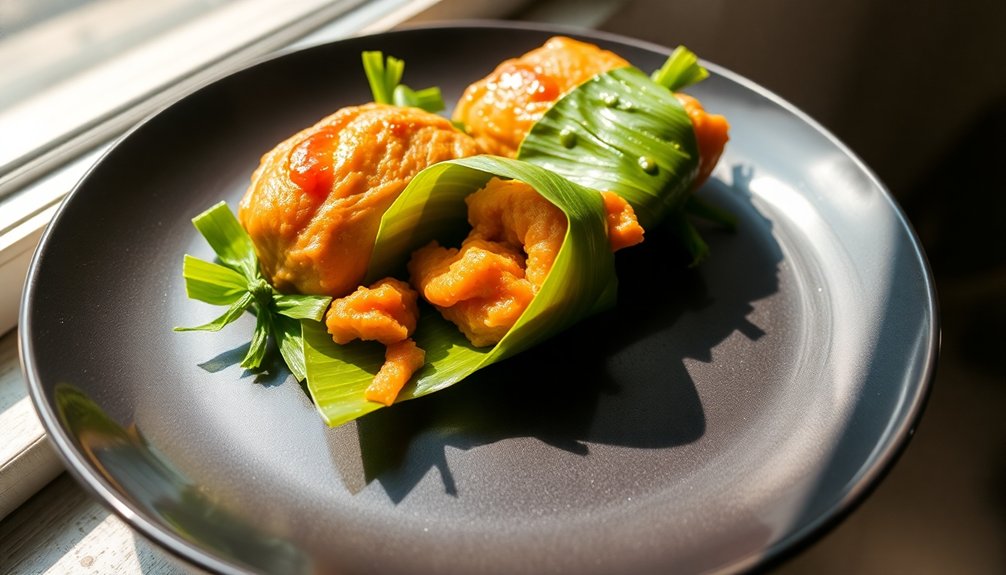
While pandan-wrapped chicken has roots across Southeast Asia, its origins can be traced to Thailand and Malaysia, where cooks have long used aromatic pandan leaves to enhance and protect grilled meats.
You'll find this dish's cultural significance deeply embedded in traditional ceremonies and family gatherings, where it's often served as a cherished centerpiece.
Regional variations have evolved over centuries, with Indonesian cooks favoring a sweeter marinade, while Thai versions typically incorporate more garlic and peppercorns.
In Malaysia, you'll encounter pandan chicken that's heavily influenced by Chinese cooking techniques, featuring five-spice powder and soy sauce.
The practice of wrapping meat in pandan leaves dates back generations, when cooks discovered that the leaves' natural compounds helped tenderize meat while imparting their signature vanilla-like fragrance.
Recipe
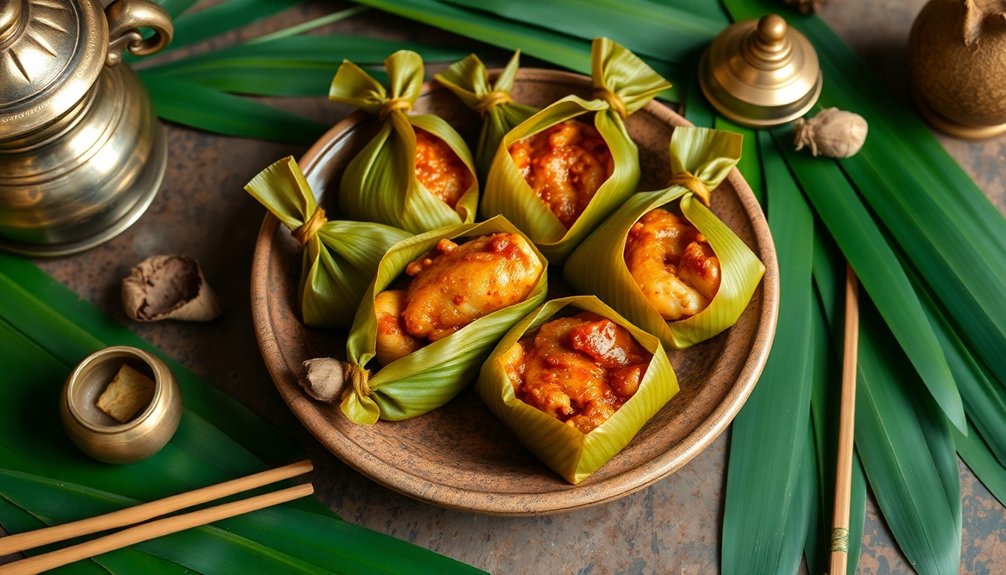
Ingredients:
- 8 chicken thighs, boneless and skinless
- 16 pandan leaves
- 4 cloves garlic, minced
- 2 tablespoons fish sauce
- 2 tablespoons soy sauce
- 1 tablespoon sugar
- 1 teaspoon white pepper
- 1 teaspoon sesame oil
- Cooking oil for frying
Instructions:
- Cut each chicken thigh into two pieces.
- Mix garlic, fish sauce, soy sauce, sugar, white pepper, and sesame oil in a bowl.
- Marinate chicken pieces in the mixture for 2 hours.
- Clean and dry pandan leaves. Cut into 10-inch lengths.
- Wrap each piece of marinated chicken with two pandan leaves, forming a bundle. Tie with kitchen string or secure with toothpicks.
- Heat oil in a pan over medium heat.
- Fry wrapped chicken pieces for 4-5 minutes on each side until golden brown and cooked through.
- Remove from heat and let rest for 2 minutes.
- Cut off strings or remove toothpicks before serving.
Serves 4-6 people.
Cooking Steps
You'll begin by marinating your chicken pieces in aromatic spices for at least 2 hours, ensuring the flavors deeply penetrate the meat.
After wrapping each piece snugly in pandan leaves secured with toothpicks, you'll fry them in hot oil at 350°F (175°C) until they achieve a rich golden-brown color and the internal temperature reaches 165°F (74°C).
Once cooked, let the wrapped chicken rest for 5 minutes before serving with sweet chili sauce, allowing the juices to redistribute throughout the meat.
Step 1. Marinate Chicken in Spices
The essential first step in preparing pandan-wrapped chicken is marinating the meat in a robust blend of Thai-inspired spices.
You'll want to combine fish sauce, soy sauce, garlic, white pepper, and sesame oil as your base marinade. For added depth, you can explore marinade variations by incorporating oyster sauce, ginger, or cilantro roots.
Mix your chosen spice combinations thoroughly with bite-sized chicken pieces, ensuring each piece is well-coated. Traditional recipes call for boneless chicken thighs, but you can use breast meat if you prefer.
Let the chicken marinate for at least 4 hours, though overnight is ideal for maximum flavor absorption. During this time, the meat will tenderize while developing complex flavor layers from the aromatic spices and umami-rich sauces.
Step 2. Wrap Chicken in Pandan Leaves
Start by preparing fresh pandan leaves for wrapping - wash them thoroughly and pat dry with paper towels.
Cut each leaf into 6-inch lengths, removing the tough spine if necessary. The pandan leaves' natural benefits include imparting a sweet, grassy fragrance that'll enhance the chicken flavors.
Take a piece of marinated chicken and place it near one end of the pandan leaf.
Fold the sides over to encase the meat, then roll it tightly toward the other end. Secure the bundle with kitchen twine or toothpicks.
If you're using wider leaves, you can fold them into triangular packets instead.
Repeat with remaining chicken pieces, ensuring each bundle is sealed well to lock in moisture and aromatics during cooking.
Step 3. Fry Until Golden Brown
Once your oil reaches 350°F (175°C) in a deep pan or wok, carefully lower the pandan-wrapped chicken bundles into the hot oil.
Don't overcrowd the pan - work in batches if needed to maintain proper oil temperature. Using tongs, gently turn the bundles every 2-3 minutes to guarantee even cooking.
You'll want to fry the chicken for 8-10 minutes total, until it develops a golden crust and the pandan leaves turn dark green.
One of the key frying techniques is to maintain consistent oil temperature throughout cooking. If you notice the oil getting too hot, reduce the heat slightly.
Remove the chicken bundles when they're golden brown and crispy, then let them drain on paper towels for about 2 minutes before serving.
Step 4. Let Rest Before Serving
After removing your pandan-wrapped chicken from the oil, proper resting is essential for achieving the finest texture and flavor distribution.
Place the golden-brown bundles on a wire rack or paper towel-lined plate, allowing excess oil to drain for 3-5 minutes. During this resting period, the internal temperature will stabilize, and the juices will redistribute throughout the meat.
For peak serving, transfer the rested chicken bundles to a serving platter, keeping them wrapped in their aromatic pandan leaves.
You'll notice the meat has become more tender and succulent thanks to the resting benefits. If you'd like, garnish with additional fresh pandan leaves and serve with sweet chili sauce.
The chicken will maintain its ideal temperature and moisture for about 10 minutes after resting.
Step 5. Serve With Sweet Chili Sauce
The homemade sweet chili sauce takes your pandan-wrapped chicken to new heights through three key steps.
First, combine rice vinegar, sugar, and water in a small saucepan, bringing the mixture to a gentle simmer until it thickens.
Next, add finely minced red chilies, garlic, and a pinch of salt, letting the flavors meld for 2-3 minutes.
For serving, you'll want to arrange your pandan parcels on a platter with the sweet sauce in small individual dipping bowls.
While the traditional sweet sauce is the classic choice, you can explore other dipping options like sriracha mayo, peanut sauce, or soy-ginger dipping sauce.
Just make sure to serve the sauce warm or at room temperature to complement the hot chicken parcels.
Cooking Tips
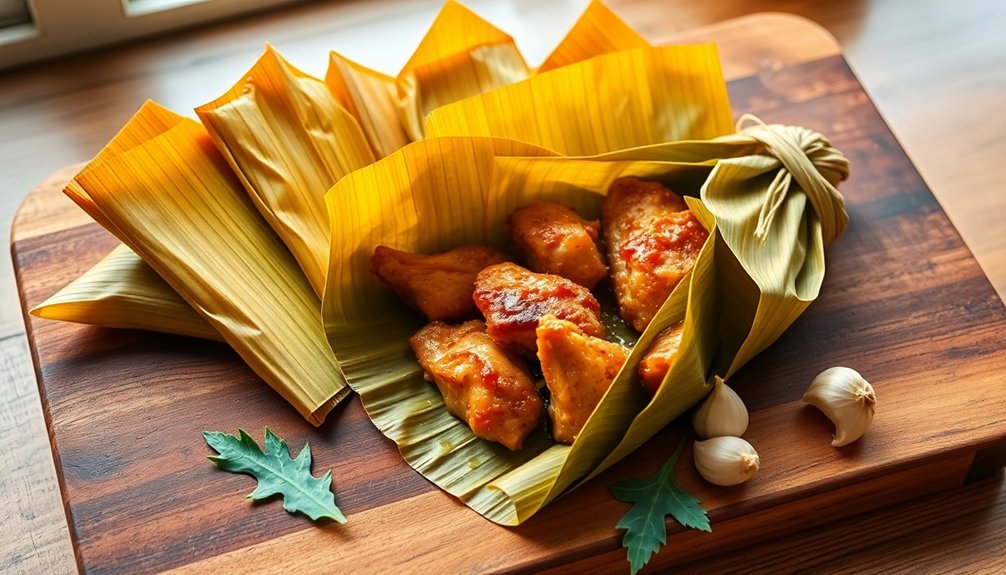
While preparing pandan-wrapped chicken, maintaining the proper wrapping technique is essential for both presentation and flavor infusion.
The cooking techniques you'll use determine how effectively the pandan's distinct flavor profiles permeate the meat during the cooking process.
- Don't overcrowd your steamer or pan - leave enough space between each wrapped parcel to guarantee even cooking and prevent the pandan leaves from becoming waterlogged.
- Keep the heat at medium-high when pan-frying; too high will burn the leaves before the chicken's cooked through, while too low won't achieve that desirable caramelization.
- You'll know the chicken's done when the pandan leaves turn a darker green and become fragrant - typically 15-20 minutes depending on the size of your chicken pieces.
Final Thoughts

By mastering this traditional Southeast Asian dish, you'll add a versatile recipe to your culinary repertoire that impresses with both its presentation and complex flavor profile.
The marriage of pandan's subtle floral notes with tender chicken creates an unforgettable dining experience that pays homage to generations-old culinary traditions.
While the technique might seem challenging at first, you'll find that wrapping chicken in pandan leaves becomes second nature with practice.
Don't be afraid to experiment with different marinades while keeping the core elements intact.
Remember that each region has its own interpretation of this dish, with varying flavor profiles and accompaniments.
Whether served as an appetizer or main course, this pandan-wrapped chicken demonstrates your dedication to preserving authentic cooking methods while delivering exceptional taste.
Frequently Asked Questions
Can I Substitute Pandan Leaves With Another Ingredient?
You'll find banana leaves provide similar wrapping functionality, though they lack pandan's distinct flavor profile. For aromatics, try combining vanilla and coconut extract to mimic pandan's sweet, nutty notes.
How Long Can I Store Pandan-Wrapped Chicken in the Refrigerator?
Did you know 40% of food spoilage happens in home fridges? You'll want to follow proper refrigeration tips: store your wrapped chicken for up to 3 days at 40°F for ideal food safety.
Is This Dish Common in All Regions of Thailand?
You'll find regional variations in how this dish is prepared, with southern Thailand being its stronghold. While cooking techniques differ slightly across provinces, it's more popular in coastal regions.
What Side Dishes Pair Well With Gai Hor Bai Toey?
90% of Thai diners pair their meat dishes with jasmine rice. You'll want fluffy, aromatic rice and spicy dipping sauces like nam jim or sweet chili sauce for maximum flavor enjoyment.
Can I Prepare the Marinade Mixture in Advance?
You can prepare the marinade up to 24 hours ahead. Store it in an airtight container in your fridge for ideal flavor enhancement. Don't add garlic too early as it'll become overly intense.