
Foi Thong - Golden Egg Yolk Threads in Syrup
To create authentic Foi Thong, meaning "golden threads," emerged during Thailand's Ayutthaya period when Portuguese traders introduced egg-based desserts to the royal court. You'll find this delicate dessert at weddings and ceremonies symbolizing prosperity and good fortune. Made by skillfully drizzling egg yolks into hot syrup, these golden strands require precise technique and temperature control. What began as exclusive royal cuisine has evolved into a beloved Thai sweet that reveals centuries of cultural exchange through every glistening thread.
Key Takeaways
- Foi Thong is a traditional Thai dessert made of fine golden egg yolk threads cooked in sugar syrup.
- Of Portuguese origin during Thailand's Ayutthaya period (1350-1767), the name translates to "golden threads."
- The dessert requires precisely whisked egg yolks drizzled through a strainer into simmering syrup at 105-110°C.
- After cooking, the threads must be immediately chilled in ice water to stop the cooking process.
- Foi Thong symbolizes prosperity and good fortune, commonly served at Thai weddings and ceremonial occasions.
History
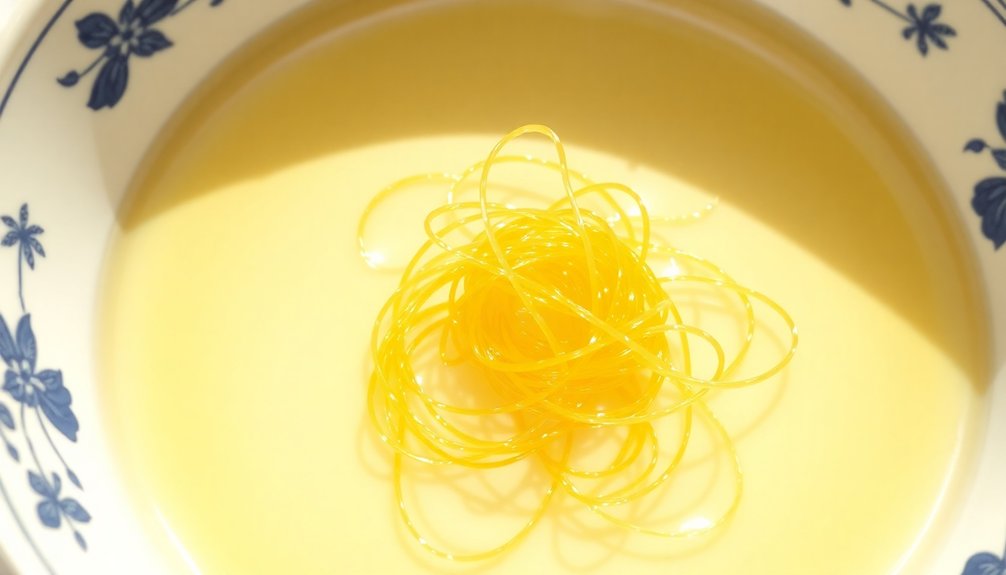
Although documentation is sparse, Foi Thong likely originated in Thailand's Ayutthaya period (1350-1767), when Portuguese traders introduced egg-based desserts to the Siamese royal court.
You'll find this golden dessert's cultural significance rooted in this cross-cultural exchange, as Thai chefs adapted Portuguese techniques to local ingredients and tastes.
The dessert's name—"Foi Thong" meaning "golden threads"—reflects its appearance and prestigious status.
Royal kitchens refined the technique of drizzling egg yolk streams into hot syrup, creating delicate golden strands that became a symbol of wealth and celebration at the court.
Regional variations emerged as the dessert spread throughout Southeast Asia.
In Myanmar, it's known as "Shwe Kyi," while Malaysia calls it "Jala Mas," each country adapting the basic technique with subtle local preferences.
Recipe
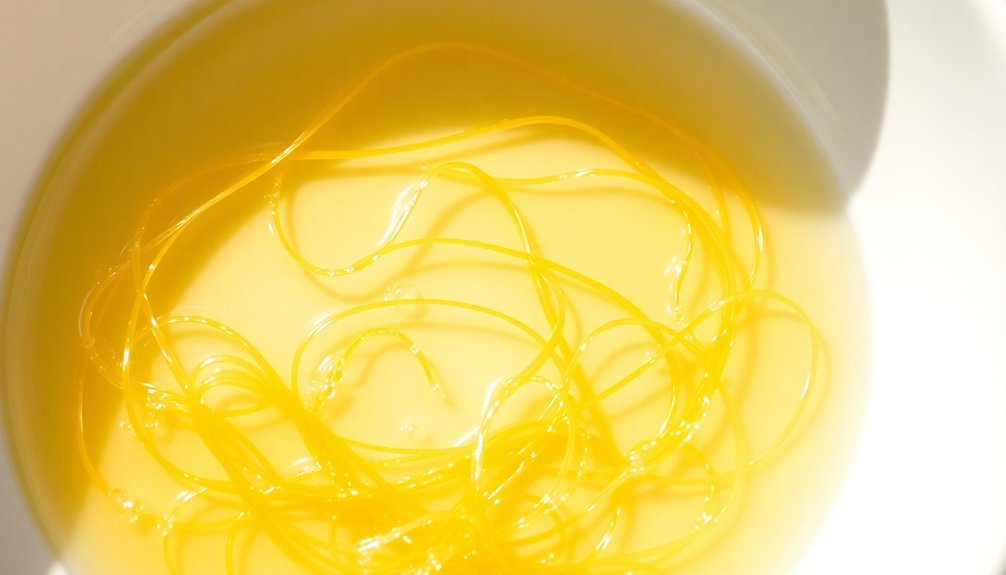
Ingredients
- 10 egg yolks
- 1 cup granulated sugar
- 1/2 cup water
- 1 teaspoon vanilla extract (optional)
- Pinch of salt
Equipment
- Medium saucepan
- Whisk
- Fine-mesh strainer or cheesecloth
- Small bowl with ice water
- Squeeze bottle or plastic bag with small hole cut in corner
Instructions
- In a saucepan, combine sugar and water.
- Bring to a boil over medium heat until sugar is completely dissolved (about 3-4 minutes) to create a simple syrup.
- While the syrup is cooking, whisk egg yolks, vanilla extract (if using), and salt in a bowl until smooth.
- Pass the egg yolk mixture through a fine-mesh strainer or cheesecloth to remove any lumps.
- Transfer the strained egg mixture into a squeeze bottle or plastic bag.
- Once the syrup reaches a full boil, reduce heat to low to maintain a gentle simmer.
- Hold the squeeze bottle about 12 inches above the simmering syrup and squeeze the egg mixture in thin streams, moving in circular motions to create golden threads.
- Cook the threads for about 15-20 seconds until they firm up.
- Use a slotted spoon to carefully remove the egg threads and transfer to a bowl of ice water to stop the cooking process.
- Drain the threads and arrange them in serving bowls.
- Serve Foi Thong warm or at room temperature, typically with a small amount of syrup poured over the top.
Cooking Steps

To create authentic Foi Thong, a Portuguese-influenced Thai dessert dating to the Ayutthaya period, you'll need to master several critical techniques.
First, you'll thoroughly mix egg yolks and create a sugar syrup before threading the mixture through a traditional copper strainer directly into simmering water, where the threads magically form.
You'll then immediately chill these golden threads and coat them in light syrup, a method that's remained virtually unchanged since Portuguese traders introduced egg-based desserts to the Siamese court in the 16th century.
Step 1. Mix Egg Yolks Thoroughly
Whisking and layering egg yolks with absolute precision forms the foundation of Foi Thong, Thailand's adaptation of Portugal's cherished egg-thread dessert.
Thai royal chefs, who first encountered this technique in the Ayutthaya period (1350-1767), refined the mixing methods to achieve the signature silky consistency.
You'll need to separate yolks cleanly from whites, then strain them through fine mesh—a practice unchanged for centuries.
Unlike Western egg preparations, Foi Thong requires you to stir the yolks gently in a circular motion without creating bubbles, a technique passed through generations of palace cooks.
The most authentic egg yolk techniques involve using a wooden paddle called "mai phad" rather than metal tools, as Thai culinary tradition holds that metal affects the delicate flavor profile of the royal dessert.
Step 2. Create Syrup Solution
The preparation of the syrup solution marks a critical juncture in the creation of Foi Thong, drawing from ancient Thai sugar-making traditions dating back to the 16th century.
This technique traveled from Portugal to Southeast Asia through trade routes, where it was adapted with local ingredients.
You'll need to combine water and sugar in a 2:1 ratio in a wide, shallow pan.
Heat until completely dissolved, then bring to a gentle simmer.
Traditionally, Thai chefs used palm sugar, but today many prefer refined white sugar for its neutral flavor and consistent syrup consistency.
The resulting solution should be clear but not caramelized.
Various sugar types create different results—muscovado lends molasses notes while coconut sugar offers caramel undertones.
The syrup's temperature must remain steady, as Portuguese-Thai culinary exchange dictated precise thermal control.
Step 3. Thread Through Copper Strainer
Threading egg yolks through a traditional copper strainer represents the heart of Foi Thong's artistry, a technique Portuguese nuns introduced to the Siamese court in the Ayutthaya period.
You'll hold your copper strainer about 8-10 inches above the simmering syrup. The copper benefits aren't merely culinary superstition—the metal conducts heat evenly while interacting minimally with egg proteins, preserving their delicate structure.
Pour your egg mixture into the strainer's reservoir, then move it in circular motions as the yolk drips through the tiny perforations.
Various strainer techniques evolved across Thailand's regions—Bangkok-style foi thong features finer threads while northern versions present slightly thicker strands.
This delicate threading process transforms simple ingredients into golden silk, illustrating the cultural evolution of Thai desserts from their European origins to distinctly Siamese creations.
Step 4. Chill Threads Immediately
Once your golden threads have been artfully formed in the hot syrup, immediate chilling becomes essential to halt the cooking process and preserve Foi Thong's signature texture.
This critical cooling method dates back to the 16th-century Portuguese influence in the Ayutthaya Kingdom, where rapid temperature change was recognized as key to maintaining the dessert's delicate consistency.
You'll need to prepare an ice bath beforehand—a tradition Thai royal palace cooks adapted from Portuguese techniques.
Submerge your threads in this chill temperature immediately after straining, allowing them to rest for 1-2 minutes. This rapid cooling solidifies the protein structure while maintaining elasticity.
In Thai culinary history, this step differentiated master dessert makers from novices, as properly chilled Foi Thong exhibits the balanced resistance when bitten that has delighted Thai nobility for centuries.
Step 5. Coat in Light Syrup
After chilling has set their delicate structure, Foi Thong threads require immersion in a light syrup bath—a refinement of the original Portuguese technique that Thai royal confectioners perfected during the Rattanakosin period.
You'll need to prepare a delicate coating that enhances the threads without overwhelming them:
- Combine one part sugar to one part water, heating until you achieve a thin syrup consistency (approximately 105°C).
- Add a few drops of jasmine water or rose essence for subtle flavor enhancement.
- Let the syrup cool to room temperature before gently submerging the threads.
- Allow Foi Thong to absorb the syrup for 3-4 hours, transforming them into the translucent golden strands prized at royal banquets.
This syruping technique represents the Thai adaptation of Portuguese fios de ovos, balancing sweetness with the egg's natural richness.
Cooking Tips
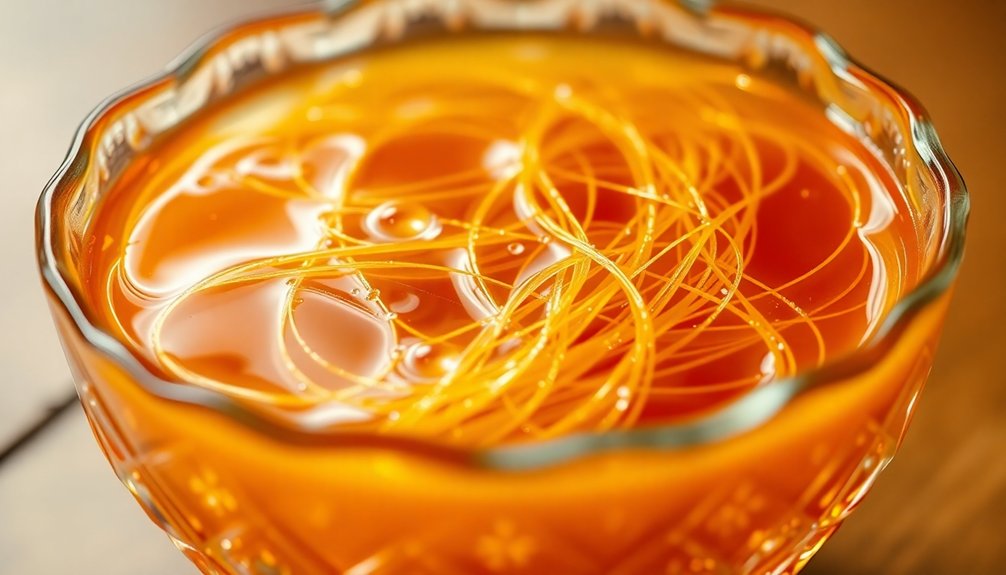
Making Foi Thong requires patience and precise technique that Thai dessert artisans have perfected over centuries.
You'll need to beat egg yolks thoroughly until smooth, then strain them to remove any membrane fragments. Measuring ingredients precisely—traditionally one cup of sugar to one cup of water for syrup—ensures authentic texture and sweetness.
Temperature control is critical in this royal dessert tradition. Heat your syrup to a gentle simmer (around 105-110°C), never boiling vigorously.
When drizzling the yolk mixture through a funnel or pastry bag, maintain a consistent height of 12-15 centimeters above the syrup.
Since its introduction by Portuguese traders in the Ayutthaya period (1350-1767), Thai cooks have adapted this technique, using coconut water instead of plain water for an additional layer of flavor that complements traditional Thai ceremonial occasions.
Final Thoughts
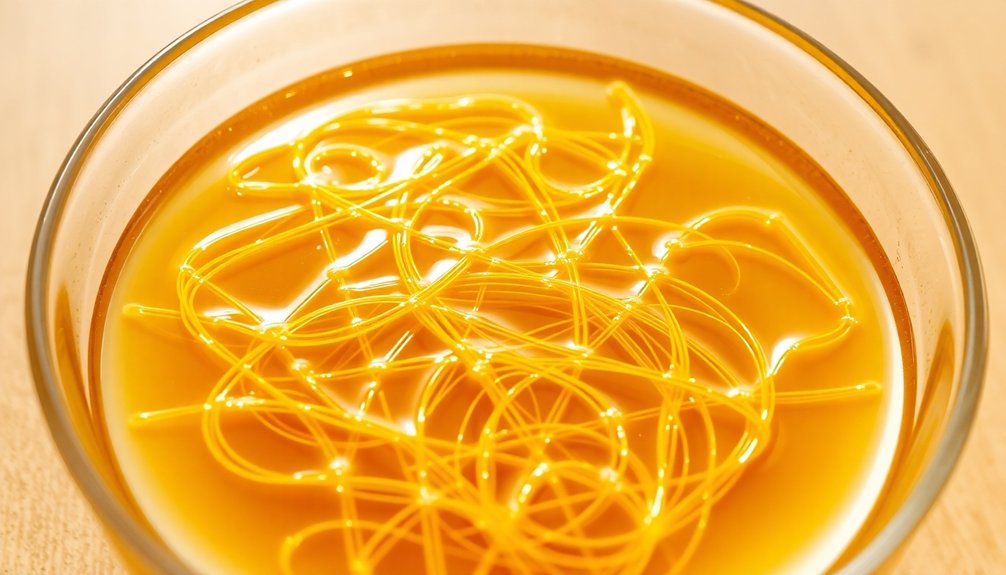
Though Foi Thong has evolved over centuries, its status as a prestigious Thai dessert remains undiminished.
Its journey from Portuguese-influenced sweet to Thai culinary artistry showcases how food traditions transcend borders and adapt to local tastes.
As you explore this golden delicacy, remember its:
- Cultural significance in ceremonial occasions, particularly weddings and merit-making ceremonies
- Historical connection to 16th-century Portuguese trade routes and Ayutthaya's cosmopolitan heritage
- Representation of Thailand's skill in transforming foreign influences into distinctly Thai creations
- Evolution from royal court cuisine to beloved dessert accessible to people from all walks of life
When you taste Foi Thong today, you're experiencing more than a dessert—you're partaking in Thailand's rich cultural tapestry and centuries-old traditions.
Frequently Asked Questions
Can Foi Thong Be Made Without Traditional Brass Drizzling Utensils?
You can create these delicate threads using alternative utensils like squeeze bottles or syringes. Modern techniques have evolved alongside traditional methods, reflecting how culinary practices adapt through cultural exchange.
How Long Do Homemade Foi Thong Noodles Stay Fresh?
People often underestimate traditional preservation wisdom. Your homemade egg threads typically last 3-5 days refrigerated. Thai culinary history taught us airtight containers maximize shelf life, reflecting storage tips from royal kitchens.
What Are Common Serving Accompaniments for Foi Thong?
You'll find traditional pairings include coconut ice cream, sticky rice, and fresh tropical fruits. Serving suggestions evolved from royal Thai cuisine to everyday desserts, reflecting cultural shifts in Southeast Asian sweetmeat traditions.
Is Foi Thong Suitable for People With Certain Dietary Restrictions?
Imagine golden threads dissolving on your tongue—traditionally egg-based foi thong isn't vegan, but you'll find gluten-free options abound. Throughout Thai history, modern adaptations now embrace plant-based alternatives using mung bean or pumpkin puree.
Can Foi Thong Be Colored Naturally for Festive Occasions?
You can naturally color these delicate threads for festive occasions using butterfly pea flowers, pandan, or saffron—practices that evolved throughout Southeast Asia as Thai-Portuguese desserts became integral to ceremonial celebrations.