
How to Make Thai Green Curry
To make Thai green curry, start by frying aromatic green curry paste in oil until fragrant, then gradually stir in coconut milk until the oil separates. Add fish sauce and palm sugar for authentic flavor balance, then simmer your choice of protein (traditionally chicken) until cooked through. Finish with Thai basil and fresh herbs. You’ll discover the key techniques for achieving that perfect balance of sweet, salty, and spicy flavors in traditional Thai cuisine.
Key Takeaways
- Heat vegetable oil and fry Thai green curry paste for 1-2 minutes until fragrant in a large wok over medium heat.
- Gradually stir in coconut milk, fish sauce, and palm sugar, bringing the mixture to a gentle simmer.
- Add your choice of protein (typically chicken) and cook for 5 minutes before incorporating vegetables.
- Maintain a gentle simmer until meat is tender and finish with fresh Thai basil and cilantro leaves.
- Adjust the amount of curry paste to control spiciness and store leftover paste in an airtight container.
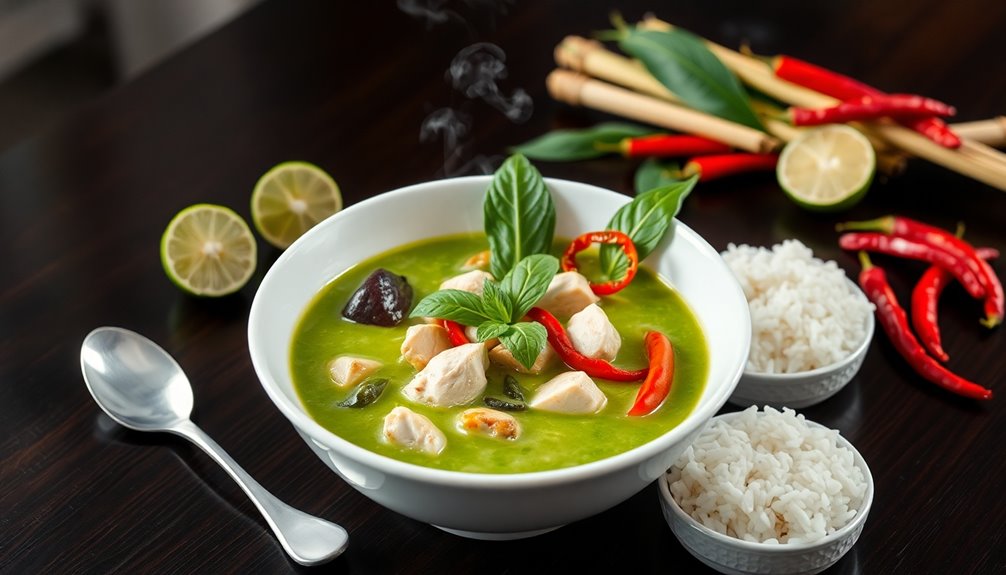
History
Although Thai green curry emerged in the early 20th century, it’s considerably younger than its red and yellow counterparts.
You’ll find its origins deeply rooted in central Thailand, where cooks innovated by incorporating fresh green chilies instead of dried ones. The striking green color comes from these fresh chilies combined with fragrant Thai basil, makrut lime leaves, and coriander.
Originally, you’d have spent hours pounding these ingredients in a granite mortar and pestle to achieve the perfect paste consistency.
The curry gained prominence during Thailand’s culinary modernization, when coconut cream became more widely available throughout the country.
Today, you’ll recognize green curry, or “gaeng keow wan,” as one of Thailand’s most beloved dishes, known for its perfect balance of spicy, sweet, and creamy flavors.
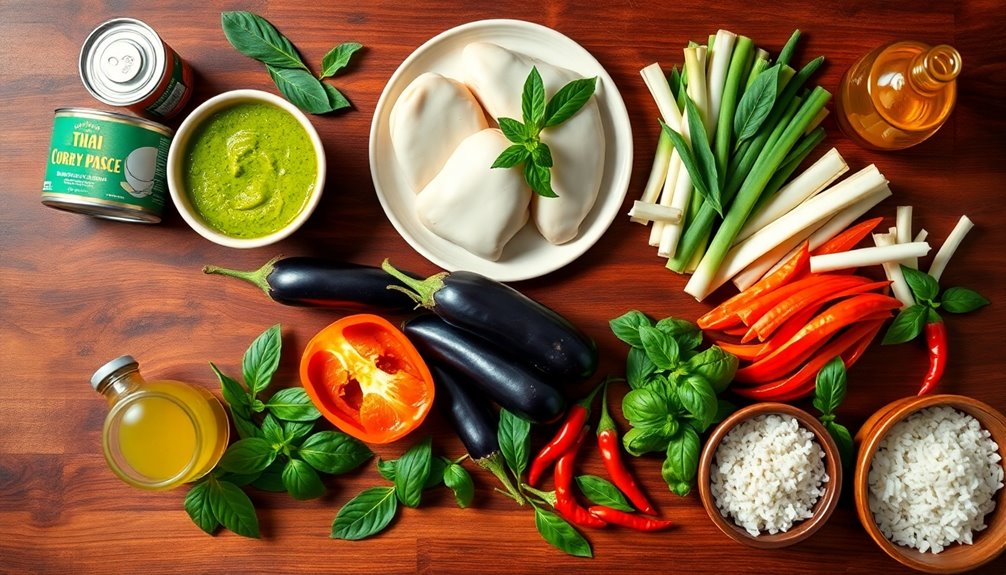
Recipe
Prep Time: 15 minutesCook Time: 20 minutesServes: 4
Ingredients:
- 2 tablespoons vegetable oil
- 4 tablespoons Thai green curry paste
- 2 cans (400ml each) coconut milk
- 2 tablespoons fish sauce
- 1 tablespoon palm sugar or brown sugar
- 4 kaffir lime leaves
- 2 chicken breasts, sliced
- 1 cup bamboo shoots
- 1 cup Thai eggplants, quartered
- 1 cup bell peppers, sliced
- 1 cup snap peas
- 1 cup Thai basil leaves
- 2 red chilies, sliced (optional)
Instructions:
- Heat oil in a large wok or pan over medium heat.
- Add curry paste and fry for 1-2 minutes until fragrant.
- Add 1/2 can of coconut milk and stir until oil separates.
- Pour in remaining coconut milk, fish sauce, and sugar.
- Add kaffir lime leaves and bring to a simmer.
- Add chicken and cook for 5 minutes.
- Add bamboo shoots and eggplants, cook for 3 minutes.
- Add bell peppers and snap peas, cook for 2 minutes.
- Season to taste with additional fish sauce or sugar if needed.
- Stir in Thai basil leaves.
- Garnish with sliced chilies if desired.
- Serve hot with steamed jasmine rice.
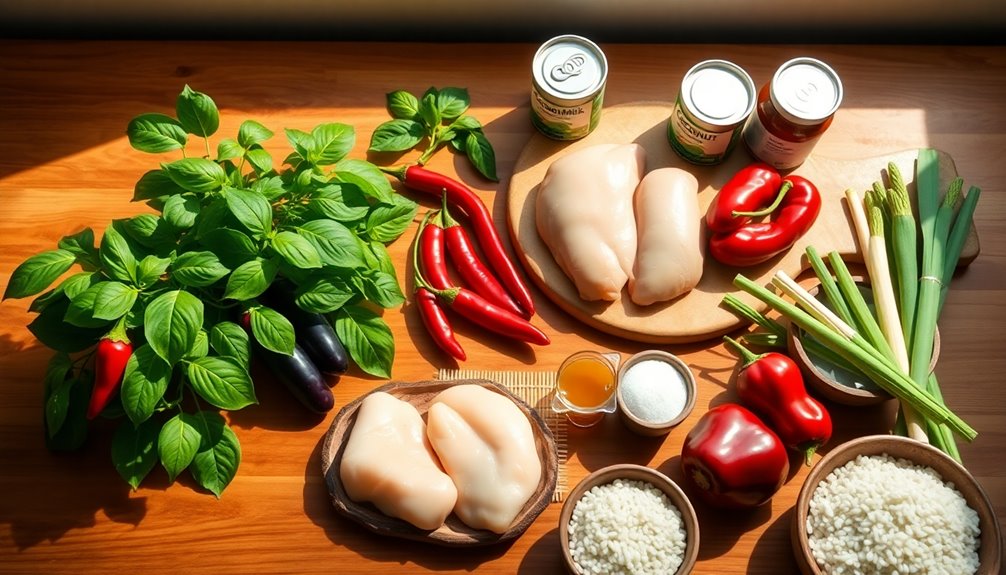
Cooking steps
Start by toasting your curry’s aromatic ingredients like coriander seeds, cumin, and white peppercorns in a dry wok until fragrant.
You’ll want to blend your curry paste ingredients until silky smooth, gradually adding coconut milk to create an emulsion that won’t separate during cooking.
Let your curry simmer gently until the meat becomes fork-tender, then finish with a generous scatter of Thai basil and fresh cilantro leaves.
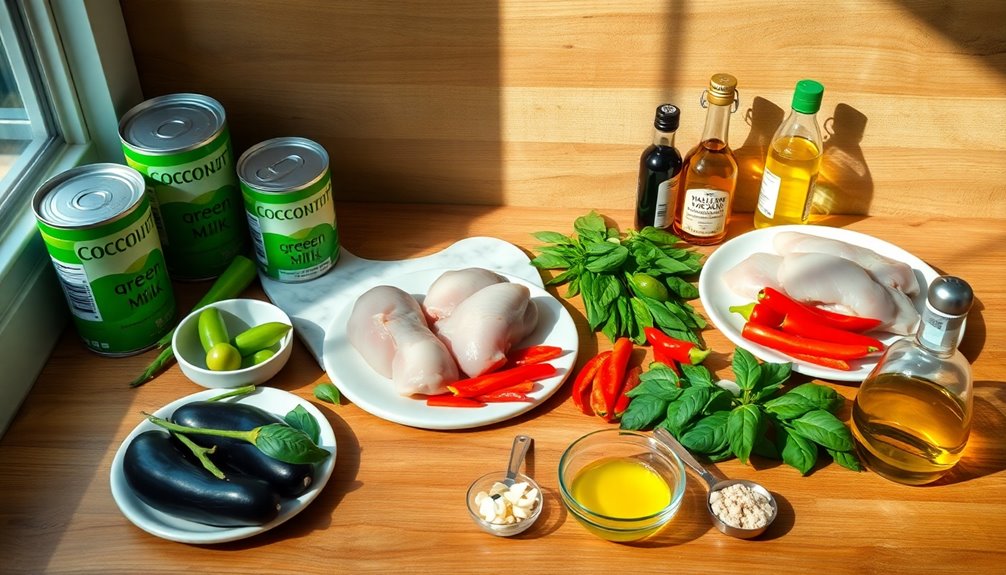
step 1. Toast Aromatic Ingredients First
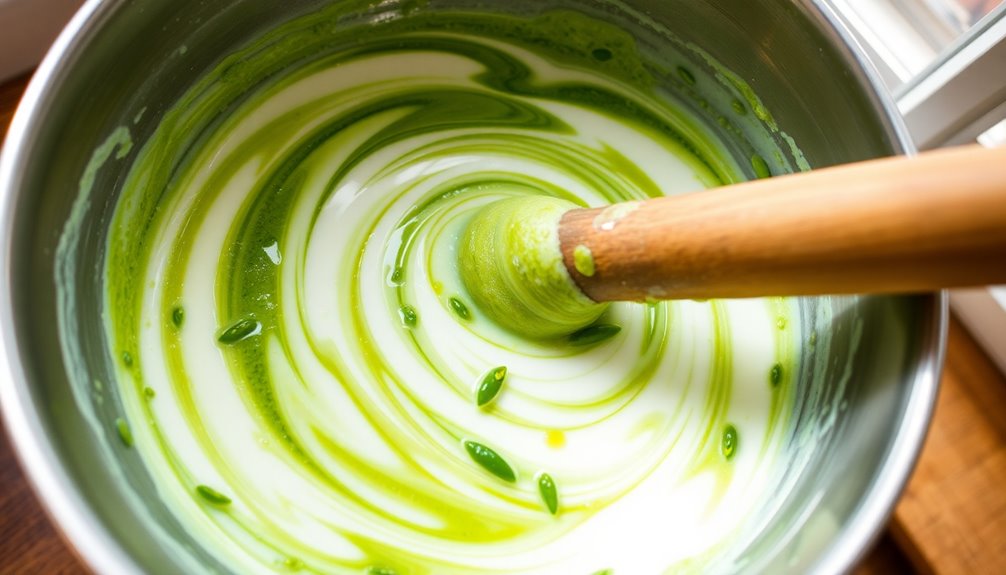
Before adding any coconut milk or proteins, you’ll need to toast the aromatic ingredients to release their essential oils and develop deeper flavors.
Heat your wok or heavy-bottomed pan over medium heat, then add 2-3 tablespoons of coconut oil until it shimmers.
Add your curry paste and stir constantly for 2-3 minutes until it becomes intensely fragrant. You’ll notice the lemongrass, galangal, and kaffir lime aromatics becoming more pronounced.
Next, add your fresh garlic, shallots, and Thai bird’s eye chilies, continuing to stir-fry for another minute.
Don’t let the ingredients brown or burn, as this will create bitter notes in your curry. The oil should take on a deep green color, and you’ll smell the characteristic Thai curry aroma when the ingredients are properly toasted.
Step 2. Blend Curry Paste Well
Creating a smooth, cohesive curry paste requires thorough blending of all ingredients until they form a uniform green mixture.
Add your toasted ingredients to a food processor or traditional stone mortar, starting with the hardest ingredients like galangal, lemongrass, and kaffir lime rind. Process these first until finely ground, then add softer ingredients like shallots, garlic, and Thai chilies.
Continue blending while gradually adding coriander roots, white peppercorns, and shrimp paste. You’ll need to scrape down the sides frequently to guarantee even processing.
The paste is ready when it’s completely smooth with no visible chunks or fibers – this typically takes 10-15 minutes of consistent grinding. For the most authentic texture, use a mortar and pestle, though a high-powered blender will also work effectively.
Step 3. Add Coconut Milk Gradually
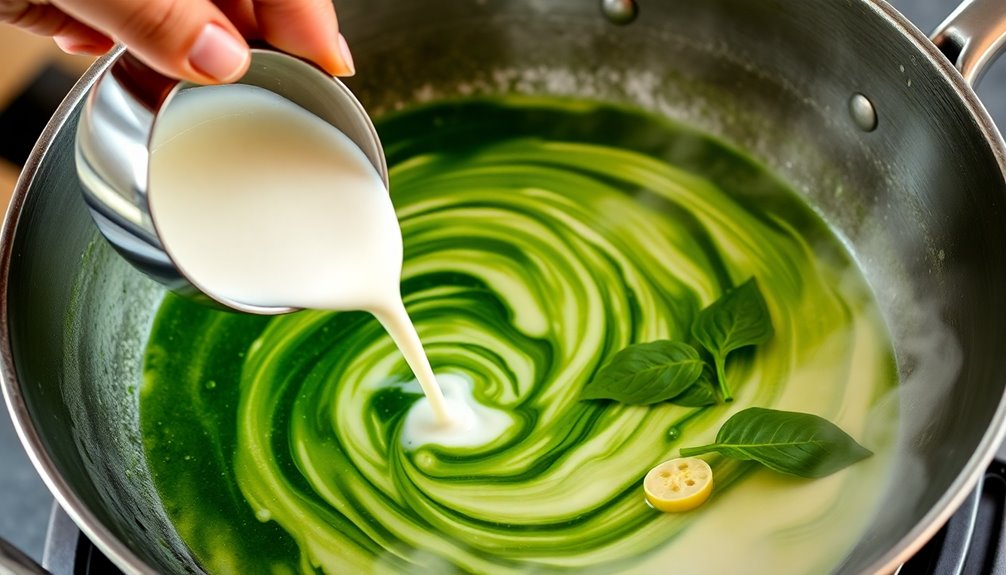
- Small oil droplets forming on the surface, indicating proper fat separation
- The sauce thickening to coat the back of a spoon
- A rich, aromatic fragrance as the coconut milk melds with the curry paste
- The color transforming into a deeper, more uniform green shade
step 4. Simmer Until Meat Tenderizes
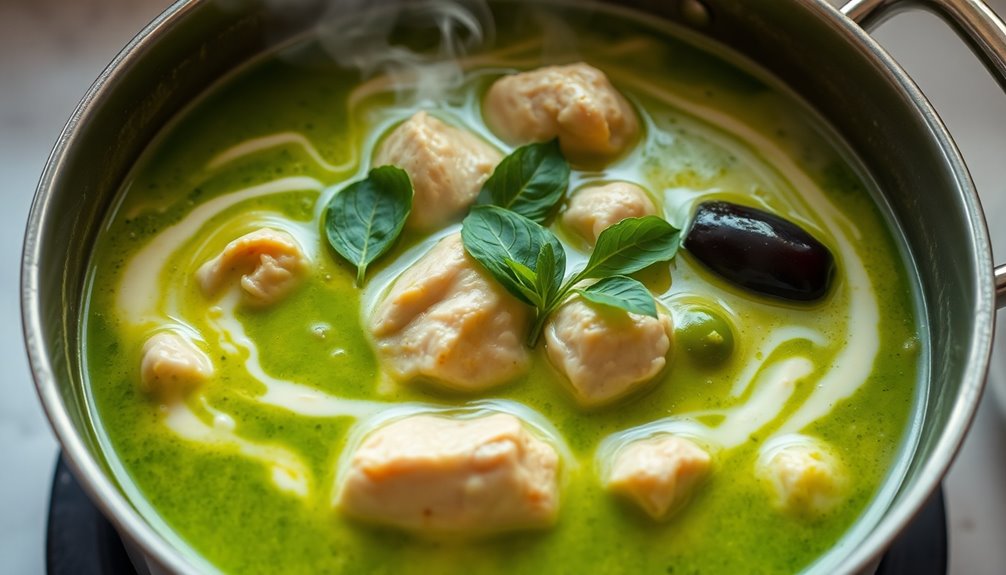
Once your coconut sauce reaches a gentle simmer, add your chosen meat – whether it’s chicken thigh pieces, beef chunks, or pork shoulder – and let it cook slowly over medium-low heat.
Different meats require varying cooking times: chicken thighs need about 15-20 minutes, while beef or pork may take 30-45 minutes to become tender.
You’ll know the meat is ready when it’s easily pierced with a fork and shows no resistance.
Don’t rush this step – proper simmering allows the meat to absorb the curry’s flavors while becoming succulent.
If you’re using bamboo shoots or Thai eggplants, add them halfway through the meat’s cooking time.
Keep the lid partially covered to maintain the right sauce consistency, and stir occasionally to prevent the coconut milk from separating.
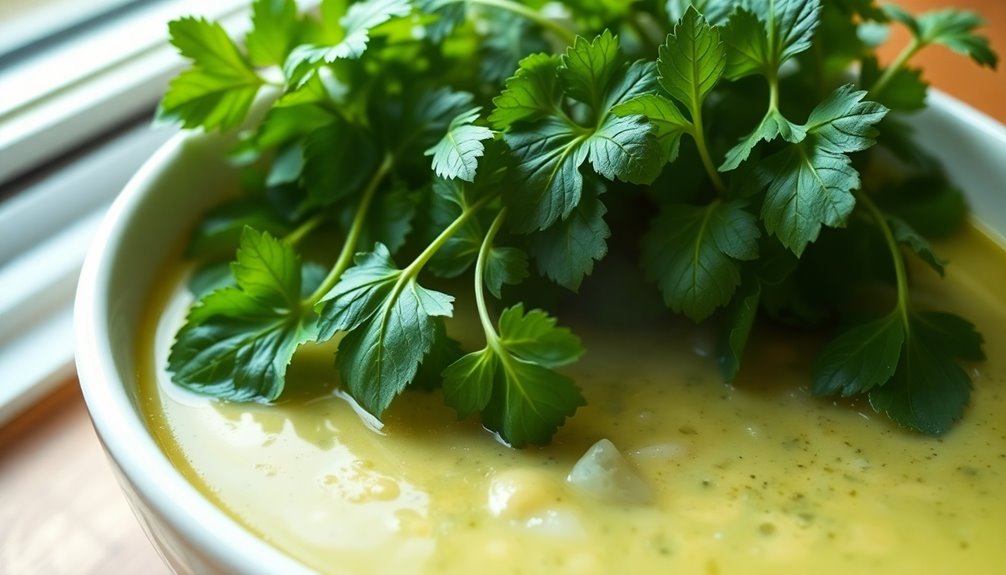
Step 5. Garnish With Fresh Herbs
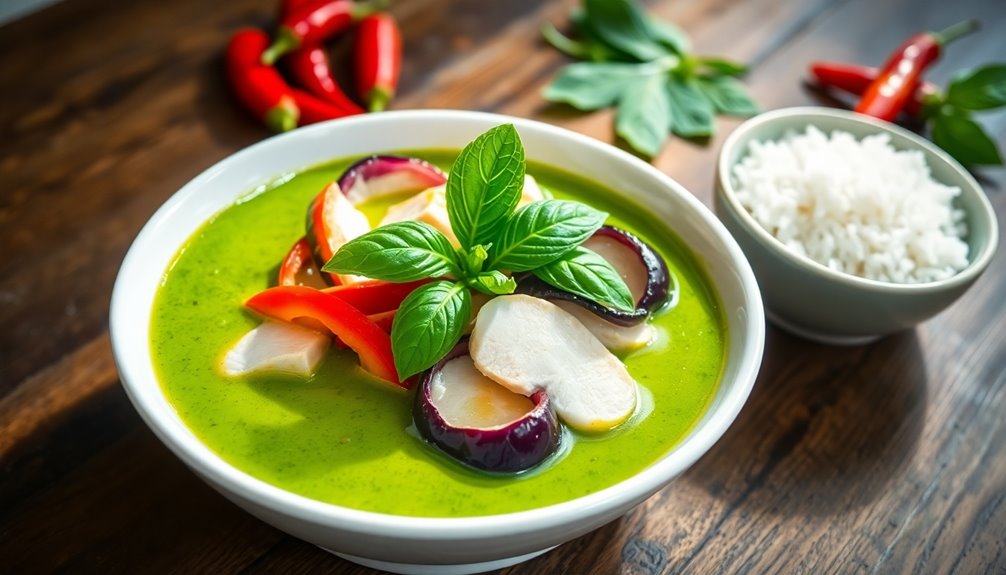
Fresh Thai basil leaves and cilantro should be torn and scattered over your curry right before serving, allowing their aromatic oils to release into the dish.
For an authentic Thai presentation, you’ll want to complement these essential herbs with traditional garnishes that add both visual appeal and layered flavors.
- Thinly sliced kaffir lime leaves create a citrusy aroma and provide a pop of deep green color.
- Fresh red chili slivers offer a striking contrast and allow diners to adjust their preferred heat level.
- A few springs of Thai sweet basil (different from holy basil) add a distinct anise-like flavor.
- Crispy fried shallots sprinkled on top provide a delightful textural element and nutty taste.
Remember not to add the garnishes too early, as the herbs will wilt in the hot curry.
Final Thoughts
After mastering this authentic Thai green curry recipe, you’ll appreciate how the complex interplay of fresh herbs, aromatics, and coconut milk creates a dish that’s both comforting and sophisticated.
Remember that Thai cooking is about balance – sweet, sour, salty, and spicy elements should harmonize without any single flavor dominating.
Don’t hesitate to adjust the curry paste quantity to match your heat preference, or experiment with different vegetables based on seasonal availability. While traditional Thai green curry uses Thai eggplants and bamboo shoots, you can incorporate local produce while maintaining the dish’s essence.
Store any leftover curry paste in an airtight container in the refrigerator for up to a week, or freeze it for up to three months to have homemade paste ready whenever you crave this classic Thai dish.
[DIRECTIONS]:
Frequently Asked Questions
Can I Substitute Coconut Milk With Regular Milk in Thai Green Curry?
You shouldn’t substitute regular milk for coconut milk, as it’ll change the curry’s authentic Thai flavor and creamy texture. The coconut milk’s rich, tropical taste is essential.
How Long Does Homemade Thai Green Curry Paste Last in the Refrigerator?
You’ll find your homemade nam prik gaeng keow wan (green curry paste) lasts 1-2 weeks when stored in an airtight container. For longer storage, you can freeze it for up to 6 months.
Is Thai Green Curry Always Spicier Than Red Curry?
You’ll find Thai red curry is typically spicier than green curry, though it varies by recipe. Green chilies are usually milder than the dried red chilies used in red curry paste.
Can I Freeze Leftover Thai Green Curry?
You can freeze your Thai green curry for up to 3 months. Store it in an airtight container, but keep in mind coconut milk might separate slightly when thawed.
Why Does My Thai Green Curry Taste Bitter?
Your curry’s bitterness likely comes from burning your garlic or shallots, using too much kaffir lime rind, or scorching your curry paste before adding coconut milk and other liquids.