You’ll find this iconic Thai-Chinese dish in Bangkok’s bustling Yaowarat district, where street vendors cook wide rice noodles and tender chicken on charcoal-fired woks. The signature “wok hei” creates a smoky char while maintaining the noodles’ chewy texture, complemented by crispy garlic and Chinese lettuce. The balance of sweet soy sauces, savory chicken, and white pepper delivers authentic Thai street food flavors. Mastering this dish reveals the heart of Bangkok’s culinary heritage.
Key Takeaways
- Guay Teow Kua Gai is a Thai-Chinese street food dish featuring charred wide rice noodles stir-fried with chicken and Chinese lettuce.
- The dish’s signature smoky “wok hei” flavor comes from cooking noodles in a very hot wok until slightly charred.
- Key ingredients include wide rice noodles, marinated chicken, eggs, Chinese lettuce, garlic chips, and a blend of soy sauces.
- Traditional preparation requires high heat cooking in small batches, with noodles pressed against the wok for crispy edges.
- The dish balances sweet, savory, and peppery flavors, typically served with lime wedges and Thai chili sauce.
History
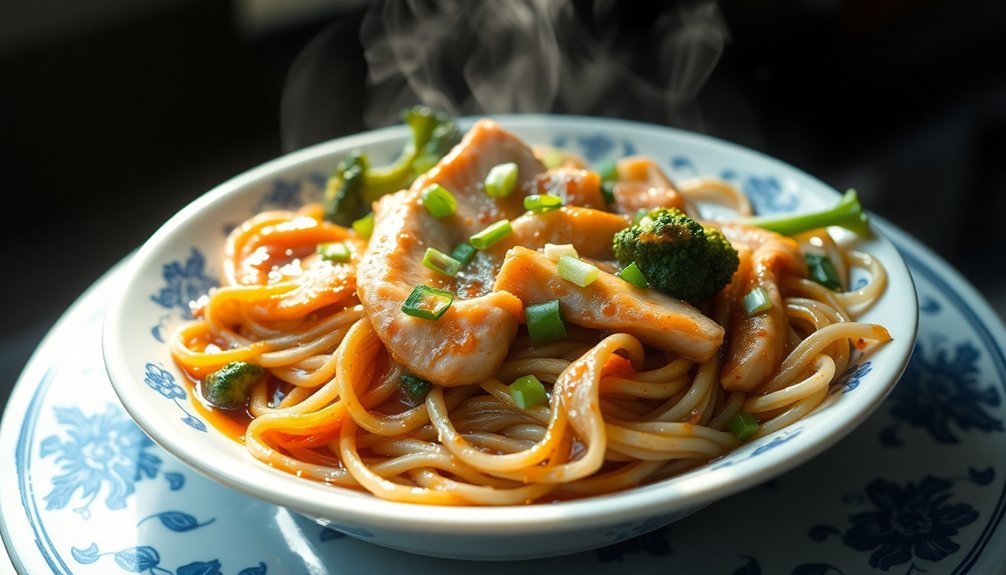
While the exact origins remain somewhat unclear, Guay Teow Kua Gai emerged as a popular street food in Thailand’s Yaowarat district, Bangkok’s Chinatown, during the mid-20th century.
You’ll find that this dish represents the perfect fusion of Chinese cooking techniques with Thai cuisine, as Chinese immigrants adapted their traditional recipes to local ingredients and tastes.
The dish evolved from other noodle variations commonly found in Thai-Chinese cooking, particularly those using wide rice noodles.
What sets it apart is the unique cooking method where the noodles are charred in a blazing hot wok with chicken and crunchy greens.
You’ll notice that many street vendors in Yaowarat still prepare it the traditional way, on charcoal-fired woks that give the noodles their distinctive smoky flavor.
Recipe
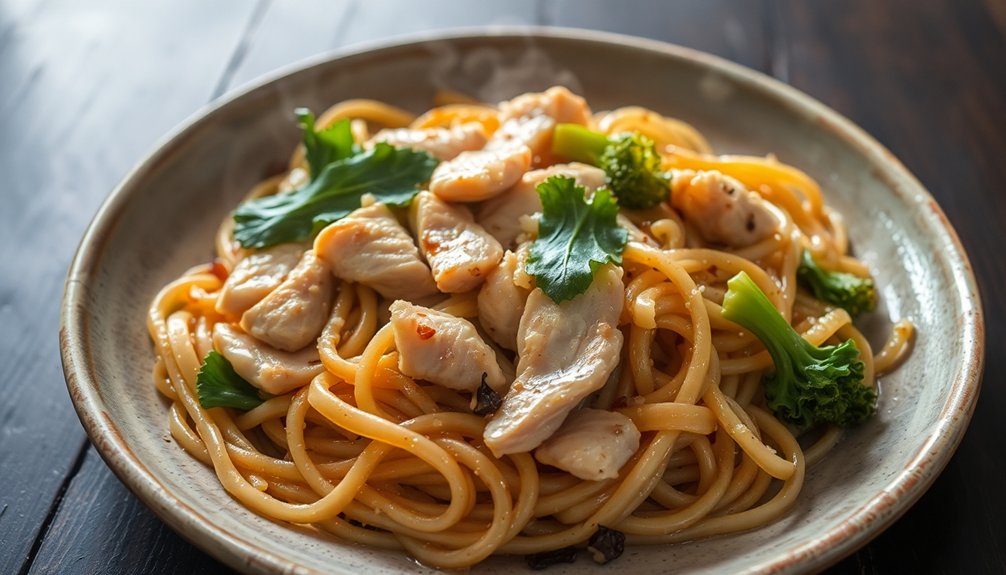
Ingredients:
- 400g wide rice noodles (sen yai)
- 300g chicken breast, sliced
- 2 eggs
- 2 cups Chinese lettuce
- 4 cloves garlic, chopped
- Spring onions, chopped
- 2 tablespoons vegetable oil
- Dark soy sauce
- Light soy sauce
- White pepper
Marinade:
- 1 tablespoon soy sauce
- 1 teaspoon white pepper
- 1 tablespoon oyster sauce
Instructions:
- Marinate sliced chicken with marinade mixture for 30 minutes.
- Heat oil in a wok over high heat until smoking.
- Add garlic and stir-fry until fragrant.
- Add marinated chicken and cook until nearly done.
- Push ingredients to one side of wok.
- Add rice noodles and dark soy sauce.
- Let noodles char slightly without stirring (about 1 minute).
- Mix noodles with chicken and add light soy sauce.
- Create space in wok and crack eggs.
- Let eggs set slightly, then mix with other ingredients.
- Add Chinese lettuce and spring onions.
- Stir-fry briefly until lettuce wilts.
- Season with white pepper.
- Serve hot with chili vinegar sauce on the side.
Cooking Steps
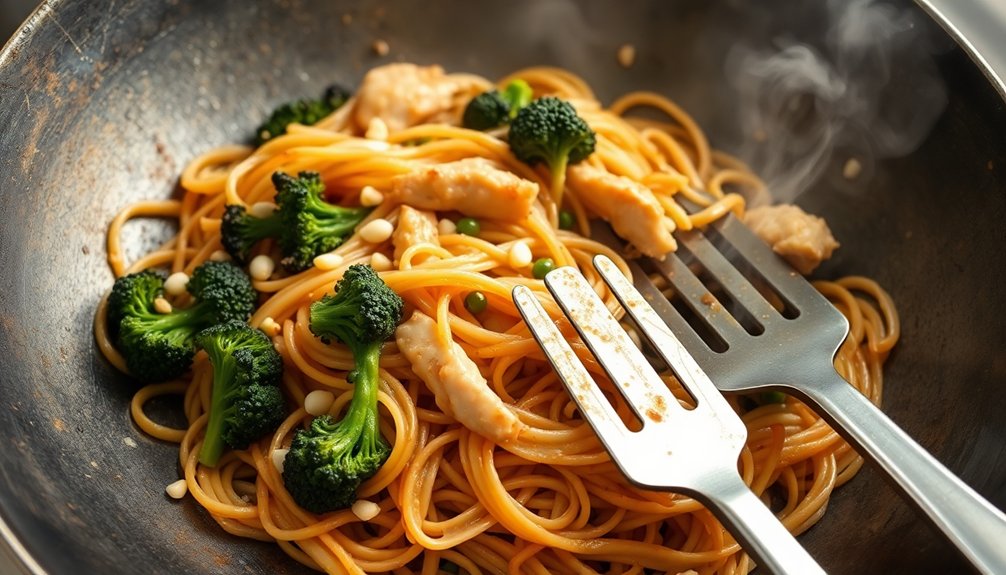
You’ll start by marinating your chicken pieces in a mix of light soy sauce, dark soy sauce, and oyster sauce until the meat absorbs the flavors.
Next, you’ll need to soak and drain your fresh rice noodles before stir-frying them in a smoking hot wok with garlic, spring onions, and leafy greens.
Once your noodles have developed a golden char, you’ll add the marinated chicken and continue to stir-fry until everything is perfectly caramelized and infused with that signature Bangkok street food smokiness.
step 1. Marinate Chicken in Sauce
Preparing the chicken marinade follows traditional Thai-Chinese methods passed down through generations of hawkers.
You’ll need to slice your chicken thighs into thin, bite-sized pieces before combining them with essential marinade options: light soy sauce, dark soy sauce, oyster sauce, and ground white pepper.
For best flavor enhancement, add a splash of Shaoxing wine and a pinch of sugar to balance the savory elements.
Mix your chicken thoroughly with the marinade ingredients, making sure each piece is well-coated.
Let it rest for at least 30 minutes at room temperature, though you can refrigerate it for up to 4 hours if you’re preparing ahead.
The marinade will tenderize the meat while infusing it with the complex umami flavors characteristic of Thai-Chinese street food.
step 2. Prepare Rice Noodles First
Before stir-frying the marinated chicken, proper rice noodle preparation forms the backbone of authentic Guay Teow Kua Gai.
You’ll need fresh, wide rice noodles (sen yai) that are at least an inch wide – these are the traditional choice in Thailand for this dish. If you can’t find fresh noodles, dried rice stick noodles will work as a substitute.
For dried noodles, pre-soaking noodles in room temperature water for 30 minutes is essential – they should become pliable but still firm.
Don’t oversoak, as they’ll continue softening during stir-frying. If using fresh noodles, separate them carefully to prevent tearing.
When the noodles clump together, briefly warming them in the microwave or steaming them for a few seconds will help separate the strands.
step 3. Heat Wok Until Smoking
The key to achieving authentic “wok hei” – the distinctive charred aroma in Thai wok dishes – lies in heating your wok until it’s smoking hot.
To properly reach the essential smoking point, you’ll need to manage your wok temperature with precision.
Place your wok over high heat and wait until you see these vital signs:
- Wisps of smoke begin to rise from the wok’s surface when you hold your hand about 6 inches above it.
- A drop of water instantly vaporizes and “dances” when flicked onto the surface.
- The metal takes on a slight color change, with the bottom developing a faint reddish tinge.
Don’t rush this step – proper heating takes about 3-4 minutes.
You’ll know you’ve reached the right temperature when the wok starts emitting a steady stream of smoke.
step 4. Add Vegetables and Aromatics
With your wok now at the perfect smoking temperature, swiftly add your julienned gai lan (Chinese broccoli), bean sprouts, and sliced garlic. Stir-fry these ingredients vigorously for about 30 seconds, allowing the gai lan to retain its crisp texture while releasing its vegetable benefits, including essential vitamins and minerals.
Next, toss in your aromatic flavors: white pepper, finely chopped spring onions, and a small handful of Chinese celery leaves.
These Southeast Asian aromatics will infuse your dish with authentic Thai-Chinese character. You’ll want to keep the vegetables moving constantly to prevent burning while ensuring they’re evenly coated with the seasonings.
The key is maintaining high heat while working quickly – you’re aiming for vegetables that are bright green and slightly charred but still crisp.
step 5. Add Noodles and Chicken
Now’s the moment to add your marinated chicken and rice noodles to the wok.
Whether you’re using fresh sen yai (wide rice noodles) or rehydrated ho fun, they’ll need quick, high-heat cooking to achieve that perfect wok hei.
For the chicken, you can opt for sliced breast meat or tender thigh pieces, both common in Bangkok’s street food scene.
- Spread your noodles evenly across the hot wok’s surface, allowing them to sear and develop those coveted charred edges.
- Add your marinated chicken pieces, distributing them between the noodles to guarantee even cooking.
- Let the ingredients sear for 30 seconds before flipping, then toss everything together using quick, decisive movements to prevent the noodles from breaking.
Cooking Tips
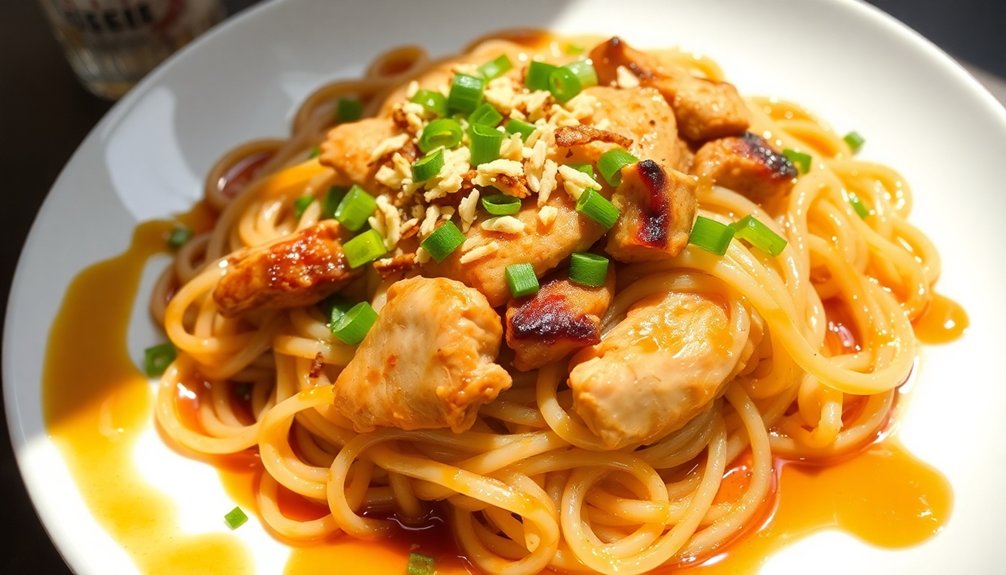
Making authentic guay teow kua gai requires precise timing and technique to achieve its signature smoky wok hei flavor.
You’ll want to heat your wok until it’s smoking hot before adding any ingredients. When stir-frying the noodles, press them firmly against the hot wok surface to create crispy, charred edges – this is an essential cooking technique that defines the dish’s authentic taste.
If you can’t find fresh rice noodles, you can substitute dried rice noodles, but soak them until they’re just pliable, not completely soft.
For the best results, cook in small batches to maintain high heat and prevent the noodles from becoming soggy. Keep your ingredients close at hand, as the cooking process moves quickly and timing is critical for achieving the perfect texture and caramelization.
Final Thoughts
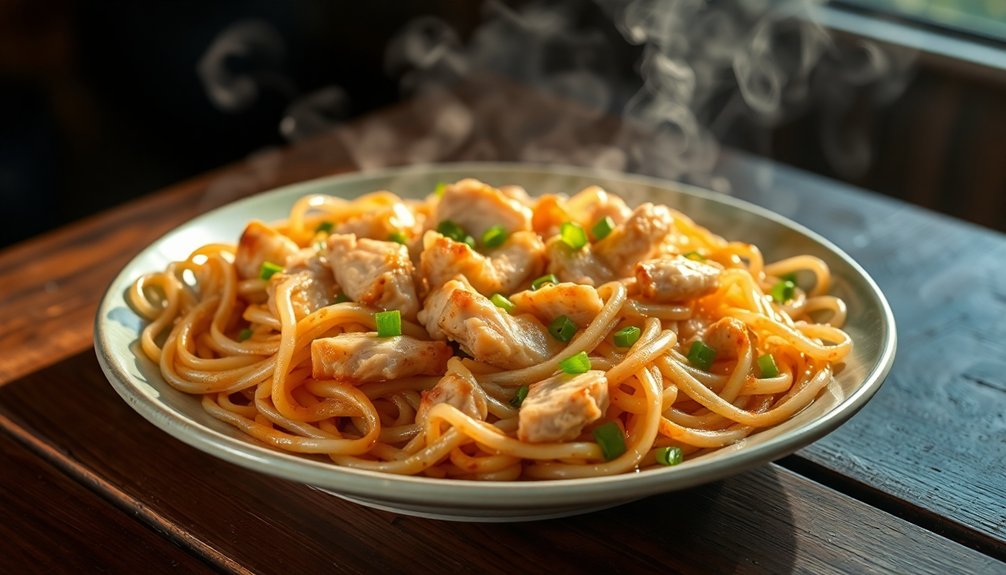
Guay teow kua gai represents one of Thailand’s most cherished street food traditions, combining the best elements of wok-fried noodles with succulent chicken.
This dish’s cultural significance extends beyond its flavor profiles, embodying the spirit of Thai street cuisine.
When you’ve mastered this recipe, you’ll appreciate these distinctive characteristics:
- The smoky “wok hei” that infuses the rice noodles when they’re charred against the hot metal surface
- The perfect balance between tender chicken, crispy garlic chips, and chewy noodles
- The harmonious blend of sweet, savory, and peppery notes that define authentic Thai street food
You’ll find that this dish captures the essence of Bangkok’s vibrant street food scene, making it a treasured addition to your Thai cooking repertoire.
Frequently Asked Questions
Can I Substitute Other Meats for Chicken in This Dish?
You’ll find that beef, pork, or shrimp work well as meat alternatives in this Thai street food classic, each bringing unique flavor variations while maintaining the dish’s smoky wok-fried essence.
How Long Can Leftover Guay Teow Kua Gai Be Stored?
Who’re you kidding – leftovers? But if you must meal prep, store your noodles in an airtight container for up to 3 days in the fridge. They’ll stay best if you reheat them thoroughly.
Is This Dish Suitable for Gluten-Free Diets?
You’ll need to check sauce ingredients carefully, as traditional soy sauce contains gluten. Choose gluten-free soy sauce alternatives and rice noodles to make this Thai dish celiac-friendly.
Where Can I Find Authentic Thai Rice Noodles?
Hit the jackpot at Thai noodle shops and authentic Thai markets in your area. You’ll find fresh rice noodles in refrigerated sections, or dried versions in Asian grocery stores’ noodle aisles.
What’s the Best Brand of Soy Sauce for Guay Teow Kua Gai?
For authentic Thai cooking, you’ll want both light and dark soy sauce. Choose Thai brands like Healthy Boy or Golden Mountain for light soy, and Dragonfly for dark soy.